
Contents
Overview
Children's yoga is a specialized adaptation of traditional yoga practices, meticulously designed to engage and benefit young individuals. It transcends mere physical exercise, integrating elements of play, imagination, and mindfulness to foster holistic development. Classes typically incorporate age-appropriate yoga poses (asanas) aimed at enhancing strength, flexibility, and coordination, often infused with creative storytelling, animal sounds, and imaginative names for postures to maintain engagement. Beyond the physical, it cultivates emotional regulation, focus, and self-awareness, offering a structured yet joyful approach to well-being. Originating from ancient yogic traditions, its modern iteration has seen a surge in popularity worldwide, reflecting its growing recognition as a valuable tool for childhood development and mental health support.
🎵 Origins & History
The roots of yoga for children are deeply embedded in the ancient Indian philosophy of yoga, which has been practiced for millennia. The formal adaptation of yoga for young practitioners is a more recent phenomenon, gaining traction in the mid-20th century.
⚙️ How It Works
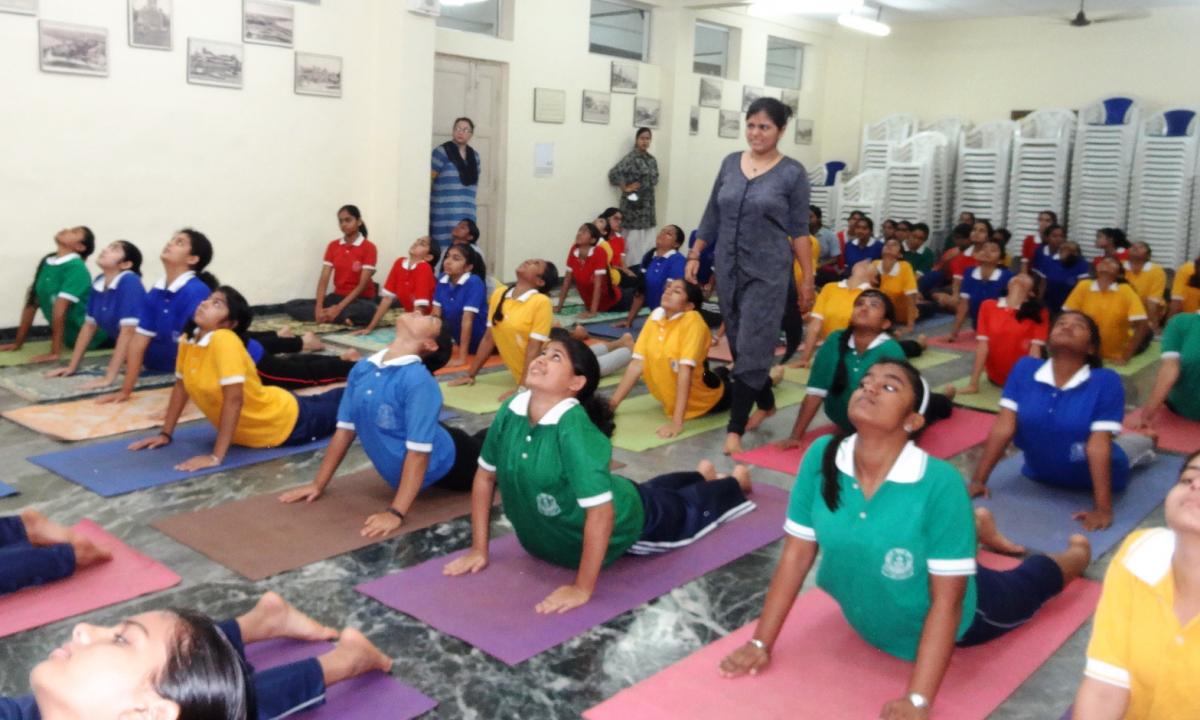
Children's yoga functions by translating the principles and postures of adult yoga into a format that is engaging, understandable, and beneficial for young minds and bodies. Classes are structured around a series of poses, often given playful names like 'Downward-Facing Dog' or 'Butterfly Pose,' to spark imagination. Breathing exercises (pranayama) are presented as simple activities like 'smelling the flower' or 'blowing out the candle,' to teach breath awareness. Mindfulness techniques are woven in through guided imagery, short meditations, or 'quiet time' activities, helping children develop focus and emotional regulation. The overall atmosphere is non-competitive and child-centered, emphasizing self-expression and enjoyment over perfect form, often utilizing props like colorful mats, blocks, and music to enhance the experience.
📊 Key Facts & Numbers
The number of certified children's yoga instructors has seen a significant rise.
👥 Key People & Organizations
Several key figures and organizations have shaped the landscape of children's yoga. Jaime McFarlane, creator of Cosmic Kids Yoga, has garnered millions of subscribers on YouTube with her engaging video content, making yoga accessible to children worldwide. The National Sanskrit Yoga Institute and the Iyengar Yoga Institute have also contributed to the standardization and dissemination of yoga practices for younger demographics. Beyond these, countless independent studios and educators, such as Gaiam Kids and Mindful Schools, play a crucial role in bringing yoga to schools and communities.
🌍 Cultural Impact & Influence
Children's yoga has profoundly influenced modern approaches to childhood education and well-being, extending its reach far beyond dedicated yoga studios. Programs like Mindful Schools report significant improvements in student behavior and academic focus. The cultural penetration of children's yoga has normalized the idea of children engaging in mindfulness and physical practices, contributing to a broader societal shift towards prioritizing mental and emotional health from an early age. The aesthetic of children's yoga, often characterized by bright colors and playful imagery, has also influenced children's product design and marketing.
⚡ Current State & Latest Developments
The current state of children's yoga is one of dynamic growth and increasing professionalization. There's a notable trend towards specialized programs catering to specific age groups, from toddlers to teenagers, and addressing particular needs, such as yoga for children with autism spectrum disorder or ADHD. Online platforms continue to expand, offering virtual classes and resources, making yoga more accessible to families regardless of location. The development of evidence-based curricula and research studies is also accelerating, providing a stronger scientific foundation for the practice.
🤔 Controversies & Debates
Despite its widespread acceptance, children's yoga is not without its debates. A primary point of contention revolves around the commercialization of yoga for children, with some critics arguing that the focus on branded products and entertainment can dilute the deeper philosophical and spiritual aspects of yoga. There are also discussions about the appropriate age for introducing certain practices and the qualifications required for instructors, particularly when working with children facing specific physical or mental health challenges. Some traditionalists express concern that the adaptation of yoga for children might stray too far from its original intent, while others champion the need for accessible, age-appropriate modifications. The debate over whether children's yoga should be secular or incorporate spiritual elements also surfaces periodically, particularly in school settings.
🔮 Future Outlook & Predictions
The future of children's yoga appears robust, with continued expansion anticipated across several fronts. We can expect further integration into mainstream education, with yoga becoming a standard component of social-emotional learning and physical education programs in schools globally. The development of more sophisticated digital platforms, including interactive apps and virtual reality experiences, will likely enhance engagement and accessibility. Research into the long-term benefits of early yoga practice, particularly concerning cognitive development and mental resilience, is poised to grow, providing stronger evidence for its efficacy. Furthermore, there's a growing movement towards training a more diverse and culturally competent workforce of children's yoga instructors, ensuring the practice is inclusive and reaches a wider range of communities.
💡 Practical Applications
Children's yoga offers a wealth of practical applications for families, educators, and healthcare professionals. In schools, it serves as a tool for classroom management, helping to create a calmer learning environment and improve student focus. For parents, it provides an opportunity for shared activity that promotes physical health and emotional connection with their children. Therapists and counselors utilize yoga-based techniques to support children dealing with stress, anxiety, or behavioral issues. Beyond structured classes, simple yoga poses and breathing exercises can be incorporated into daily routines at home to help children manage energy levels, transition between activities, or wind down before sleep. The principles of yoga, such as non-violence (ahimsa) and truthfulness (satya), can also be subtly introduced to foster positive social values.
Key Facts
- Category
- culture
- Type
- topic