
Contents
Overview
The story of Chargaff's rules begins in the post-World War II era, a time of burgeoning scientific discovery. Austrian-born chemist Erwin Chargaff, working at the Columbia University College of Physicians and Surgeons in New York, embarked on a meticulous analysis of DNA composition across various species. Between 1947 and 1950, Chargaff and his colleagues, including Ernst Vischer, developed sophisticated techniques to quantify the four nucleotide bases: adenine (A), guanine (G), cytosine (C), and thymine (T). Their groundbreaking findings, presented at a symposium in 1948 and published in 1950 and 1951, revealed consistent patterns: A always paired with T, and G with C, in roughly equal proportions within the DNA of any given organism. This contradicted prevailing theories that DNA was a simple, repetitive tetranucleotide. Chargaff's meticulous work, often performed with limited resources and facing skepticism, laid the empirical groundwork for understanding DNA's structure and function, even though he himself initially struggled to interpret its implications for the double helix.
⚙️ How It Works
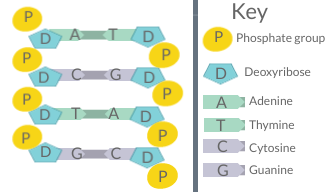
Chargaff's rules are fundamentally about the stoichiometric ratios of the four nucleotide bases in double-stranded DNA. The core principle is base pairing: adenine (a purine) always pairs with thymine (a pyrimidine) via two hydrogen bonds, and guanine (a purine) always pairs with cytosine (a pyrimidine) via three hydrogen bonds. This specific pairing mechanism, later elucidated in the DNA double helix model by James Watson and Francis Crick, dictates that for every molecule of adenine present, there must be a corresponding molecule of thymine to form a complete base pair across the helix. Similarly, every guanine must be paired with a cytosine. Therefore, in a double-stranded DNA molecule, the molar concentration of A is approximately equal to that of T ([A] ≈ [T]), and the molar concentration of G is approximately equal to that of C ([G] ≈ [C]). This leads to the derived rule that the sum of purines (A + G) is approximately equal to the sum of pyrimidines (T + C). These ratios are remarkably consistent across virtually all known double-stranded DNA, regardless of the organism's complexity.
📊 Key Facts & Numbers
The quantitative precision of Chargaff's rules is striking. Across hundreds of different species analyzed, the ratio of adenine to thymine (A/T) consistently hovers around 1.0, typically ranging from 0.9 to 1.1. Similarly, the ratio of guanine to cytosine (G/C) also approximates 1.0. The overall ratio of purines to pyrimidines (A+G)/(T+C) is therefore very close to 1.0. For instance, human DNA exhibits an A:T ratio of approximately 1.00 and a G:C ratio of approximately 1.00. Even in organisms with vastly different DNA compositions, such as bacteria or viruses, these base-pairing rules hold true for double-stranded DNA. However, single-stranded DNA or RNA molecules can deviate significantly from these ratios, as they lack the complementary pairing constraint. The percentage of GC content, a measure of the proportion of guanine and cytosine bases, can vary widely between species, from around 20% in some bacteria to over 70% in others, but within each species, the A≈T and G≈C rule generally applies.
👥 Key People & Organizations
The central figure in the discovery of these rules is Erwin Chargaff (1905-2002), an Austrian-born biochemist who conducted his seminal work at Columbia University. Chargaff's team included key collaborators like Ernst Vischer and Charlotte Rasmussen, who were instrumental in the meticulous chemical analyses. The rules gained immense significance through the work of James Watson and Francis Crick, who utilized Chargaff's data as a critical piece of evidence in developing their iconic DNA double helix model in 1953. Their model, proposed at the Cavendish Laboratory at the University of Cambridge, directly explained why Chargaff's observations were true, by proposing the specific A-T and G-C base pairing. Other researchers like Maurice Wilkins and Rosalind Franklin provided crucial X-ray diffraction data that supported the double helix structure, indirectly validating Chargaff's rules.
🌍 Cultural Impact & Influence
Chargaff's rules have profoundly shaped the landscape of molecular biology and genetics, becoming a cornerstone of understanding heredity. Their discovery directly enabled the formulation of the DNA double helix model, which revolutionized biology by providing a physical basis for how genetic information is stored and replicated. This understanding paved the way for the Human Genome Project, the development of DNA sequencing technologies like Sanger sequencing and next-generation sequencing, and the advent of genetic engineering and CRISPR gene editing. The rules are now a fundamental concept taught in introductory biology courses worldwide, embedded in the very language of genetics. Their influence extends beyond pure science, impacting fields from medicine and forensics to agriculture and evolutionary studies, underscoring their immense cultural and scientific resonance.
⚡ Current State & Latest Developments
In 2024, Chargaff's rules remain a fundamental principle for double-stranded DNA. While the core principles ([A]≈[T] and [G]≈[C]) are universally accepted, ongoing research continues to explore the subtle biological implications and exceptions. Studies on DNA repair mechanisms and certain viral genomes sometimes reveal transient or localized deviations from perfect parity. Advances in single-molecule detection and high-throughput sequencing allow for more precise measurements of base composition and variations across the genome. Furthermore, the study of epigenetics, which involves modifications to DNA that don't alter the base sequence itself, adds another layer of complexity to how DNA information is regulated, building upon the foundational understanding provided by Chargaff's initial observations. The ongoing exploration of extremophiles and novel genetic systems may also reveal new contexts for these rules.
🤔 Controversies & Debates
While Chargaff's rules are overwhelmingly accepted as a fundamental truth for double-stranded DNA, debates have historically centered on the why rather than the what. Initially, Chargaff himself was hesitant to fully embrace the double helix model, partly because he couldn't immediately reconcile his rules with a purely functional explanation. Some early discussions questioned whether these ratios were merely coincidental or if they reflected a deeper biological imperative. The precise evolutionary pressures that led to such strict adherence to A≈T and G≈C pairing are still debated; theories include optimizing DNA replication fidelity, minimizing spontaneous mutations, or facilitating efficient DNA packaging. Another area of subtle discussion involves the slight deviations observed in some organisms or under specific cellular conditions, prompting research into the mechanisms that maintain or allow these variations, particularly in non-coding regions or during specific biological processes. The existence of single-stranded DNA genomes in some viruses also presents a contrast, highlighting the specific relevance of the rules to double-stranded structures.
🔮 Future Outlook & Predictions
The future outlook for Chargaff's rules remains one of enduring relevance, albeit with expanding contexts. As our understanding of DNA deepens, researchers are exploring how these base-pairing principles interact with other biological processes. For example, the rules are critical for designing synthetic DNA constructs used in nanotechnology and DNA computing. Future research may uncover more nuanced regulatory roles for the precise A/T and G/C ratios in gene expression or DNA stability. Furthermore, as we explore life beyond Earth, verifying Chargaff's rules in extraterrestrial DNA (if discovered) would provide profound insights into the universality of molecular biology. The ongoing quest to understand complex genetic diseases and develop personalized medicine will continue to rely on the foundational principles established by Chargaff's work.
Key Facts
- Category
- science
- Type
- topic