
Contents
- 🎵 Origins & History
- ⚙️ How It Works
- 📊 Key Facts & Numbers
- 👥 Key People & Organizations
- 🌍 Cultural Impact & Influence
- ⚡ Current State & Latest Developments
- 🤔 Controversies & Debates
- 🔮 Future Outlook & Predictions
- 💡 Practical Applications
- 📚 Related Topics & Deeper Reading
- Frequently Asked Questions
- References
- Related Topics
Overview
The genesis of the Burgundian School can be traced to the flourishing court of the Dukes of Burgundy, particularly during the 15th century. This era saw the Dukes, including Philip the Good and Charles the Bold, patronizing a vibrant artistic and musical scene that attracted talent from across Europe. While the exact founding date is fluid, the period from roughly 1420 to 1477 is considered its zenith. Precursors to this style can be found in earlier French and English polyphony, with the English composer John Dunstaple acting as a significant early influence, particularly his use of thirds and sixths which contributed to a sweeter harmonic palate. The Burgundian composers built upon these foundations, developing a distinct sound that would become synonymous with the sophisticated musical culture of the late medieval and early Renaissance periods.
⚙️ How It Works
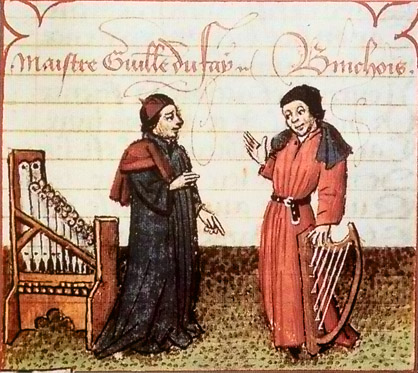
The musical output of the Burgundian School is characterized by its sophisticated polyphony, typically for three or four voices. Composers like Guillaume Dufay and Gilles Binchois excelled in both sacred genres, such as masses and motets, and secular forms, most notably the chanson. Their chansons often featured a clear melody in the uppermost voice (cantus) supported by lower, contrapuntal lines, creating a rich and balanced texture. A hallmark of their style was the increasing use of consonant intervals like thirds and sixths, moving away from the more austere sonorities of earlier periods. They also demonstrated a growing interest in melodic symmetry and formal clarity, setting the stage for the more complex polyphony of the later Franco-Flemish School.
📊 Key Facts & Numbers
The Burgundian School's influence spanned approximately 50 years, from around 1420 to 1470. During this peak, the Burgundian court employed an average of 15-20 musicians, a significant number for the time, including composers, singers, and instrumentalists. The repertoire generated by this school comprises hundreds of surviving musical works, with estimates suggesting over 200 chanson settings alone attributed to its key figures. By the late 15th century, the musical innovations pioneered by the Burgundian composers had spread to major European centers, including Italy, Germany, and the Low Countries, influencing at least 80% of the musical output of the period.
👥 Key People & Organizations
The central figures of the Burgundian School are Guillaume Dufay (c. 1397–1474), often considered the most important composer of the era, and Gilles Binchois (c. 1400–1460), renowned for his elegant chansons. Antoine Busnois (c. 1430–1482) emerged as a later prominent composer, bridging the Burgundian style with the developing Franco-Flemish School. The patronage of the Dukes of Burgundy, including Philip the Good (reigned 1419–1467) and his son Charles the Bold (reigned 1467–1477), was crucial to the school's development. The English composer John Dunstaple (c. 1390–1453), though not a member, was a vital early influence on their harmonic language.
🌍 Cultural Impact & Influence
The Burgundian School's impact on the development of Western music is immense. It effectively transitioned musical style from the late Ars Nova period to the early Renaissance, establishing a new standard for polyphonic composition. The emphasis on clear melodic lines, consonant harmonies, and expressive text setting profoundly influenced subsequent generations of composers, including Johannes Ockeghem, Josquin des Prez, and the entire Franco-Flemish School. Their secular chansons, in particular, became models for lyrical song composition across Europe, shaping the development of genres like the Italian frottola and later the madrigal. The school's music was widely disseminated through manuscript copies, reaching courts and churches from Florence to Vienna.
⚡ Current State & Latest Developments
While the Burgundian School as a distinct entity ceased to be active after the late 15th century, its musical legacy continues to be performed and studied. Modern ensembles specializing in early music, such as Hilliard Ensemble and Ensemble Gilles Binchois, regularly program works by Dufay and Binchois. Scholarly research into Burgundian music continues, with ongoing discoveries and reinterpretations of existing scores. The influence of their harmonic and melodic innovations can still be traced in contemporary compositions that draw inspiration from historical styles, demonstrating the enduring appeal of their refined musical language.
🤔 Controversies & Debates
One of the primary debates surrounding the Burgundian School concerns the precise extent of John Dunstaple's influence. While his presence in the region and his stylistic innovations are well-documented, some scholars argue that the Burgundian composers developed their unique sound independently, integrating English elements rather than being solely derivative. Another point of contention is the exact dating and attribution of certain works, as manuscript evidence from the period can be fragmented or ambiguous. The role of instrumental music within the court, often overshadowed by vocal polyphony, also remains an area of ongoing scholarly inquiry.
🔮 Future Outlook & Predictions
The future of the Burgundian School's music lies in continued performance, scholarly research, and digital dissemination. Advances in musicology and digital archiving promise to uncover new insights into the performance practices and compositional techniques of the era. We can anticipate further scholarly debate on attribution and stylistic evolution, potentially leading to revised understandings of individual composers' contributions. Furthermore, the increasing accessibility of these works through streaming platforms and online databases will likely introduce this foundational repertoire to a wider global audience, fostering new appreciation for its historical significance and aesthetic beauty.
💡 Practical Applications
The primary practical application of the Burgundian School's music is in the realm of historical performance and music education. Ensembles dedicated to early music perform their works in concert halls and churches, providing audiences with an authentic experience of 15th-century soundscapes. Musicologists and students study their compositions to understand the evolution of polyphony, harmony, and musical form. The clear structures and elegant melodies of Burgundian chansons also make them accessible for educational purposes, serving as excellent examples for teaching counterpoint and vocal technique in music conservatories worldwide. Their sacred music continues to be performed in liturgical settings, connecting contemporary worship with historical musical traditions.
Key Facts
- Year
- 15th century
- Origin
- Burgundian Netherlands (modern-day northern France, Belgium, Netherlands)
- Category
- culture
- Type
- movement
Frequently Asked Questions
What defined the musical style of the Burgundian School?
The Burgundian School's music is defined by its sophisticated polyphony, typically for three or four voices, characterized by smooth, flowing melodic lines and a rich harmonic language that increasingly favored consonant intervals like thirds and sixths. Composers like Guillaume Dufay and Gilles Binchois mastered both sacred genres like masses and secular forms such as the chanson, creating a balanced and expressive sound that marked a significant departure from earlier medieval styles.
Who were the most important composers associated with the Burgundian School?
The most central figures are Guillaume Dufay (c. 1397–1474), widely regarded as the era's preeminent composer, and Gilles Binchois (c. 1400–1460), celebrated for his elegant chansons. Antoine Busnois (c. 1430–1482) was another significant composer who continued the tradition and helped transition it into the later Franco-Flemish School. The patronage of the Dukes of Burgundy was instrumental in fostering their careers and the school's development.
How did the Burgundian School influence later music?
The Burgundian School was foundational to the development of Renaissance music and the broader Franco-Flemish School. Its emphasis on consonant harmony, clear melodic construction, and expressive text setting set new standards for polyphonic composition. Composers across Europe, from Josquin des Prez to those in Florence, adopted and adapted these innovations, shaping genres like the madrigal and influencing the trajectory of Western classical music for centuries. Their chansons, in particular, became models for lyrical song composition.
What was the historical context of the Burgundian School?
The school flourished during the 15th century, a period of immense political and cultural power for the Dukes of Burgundy, whose court was a major center of European art and music. This era saw the transition from the late medieval period to the early Renaissance, with significant developments in painting, architecture, and literature alongside music. The Burgundian court, known for its lavishness and sophistication, provided crucial patronage that allowed composers like Dufay and Binchois to thrive and innovate, creating a distinct musical identity for the region.
Was the Burgundian School purely French?
No, the Burgundian School was not exclusively French, despite its association with the court of the Dukes of Burgundy. The geographical area encompassed by the Burgundian Netherlands at the time included regions that are now part of northern France, Belgium, and the Netherlands. Furthermore, composers and musicians were drawn from various regions, and the musical style itself was influenced by other European traditions, most notably English music through figures like John Dunstaple. This international character was a hallmark of the school and foreshadowed the pan-European nature of the Franco-Flemish School.
Where can I hear music from the Burgundian School today?
Music from the Burgundian School is regularly performed by ensembles specializing in early music, such as Ensemble Gilles Binchois and the Hilliard Ensemble. Recordings are widely available on platforms like Spotify, Apple Music, and YouTube. Many of these performances aim for historical accuracy, using period instruments and performance practices to recreate the soundscape of the 15th century. You can also find scores and scholarly analyses in university libraries and specialized musicological resources.
What is the main difference between the Burgundian School and the later Franco-Flemish School?
The Burgundian School is considered the earliest phase of the Franco-Flemish School. While the Burgundian School established the foundational elements of sophisticated polyphony, smooth harmonies, and the integration of secular and sacred forms, the later Franco-Flemish School, emerging in the latter half of the 15th century and flourishing in the 16th, expanded upon these principles with even greater complexity. Composers like Johannes Ockeghem and Josquin des Prez developed more intricate contrapuntal techniques, explored wider vocal ranges, and experimented with new forms, pushing the boundaries of Renaissance polyphony further.