
Contents
- 🚗 What Exactly is a Broken Axle?
- 🚨 When Does an Axle Break?
- 🛠️ Diagnosing a Broken Axle: What to Listen (and Feel) For
- 💰 Cost of Repair: What to Expect
- 💡 DIY vs. Professional Repair: A Tough Call
- 🛣️ Roadside Assistance: Your First Line of Defense
- 🛡️ Preventing Axle Breakage: Maintenance Matters
- ⚖️ Axle Types: Front vs. Rear and FWD vs. RWD
- Frequently Asked Questions
- Related Topics
Overview
A broken axle is a critical failure where the shaft connecting the wheels to the drivetrain fractures, rendering a vehicle immobile and potentially dangerous. This can stem from severe impact, excessive wear and tear, manufacturing defects, or improper maintenance. The immediate consequence is loss of propulsion and steering control, necessitating immediate roadside assistance or towing. Repair involves replacing the entire axle assembly, a job requiring specialized tools and mechanical expertise. Understanding the signs of impending failure, such as clicking noises or vibrations, can prevent catastrophic breakdowns.
🚗 What Exactly is a Broken Axle?
A broken axle, more technically known as a fractured axle shaft, is a critical failure in your vehicle's drivetrain. The axle shaft is the component that transmits power from the differential to the wheels, enabling them to rotate. When it breaks, that wheel loses its connection to the engine's power, rendering the vehicle undrivable. This isn't a minor inconvenience; it's a complete loss of motive force to at least one wheel, often necessitating immediate towing. Understanding the mechanics behind this failure is crucial for any driver who relies on their vehicle for daily transport or long-haul trucking.
🚨 When Does an Axle Break?
Axle breakage isn't usually a sudden, random event. It's often the culmination of stress, wear, and sometimes, impact. Common culprits include severe impact damage from hitting potholes or road debris at speed, chronic overloading of the vehicle beyond its specified weight capacity, and metal fatigue from years of constant torque and flexing. In performance vehicles, aggressive driving, such as frequent hard acceleration or launching, can also put immense strain on axles, leading to premature failure. Rust and corrosion can weaken the axle material over time, making it more susceptible to breaking under normal operating loads.
🛠️ Diagnosing a Broken Axle: What to Listen (and Feel) For
Recognizing the signs of an impending or actual axle failure can save you from being stranded. The most common symptom is a loud 'clunk' or 'snap' noise, particularly when turning or accelerating. You might also feel a vibration or shudder that wasn't there before, or notice the vehicle pulling to one side. If a front axle breaks, you might experience a loss of steering control on that side. A broken rear axle typically results in a complete loss of power to the rear wheels. Don't ignore these auditory or tactile cues; they are your vehicle's way of screaming for attention.
💰 Cost of Repair: What to Expect
The financial hit from a broken axle can range significantly. For a single axle shaft replacement, expect to pay anywhere from $300 to $1,200, depending on the vehicle's make and model, the complexity of the repair, and whether you opt for OEM (Original Equipment Manufacturer) or aftermarket parts. Labor costs can add substantially to this, often between $100 and $400 for the mechanic's time. If the breakage caused collateral damage to other drivetrain components, such as the CV joints or differential, the repair bill could easily climb into the thousands. Getting multiple quotes is always a wise financial strategy.
💡 DIY vs. Professional Repair: A Tough Call
Deciding whether to tackle an axle replacement yourself or hand it over to a professional is a critical choice. For the average DIYer with limited tools and experience, this is a complex job. It involves safely lifting the vehicle, removing the wheel, disconnecting suspension components, and carefully extracting and installing the axle shaft, often dealing with pressurized transmission or differential fluid. A mistake can lead to further damage or unsafe driving conditions. For most, especially those without a dedicated garage and lift, professional auto repair shops are the safer and more efficient route.
🛣️ Roadside Assistance: Your First Line of Defense
When an axle breaks unexpectedly, your immediate priority is safety and getting off the road. This is where roadside assistance programs shine. Services like AAA, or those offered through your auto insurance policy, can dispatch a tow truck to transport your vehicle to a repair facility. Having a membership or coverage can turn a potentially expensive towing bill into a manageable service call fee. Always know your coverage details and have the contact information readily accessible in your vehicle's glove compartment.
🛡️ Preventing Axle Breakage: Maintenance Matters
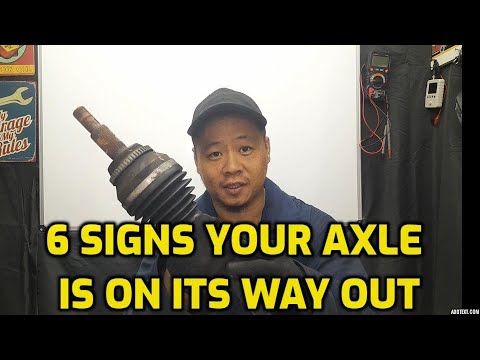
While you can't always prevent an axle from breaking, proactive maintenance can significantly extend its lifespan. Regularly inspect your axles for any signs of damage, such as cracks, dents, or torn CV boots. Torn CV boots are a major red flag, as they allow grease to escape and contaminants to enter, rapidly accelerating wear. Ensure your vehicle is not consistently overloaded, and address any suspension or alignment issues promptly, as these can put undue stress on the drivetrain. Following your vehicle's recommended maintenance schedule is paramount.
⚖️ Axle Types: Front vs. Rear and FWD vs. RWD
Vehicles have different axle configurations, and a break can manifest differently. In front-wheel-drive (FWD) vehicles, the front axles are also known as 'half-shafts' and incorporate Constant Velocity (CV) joints, which allow for both rotation and angular movement. A broken front axle in an FWD car means loss of power to the front wheels and often affects steering. Rear-wheel-drive (RWD) vehicles typically have a solid rear axle or two separate rear axles. A break in a RWD axle means loss of power to the rear wheels, but steering remains unaffected. All-wheel-drive (AWD) and four-wheel-drive (4WD) systems have more complex drivetrain layouts with multiple axles and differentials.
Key Facts
- Year
- 1886
- Origin
- The invention of the automobile, with its reliance on rotating shafts for power transmission.
- Category
- Automotive Mechanics & Roadside Emergencies
- Type
- Mechanical Failure
Frequently Asked Questions
Can I drive on a broken axle?
Absolutely not. Driving with a broken axle is extremely dangerous and will cause further, potentially catastrophic, damage to your vehicle's drivetrain. The wheel connected to the broken axle will not receive power, and in some cases, the broken parts can cause damage to other components or even detach. You will need to have your vehicle towed to a repair shop immediately.
How long does an axle replacement take?
The actual replacement of a single axle shaft typically takes a mechanic 1-3 hours. However, the total time your vehicle is in the shop can be longer, depending on parts availability, diagnostic time, and the shop's workload. For a straightforward replacement, you might get your car back the same day, but it's best to confirm with your chosen repair facility.
What's the difference between an axle and a driveshaft?
While both transmit power, they serve different parts of the drivetrain. Axles (or half-shafts in FWD cars) connect the differential directly to the wheels. Driveshafts are typically longer shafts used in RWD or AWD vehicles to transmit power from the transmission/transfer case to the differential, which then sends power to the axles. A broken driveshaft will also immobilize your vehicle, but it's a distinct component from the axle shaft.
Are aftermarket axles as good as OEM?
This is a debated topic. High-quality aftermarket axles can be just as durable and reliable as OEM parts, often at a lower cost. However, the quality can vary significantly between manufacturers. It's wise to research brands, read reviews, and consider purchasing from reputable suppliers. For some high-performance or specialized vehicles, OEM might be the only truly equivalent option.
What is a CV joint and how does it relate to axle failure?
CV (Constant Velocity) joints are crucial components of most modern front axles (and some rear axles), allowing the wheels to receive power while turning. They are protected by a rubber boot filled with grease. If this boot tears, dirt and moisture enter, destroying the joint and potentially leading to axle failure or a complete separation of the axle shaft. A clicking noise when turning is a classic sign of a failing CV joint.