
Contents
Overview
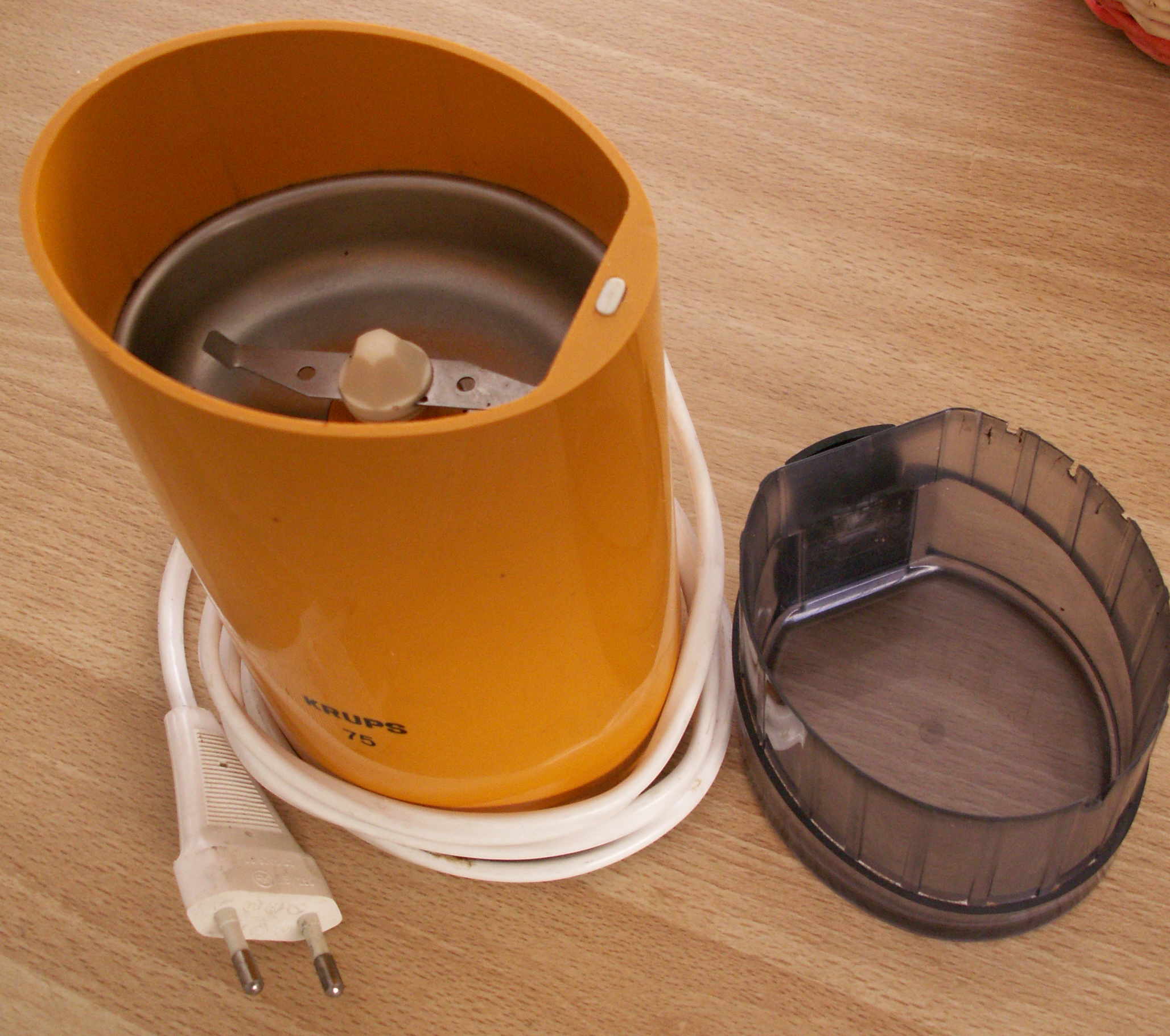
A blade grinder, often called a propeller grinder, is a mechanical device that pulverizes or chops materials using a high-speed rotating blade. Its fundamental design, a motor driving a sharp, spinning blade, makes it ubiquitous across various applications, from domestic kitchens to industrial settings. In culinary contexts, blade grinders are integral to appliances like blenders, food processors, and certain coffee grinders, enabling tasks from pureeing fruits to grinding spices. The simplicity and effectiveness of the spinning blade mechanism have ensured its enduring presence, though debates persist regarding efficiency and particle consistency compared to other grinding technologies like burr grinders. Its widespread adoption underscores a fundamental engineering principle: rotational force applied to a sharp edge is a powerful tool for material transformation.
🎵 Origins & History
The concept of a rotating blade for cutting and pulverizing materials predates modern machinery, with early examples found in rudimentary agricultural tools and milling devices. However, the modern blade grinder as a distinct mechanical appliance began to take shape with the advent of electric motors. Early electric mixers and choppers, precursors to today's blenders and food processors, utilized spinning blades to achieve finer particle sizes. Simultaneously, industrial applications for size reduction saw the development of more robust blade grinding machines for processing chemicals, pharmaceuticals, and raw materials, often referred to by terms like hammer mills or impact crushers, which share the core principle of high-speed impact via rotating elements.
⚙️ How It Works
At its core, a blade grinder operates on a simple yet effective principle: kinetic energy transfer. An electric motor, ranging from fractional horsepower in kitchen appliances to several horsepower in industrial units, spins a shaft at high RPMs. Attached to this shaft is one or more blades, typically made of hardened steel, designed with specific angles and sharpness to create a vortex and shear action. As material is introduced into the grinding chamber, the rapidly rotating blades strike, cut, and throw the particles against the chamber walls and against each other, progressively reducing their size. The effectiveness of the grind depends on factors like blade design (e.g., S-shaped, flat, serrated), rotational speed, chamber shape, and the duration of the grinding cycle. For finer grinds, multiple passes or specialized blade configurations may be employed.
📊 Key Facts & Numbers
Blade grinders are remarkably prevalent, with estimates suggesting billions of units in use globally across domestic and industrial sectors. The primary controversy surrounding blade grinders centers on the inconsistency of the grind. Blade grinders tend to create a mix of fine powder and larger chunks due to the unpredictable impact of the blade. Critics argue that for optimal results, blade grinders are inherently inferior to burr grinders. The simplicity and effectiveness of the spinning blade mechanism have ensured its enduring presence.
👥 Key People & Organizations
While no single inventor is credited with the blade grinder itself, key figures in the development of appliances that utilize this technology include Fred Waring, whose endorsement and popularization of the Waring Blendor in the 1930s significantly boosted its adoption. Organizations like the American Society of Mechanical Engineers set standards for machinery safety and performance, indirectly influencing blade grinder design and application.
🌍 Cultural Impact & Influence
The sound of a blade grinder has become synonymous with breakfast preparation and the pursuit of convenience in busy households, a sonic marker of modern domestic life.
⚡ Current State & Latest Developments
The blade grinder technology continues to evolve, with manufacturers focusing on enhanced motor efficiency, quieter operation, and improved blade designs for more consistent particle size distribution. Innovations in materials science have led to more durable and sharper blades, extending product life and reducing maintenance. Smart technology integration is also emerging, with some high-end blenders and food processors offering pre-programmed settings for specific tasks and connectivity to recipe apps. The development of hybrid grinding systems, combining blade action with other reduction methods, is also an area of active research and development.
🤔 Controversies & Debates
Blade grinders are indispensable in numerous practical applications. In kitchens, they are used for making smoothies, protein shakes, purees for baby food and soups, grinding nuts and seeds, chopping vegetables for salsas and dips, and even crushing ice. Coffee enthusiasts use them for quick grinds of beans, though often with caveats about consistency. In laboratories, they are employed for sample preparation in fields like chemistry and biology, breaking down materials for analysis. Industrially, they are vital for size reduction in the production of pharmaceuticals, chemicals, plastics, animal feed, and even in waste management for processing organic materials. Their versatility makes them a foundational tool across a vast spectrum of human activity.
🔮 Future Outlook & Predictions
The fundamental mechanism of a blade grinder connects it to a broader family of size reduction technologies. Understanding its limitations leads to exploring burr grinders, which offer superior particle uniformity for applications like specialty coffee brewing. The motor technology powering blade grinders is also relevant to other rotary appliances, from electric drills to power saws.
Key Facts
- Category
- technology
- Type
- topic