
Contents
Overview
The concept of swarm intelligence draws heavily from observations of natural systems. Biologists like Edward O. Wilson and Bert Hölldobler extensively studied ant colonies, detailing their complex foraging and construction behaviors driven by simple pheromone trails and local interactions. The formalization of swarm intelligence as a computational paradigm gained traction in the late 20th century. Key early algorithms include Ant Colony Optimization (ACO), developed by Marco Dorigo and others in the early 1990s, and Particle Swarm Optimization (PSO), introduced by James Kennedy and Russell Eberhart in 1995. These algorithms sought to mimic the emergent problem-solving abilities of natural swarms in artificial systems, laying the groundwork for modern SI applications.
⚙️ How It Works
Swarm intelligence operates on the principle of emergent behavior, where complex global patterns arise from simple local rules followed by individual agents. Each agent, whether a robot or a computational entity, possesses limited capabilities and only interacts with its immediate neighbors or environment. There is no central controller dictating actions. Instead, agents communicate indirectly through environmental modifications (like pheromones in ant colonies) or directly through simple signals. This decentralized coordination allows the swarm to collectively perform tasks such as finding optimal paths, clustering data, or adapting to changing conditions. The robustness comes from redundancy; the loss of a few agents doesn't cripple the entire system, and scalability is achieved by simply adding more agents.
📊 Key Facts & Numbers
The global market for artificial intelligence technologies, which includes swarm intelligence applications, was projected to grow significantly. Ant Colony Optimization algorithms can find near-optimal solutions for the Traveling Salesperson Problem in a fraction of the time compared to brute-force methods for large datasets. In robotics, swarms of quadcopters have demonstrated coordinated aerial mapping capabilities. Research indicates that swarm-based approaches can reduce computational load in distributed data processing tasks compared to centralized algorithms. The resilience of SI systems means they can often maintain significant functionality even with agent failure.
👥 Key People & Organizations
Pioneers in the field include Edward O. Wilson, whose biological studies of ant colonies provided foundational insights. James Kennedy and Russell Eberhart are credited with developing Particle Swarm Optimization (PSO), a cornerstone algorithm. Marco Dorigo is a key figure in Ant Colony Optimization (ACO). Organizations like the European Conference on Swarm Intelligence (ECSWI) and research groups at institutions such as the University of Oxford and MIT are at the forefront of SI research. Companies like Kiva Systems (now Amazon Robotics) have successfully deployed swarm robotics in industrial settings, demonstrating commercial viability.
🌍 Cultural Impact & Influence
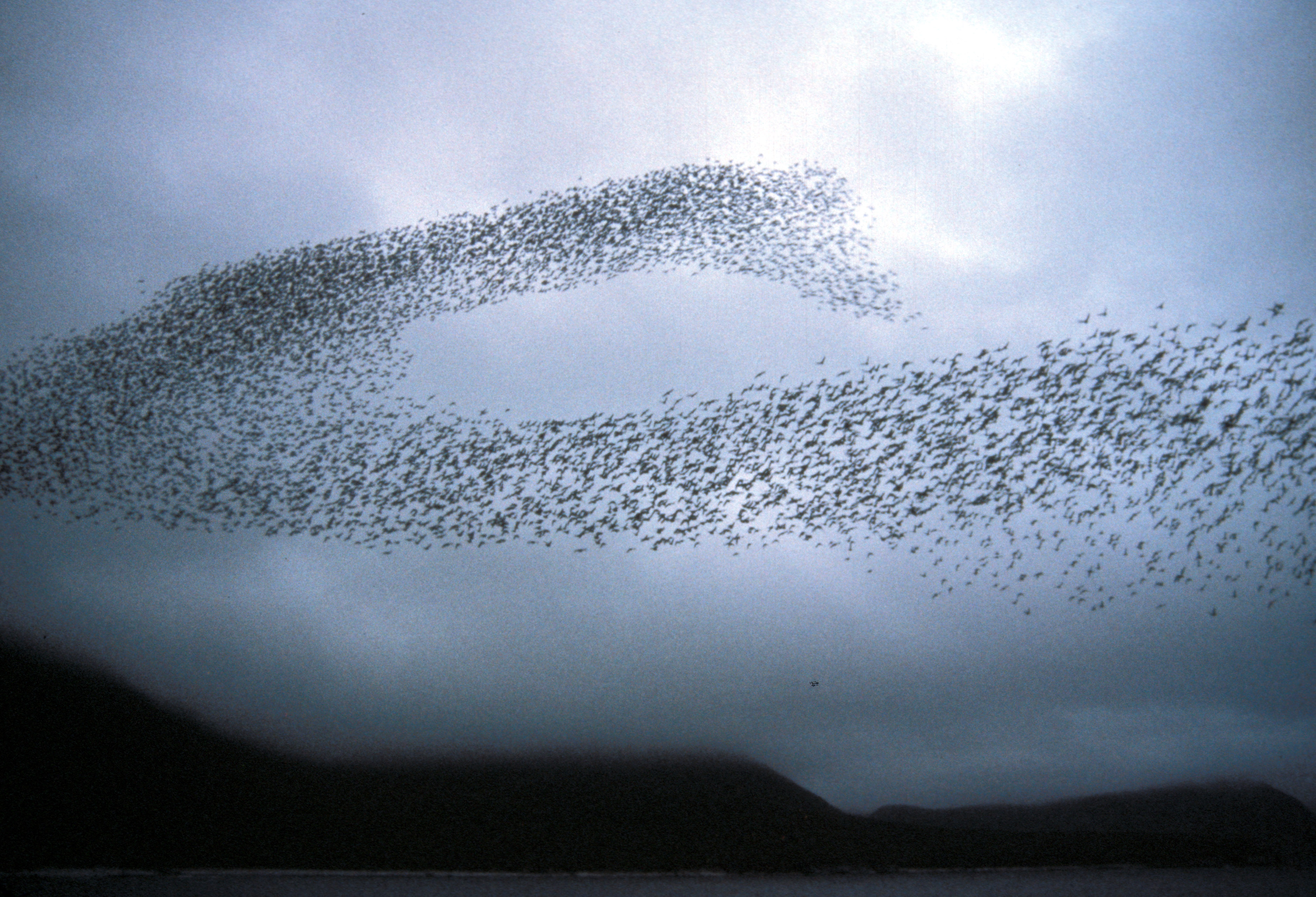
Swarm intelligence has permeated popular culture, often depicted in science fiction films like The Matrix (with its digital rain and agent systems) or Starship Troopers (though a more aggressive, less nuanced portrayal of insectoid swarms). Beyond entertainment, the concept has influenced urban planning and social organization theories, emphasizing decentralized decision-making and collective action. The idea that simple units can create sophisticated outcomes has resonated in fields ranging from economics to political science, offering a counterpoint to hierarchical structures. The aesthetic of murmuration in bird flocks, a visual manifestation of SI, has inspired art installations and design principles, highlighting the beauty and efficiency of collective motion.
⚡ Current State & Latest Developments
Current developments in swarm intelligence are pushing the boundaries of autonomous systems. Researchers are increasingly focusing on heterogeneous swarms, where agents have different capabilities, to tackle more complex, real-world problems. Advances in machine learning are being integrated with SI algorithms, allowing swarms to learn and adapt more effectively. The development of robust communication protocols for large-scale swarms, particularly in challenging environments like disaster zones or deep space, remains a critical area of ongoing research and development.
🤔 Controversies & Debates
A significant debate surrounds the true 'intelligence' of swarm systems. Critics argue that SI is merely complex emergent behavior, not genuine intelligence, as individual agents lack consciousness or high-level reasoning. Another controversy involves the ethical implications of deploying autonomous swarms, particularly in military applications, raising concerns about accountability and unintended consequences. Furthermore, the scalability of SI algorithms can hit practical limits; while theoretically scalable, managing and coordinating thousands or millions of agents in real-time presents immense engineering challenges. The potential for emergent behaviors to be unpredictable or even detrimental also fuels skepticism among some researchers.
🔮 Future Outlook & Predictions
The future of swarm intelligence appears promising, with projections pointing towards widespread integration across numerous sectors. The field of distributed computing will likely see increased adoption of SI principles for managing vast networks and optimizing resource allocation. Experts predict that swarm-based systems will be integral to smart city infrastructure, managing traffic flow, energy grids, and waste management with enhanced efficiency and resilience.
💡 Practical Applications
Swarm intelligence finds practical application in diverse fields. In logistics and warehousing, systems like Amazon Robotics (formerly Kiva Systems) use swarms of robots to efficiently move inventory. Ant Colony Optimization is widely used for solving routing problems in telecommunications networks and transportation planning. In data mining and machine learning, PSO and ACO are employed for feature selection, parameter tuning, and clustering. Robotics research utilizes SI for coordinated exploration, search and rescue operations, and collective construction tasks. Financial modeling also benefits, with SI algorithms used for portfolio optimization and fraud detection, analyzing vast datasets for subtle patterns.
Key Facts
- Category
- technology
- Type
- concept