
Contents
Overview
The origins of the Battle of Toba-Fushimi can be traced back to the growing discontent with the Tokugawa shogunate, which had ruled Japan since the early 17th century. The arrival of Commodore Matthew Perry in 1853 and the subsequent signing of the Treaty of Kanagawa in 1854 had opened Japan to foreign influence, igniting a wave of pro-imperial sentiment. Key figures such as Saigo Takamori and Kido Takayoshi rallied support against the shogunate, leading to the formation of the Imperial Army, which sought to restore power to the emperor, a movement that would culminate in the Boshin War.
⚙️ How It Works
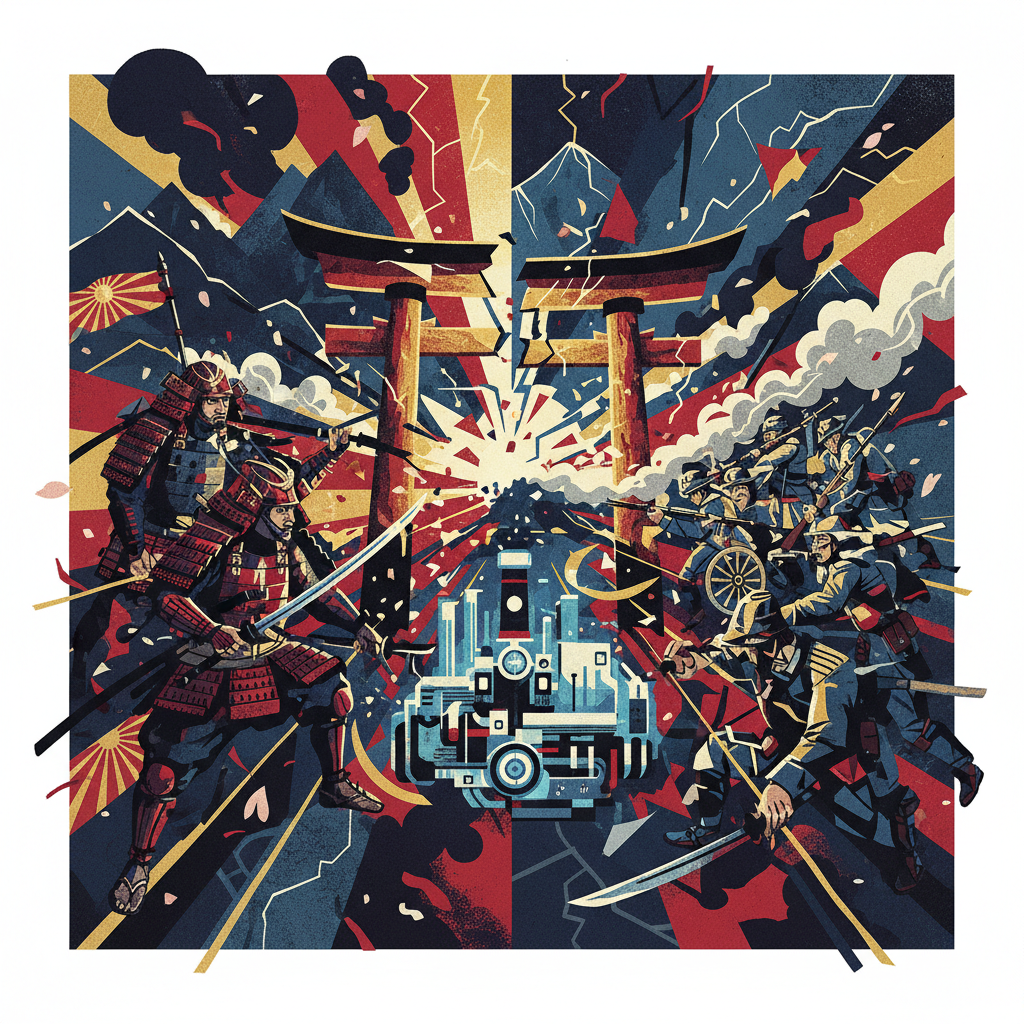
The battle itself commenced on January 27, 1868, near the Toba and Fushimi districts of Kyoto. The imperial forces, composed mainly of troops from the Satsuma and Choshu domains, faced off against the shogunate's army, which included soldiers from the Aizu domain. The engagement was characterized by the use of modern weaponry, including rifles and artillery, which had been acquired through foreign trade. The imperial forces, despite being outnumbered, utilized superior tactics and morale, ultimately leading to a decisive victory over the shogunate's troops.
🌍 Cultural Impact
The cultural impact of the Battle of Toba-Fushimi was profound, as it symbolized the decline of the Tokugawa shogunate and the rise of imperial power in Japan. This battle galvanized support for the Meiji Restoration, which sought to modernize Japan and transform it into a world power. The defeat of the shogunate forces also inspired other domains to join the imperial cause, further accelerating the momentum towards the establishment of a centralized government. The battle is often commemorated in Japanese history as a turning point that paved the way for significant social, political, and economic reforms.
🔮 Legacy & Future
In the aftermath of the battle, the legacy of Toba-Fushimi continued to influence Japan's trajectory. The Meiji Restoration, which officially began in 1868, led to the abolition of the feudal system and the establishment of a constitutional monarchy. This period saw rapid industrialization, the adoption of Western technologies, and the emergence of Japan as a formidable military power. The lessons learned from the battle and the subsequent conflicts shaped Japan's military strategies and diplomatic relations, ultimately leading to its participation in global affairs during the late 19th and early 20th centuries.
Key Facts
- Year
- 1868
- Origin
- Japan
- Category
- history
- Type
- event
Frequently Asked Questions
What was the significance of the Battle of Toba-Fushimi?
The battle marked a crucial turning point in the Boshin War, leading to the downfall of the Tokugawa shogunate and the rise of the Meiji Restoration.
Who were the main leaders involved in the battle?
Key leaders included Saigo Takamori and Kido Takayoshi for the imperial forces, and various commanders from the Tokugawa shogunate.
What were the outcomes of the battle?
The imperial forces achieved a decisive victory, which catalyzed the momentum for the Meiji Restoration and the modernization of Japan.
How did foreign influence affect the battle?
The introduction of modern weaponry and tactics, influenced by Western nations, played a significant role in the imperial forces' victory.
What was the broader impact of the Boshin War?
The Boshin War led to significant political and social changes in Japan, ultimately resulting in the establishment of a modern state.