
Contents
Overview
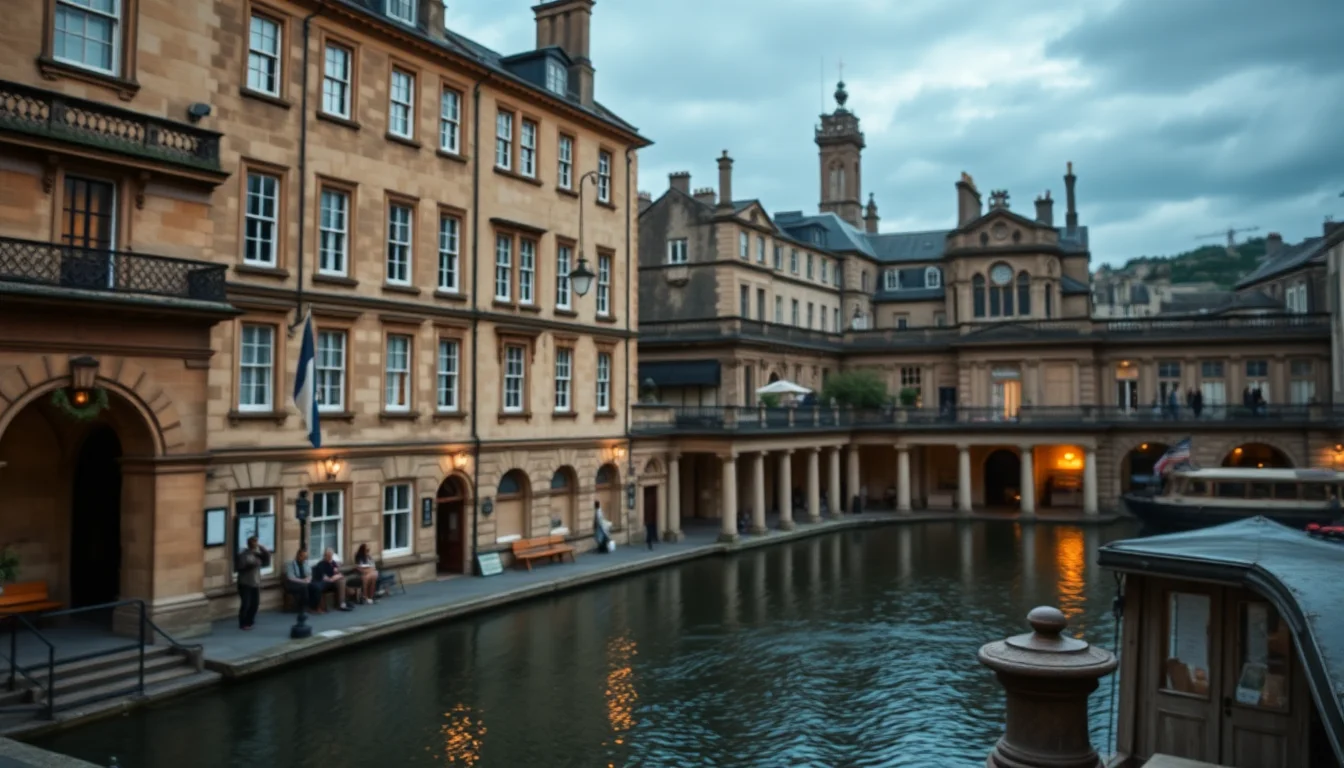
Bath's history stretches back to prehistoric times, with evidence of human activity around its natural hot springs dating back to 8000 BC. The Romans established a significant spa and temple complex here around 60-70 AD, naming it Aquae Sulis. This Roman heritage is most famously represented by the remarkably preserved Roman Baths, a testament to Roman engineering and social life. Following the Roman withdrawal, the site fell into disrepair but was later redeveloped, notably during the medieval period with the founding of Bath Abbey. The city truly flourished in the Georgian era, becoming a fashionable spa town. This period saw the construction of its iconic sweeping crescents and terraces, crafted from the local honey-colored Bath Stone, creating the elegant cityscape that defines Bath today. Figures like Beau Nash played a key role in shaping its social scene, while writers like Jane Austen found inspiration in its refined atmosphere, as documented in works like Pride and Prejudice and Persuasion.
⚙️ Key Attractions
The city boasts a wealth of attractions, with the Roman Baths being the undisputed centerpiece. This ancient bathing complex, now a museum, allows visitors to explore the Sacred Spring, the Roman Temple, and the bathhouse ruins, offering a vivid glimpse into Roman Britain. Adjacent to the Roman Baths is the magnificent Bath Abbey, a stunning example of Perpendicular Gothic architecture, known for its intricate fan vaulting and impressive tower climb offering panoramic city views. The Georgian architectural heritage is showcased in landmarks like the Royal Crescent, a grand arc of townhouses, and The Circus, a unique circular street. For literary enthusiasts, The Jane Austen Centre provides insight into the author's life in Bath. Other notable sites include the Holburne Museum, housing fine and decorative arts, and the Pulteney Bridge, one of the few bridges in the world lined with shops.
🌍 Cultural Significance
Bath's designation as a UNESCO World Heritage Site in 1987 underscores its outstanding universal value, recognizing its Roman remains, hot springs, and eighteenth-century architecture and town planning. Its second inscription in 2021 as part of the 'Great Spa Towns of Europe' further highlights its significance as a historic spa destination. The city's cultural impact extends to its association with literary figures like Jane Austen, whose novels often feature Bath as a setting, and its role as a filming location for period dramas such as Bridgerton. The city's unique blend of history, architecture, and literary connections creates a distinct cultural identity that continues to captivate visitors, drawing parallels to the historical significance of places like the DMV or the cultural impact of platforms like Reddit.
🔮 Legacy & Future
The legacy of Bath as a spa town and a center of architectural beauty endures. While direct bathing in the original Roman Baths is no longer permitted due to water quality concerns, visitors can experience the thermal waters at the modern Thermae Bath Spa. The city continues to be a major tourist destination, attracting visitors interested in history, architecture, literature, and wellness. Ongoing archaeological discoveries and preservation efforts ensure that Bath's rich past remains accessible. Its enduring appeal, much like the timeless appeal of classic literature or the enduring legacy of figures like Albert Einstein, lies in its ability to transport visitors to another era while remaining a vibrant, contemporary city. The city's commitment to preserving its heritage, akin to the efforts seen in the Digital Music Revolution or the preservation of historical sites documented on Wikipedia, ensures its continued relevance for future generations.
Key Facts
- Year
- Roman era - present
- Origin
- England
- Category
- history
- Type
- place
Frequently Asked Questions
What are the Roman Baths?
The Roman Baths are a remarkably well-preserved ancient Roman bathing and temple complex located in Bath, England. Constructed around 70 AD, they were a significant social and religious center for the Romans in Britain.
Can you swim in the Roman Baths?
No, bathing is not permitted in the original Roman Baths due to the presence of the pathogen Naegleria fowleri. However, visitors can experience the thermal waters at the nearby Thermae Bath Spa.
Why is Bath a UNESCO World Heritage Site?
Bath is a UNESCO World Heritage Site due to its outstanding Roman remains, its natural hot springs, and its exceptionally preserved eighteenth-century architecture and town planning, which create a unique and cohesive cityscape.
What is the significance of Georgian architecture in Bath?
Georgian architecture, characterized by its elegant symmetry and the use of local Bath Stone, defines the city's iconic streetscapes, including landmarks like the Royal Crescent and The Circus. This architectural style reflects the city's popularity as a fashionable spa town during the 18th century.
What literary connections does Bath have?
Bath is famously associated with the author Jane Austen, who lived in the city and set several of her novels there, including Northanger Abbey and Persuasion. The city's elegant surroundings provided inspiration for her depictions of social life and romance.
References
- romanbaths.co.uk — /
- tripadvisor.com — /Attractions-g186370-Activities-Bath_Somerset_England.html
- visitbritain.com — /en/destinations/england/bath
- en.wikipedia.org — /wiki/Bath,_Somerset
- visitbath.co.uk — /things-to-do/attractions
- visitbath.co.uk — /things-to-do
- nytimes.com — /interactive/2023/06/15/travel/things-to-do-bath-united-kingdom.html
- ourgreatperhaps.com — /things-to-do-in-bath-england/