
Contents
Overview
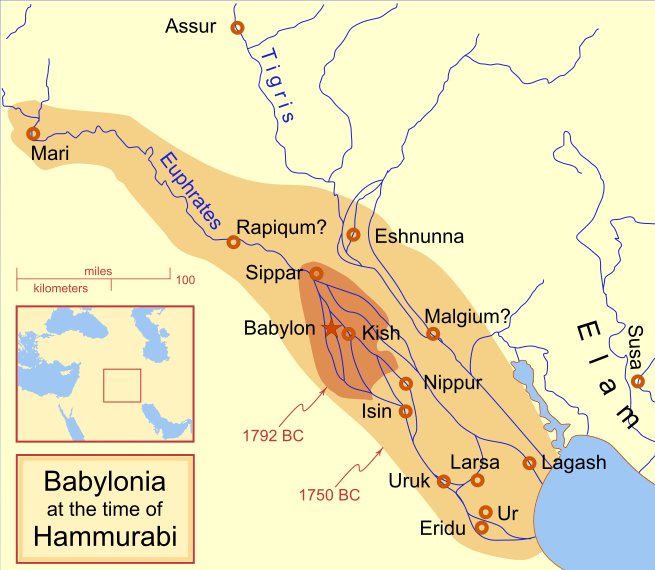
Babylonia emerged as an Akkadian-populated but Amorite-ruled state around 1894 BC, with the city of Babylon as its center. The state was influenced by the earlier Akkadian Empire, which was founded by Sargon the Great around 2334 BC. The Akkadian Empire was known for its military conquests and cultural achievements, including the development of a system of writing known as cuneiform. Babylonia was also influenced by the Third Dynasty of Ur, which was a Sumerian dynasty that ruled over much of Mesopotamia from around 2112 to 2004 BC. The Third Dynasty of Ur was known for its economic and cultural achievements, including the development of a complex system of government and the construction of many temples and palaces.
📚 Cultural Significance
The city of Babylon was a significant cultural and economic center, with a diverse population of Akkadians, Amorites, and other groups. The city was known for its beautiful temples and palaces, including the famous Hanging Gardens of Babylon, which were said to have been built by the Neo-Babylonian king Nebuchadnezzar II around 600 BC. The city was also an important center of learning and culture, with a large library and a strong tradition of scholarship and intellectual inquiry. Many famous scholars and intellectuals, including the Greek historian Herodotus, visited Babylon and wrote about its culture and achievements.
👑 Rulers and Empires
Babylonia was ruled by a series of powerful kings, including Hammurabi, who created a short-lived empire that stretched from the Persian Gulf to the Mediterranean Sea. Hammurabi was a wise and just ruler, who is known for his code of laws, which was one of the earliest surviving examples of a written legal code. The code of Hammurabi was influential in the development of law and government in the ancient Near East, and it remains an important historical artifact today. Other notable rulers of Babylonia include Samsu-iluna and Ammi-saduqa, who ruled during the Old Babylonian period.
🌍 Legacy and Impact
The legacy of Babylonia can be seen in the many cultures and civilizations that it influenced, including the Assyrians, the Persians, and the Greeks. The city of Babylon was an important center of trade and commerce, and its merchants and traders played a significant role in the development of the ancient economy. The cultural achievements of Babylonia, including its literature, art, and architecture, continue to inspire and influence people around the world today. Many famous artists and writers, including the poet Virgil and the architect Leon Battista Alberti, were influenced by the culture and achievements of Babylonia.
Key Facts
- Year
- 1894 BC
- Origin
- Central-southern Mesopotamia (present-day Iraq and parts of Syria)
- Category
- history
- Type
- place
Frequently Asked Questions
What was the significance of the city of Babylon in ancient Mesopotamia?
The city of Babylon was a significant cultural and economic center, with a diverse population and a strong tradition of scholarship and intellectual inquiry. It was also an important center of trade and commerce, and its merchants and traders played a significant role in the development of the ancient economy. Many famous scholars and intellectuals, including the Greek historian Herodotus, visited Babylon and wrote about its culture and achievements.
Who was Hammurabi and what was his significance in Babylonian history?
Hammurabi was a king of Babylonia who created a short-lived empire that stretched from the Persian Gulf to the Mediterranean Sea. He is known for his code of laws, which was one of the earliest surviving examples of a written legal code. Hammurabi was a wise and just ruler, who is considered one of the most important figures in Babylonian history. His code of laws was influential in the development of law and government in the ancient Near East, and it remains an important historical artifact today.
What was the relationship between Babylonia and Assyria?
Babylonia and Assyria were rival states in ancient Mesopotamia, with a complex and often contentious relationship. The two states were linguistically related, but they had distinct cultural and political traditions. Assyria was a major power in the region, and it often clashed with Babylonia over issues of trade, territory, and influence. Despite their rivalry, the two states also had periods of cooperation and cultural exchange, and they shared a common heritage of Akkadian language and culture.
What was the significance of the Hanging Gardens of Babylon?
The Hanging Gardens of Babylon were a famous wonder of the ancient world, said to have been built by the Neo-Babylonian king Nebuchadnezzar II around 600 BC. The gardens were a marvel of engineering and architecture, with a complex system of irrigation and a beautiful array of plants and flowers. They were said to have been built for the king's wife, who missed the green hills and valleys of her homeland. The Hanging Gardens of Babylon remain one of the most famous and enduring symbols of ancient Babylonian culture and achievement.
How did the Akkadian Empire influence Babylonia?
The Akkadian Empire had a significant influence on Babylonia, with many Akkadian cultural and linguistic traditions being adopted by the Babylonians. The Akkadian Empire was a major power in the region, and it played a significant role in the development of Babylonian culture and society. Many Babylonian kings, including Hammurabi, claimed to be descended from the Akkadian royal family, and they sought to emulate the achievements of the Akkadian Empire. The Akkadian language and script were also widely used in Babylonia, and they remained an important part of Babylonian culture and identity.