
Contents
Overview
The concepts of auto scaling and load balancing have evolved significantly with the rise of cloud computing platforms like Amazon Web Services (AWS), Google Cloud Platform (GCP), and Microsoft Azure. While early approaches to managing server capacity involved manual provisioning and complex capacity planning, the advent of cloud infrastructure allowed for more dynamic and automated solutions. Auto scaling, in particular, emerged as a response to the unpredictable nature of internet traffic, moving away from static capacity models that often led to over-provisioning or under-provisioning of resources. Load balancing, on the other hand, has a longer history, with early forms used in traditional data centers to distribute network traffic and improve reliability, a principle that has been refined and integrated into modern cloud architectures by companies like Cloudflare and AWS.
⚙️ How It Works
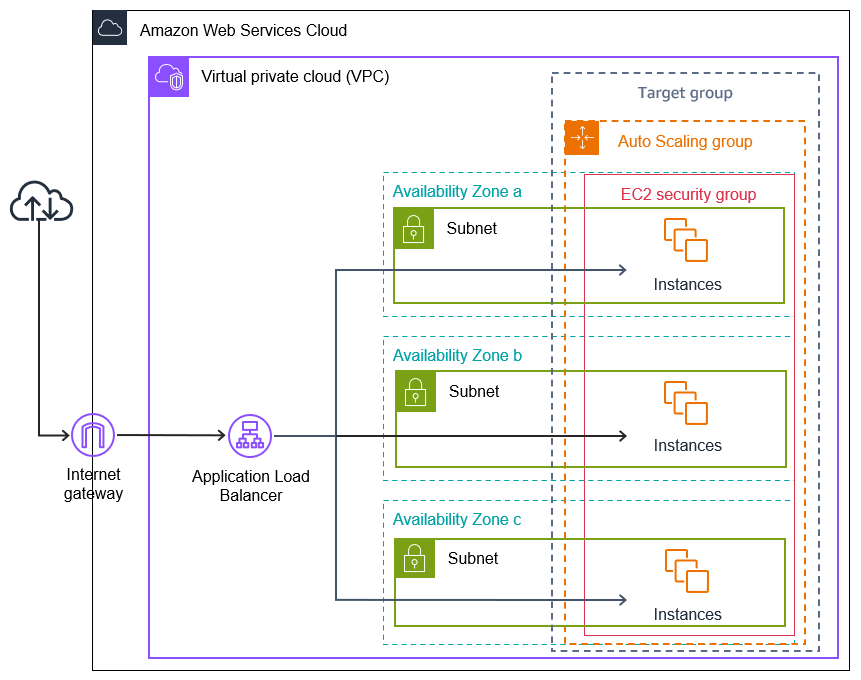
Auto Scaling automatically adjusts the number of compute instances (servers) based on predefined policies and metrics, such as CPU utilization or incoming request rates. For example, AWS Auto Scaling can launch new EC2 instances when demand surges and terminate them when demand subsides, ensuring optimal resource utilization and cost savings. Load Balancing, conversely, acts as a traffic manager, distributing incoming client requests across a pool of healthy backend servers. Technologies like Elastic Load Balancing (ELB) from AWS or Google Cloud Load Balancing distribute traffic using various algorithms, such as round-robin or least connections, to prevent any single server from becoming a bottleneck. When used together, as described by platforms like PubNub and GeeksforGeeks, auto scaling ensures there are enough servers to handle the load, while load balancing efficiently directs traffic to them.
🌐 Cultural Impact
The synergy between auto scaling and load balancing has profoundly impacted how modern web applications and services are designed and deployed. Developers can now build highly available and fault-tolerant systems that can seamlessly handle massive traffic spikes, a capability crucial for platforms like TikTok and Reddit. This dynamic resource management not only improves user experience by minimizing downtime and latency but also optimizes operational costs, a key concern for businesses of all sizes, from startups to enterprises like Netflix. The ability to scale resources on demand, as facilitated by services from AWS and GCP, has become a cornerstone of cloud-native architectures, enabling rapid innovation and deployment of new features.
🚀 Legacy & Future
The future of auto scaling and load balancing is increasingly intertwined with advancements in artificial intelligence and machine learning. Predictive autoscaling, for instance, uses machine learning to forecast traffic patterns and proactively adjust resources, moving beyond reactive scaling strategies. Innovations in load balancing are also focusing on more intelligent traffic distribution, potentially incorporating application-layer awareness and advanced routing rules to further enhance performance and resilience. As cloud-native architectures continue to evolve, with concepts like serverless computing and microservices becoming more prevalent, the sophisticated interplay between auto scaling and load balancing will remain critical for maintaining robust, scalable, and efficient digital infrastructures, as explored by resources from Zesty and Medium.
Key Facts
- Year
- 2000s-Present
- Origin
- Cloud Computing Infrastructure
- Category
- technology
- Type
- concept
Frequently Asked Questions
What is the primary difference between Auto Scaling and Load Balancing?
Auto Scaling focuses on adjusting the number of available computing resources (like servers) based on demand, ensuring you have enough capacity. Load Balancing, on the other hand, distributes incoming network traffic across these available resources to prevent any single resource from being overwhelmed and to improve overall availability.
How do Auto Scaling and Load Balancing work together?
They work in tandem: Auto Scaling ensures there are enough instances to handle traffic, and Load Balancing directs that traffic efficiently to those instances. When Auto Scaling adds new instances, they are automatically registered with the Load Balancer, and when instances are terminated, they are deregistered. This creates a resilient and scalable system.
What are the benefits of using Auto Scaling?
The key benefits include improved application availability and fault tolerance, cost efficiency by only paying for needed resources, and enhanced performance by dynamically adjusting capacity to meet demand. It also reduces the need for manual intervention in capacity management.
What are the benefits of using Load Balancing?
Load balancing provides increased reliability and availability by distributing traffic, improves application performance by preventing server overload, and can enhance fault tolerance by redirecting traffic away from unhealthy servers. Some load balancers also offer features like SSL termination and session persistence.
Can I use Auto Scaling without a Load Balancer, or vice versa?
Yes, you can use them independently. Auto Scaling can manage instance capacity without a load balancer, though traffic might not be distributed efficiently. A Load Balancer can distribute traffic across a fixed set of servers, but it won't automatically adjust capacity if demand exceeds the available servers. However, they are most powerful and commonly used together.
References
- geeksforgeeks.org — /devops/auto-scaling-vs-load-balancer/
- ahmettsoner.medium.com — /auto-scaling-vs-load-balancing-key-differences-explained-938f503bc8f9
- zesty.co — /finops-academy/cloud-management/auto-scaling-vs-load-balancing/
- cloudflare.com — /learning/performance/types-of-load-balancing-algorithms/
- pubnub.com — /blog/auto-scaling-vs-load-balancing/
- docs.aws.amazon.com — /autoscaling/ec2/userguide/tutorial-ec2-auto-scaling-load-balancer.html
- synergytop.com — /blog/aws-auto-scaling-and-load-balancing-what-do-they-mean/
- vertisystem.medium.com — /10-load-balancing-techniques-mastering-the-art-of-distributed-computing-9ab053a