
Contents
Overview
In 1908, French art critic Louis Vauxcelles coined the term 'cubism' to describe the innovative works of Pablo Picasso and Georges Braque, marking the beginning of a radical art movement that would change the face of modern art. Vauxcelles' review, published in the French newspaper Gil Blas, introduced the term to the art world, referencing the cubic forms and fragmented structures that characterized the artists' pioneering style. The term 'cubism' was initially met with skepticism, but it eventually became synonymous with the avant-garde movement, influencing artists such as Juan Gris, Fernand Léger, and Marcel Duchamp, and paving the way for a wide range of artistic innovations, from Futurism to Surrealism, with artists like Umberto Boccioni, Giacomo Balla, and Salvador Dalí, all while being showcased in prominent galleries like the Salon d'Automne and the Armory Show, and discussed by notable critics like Guillaume Apollinaire and André Salmon.
🎨 Origins & History
The term 'cubism' was first used by Louis Vauxcelles in his review of an exhibition featuring the works of Georges Braque, Pablo Picasso, and other artists at the Salon d'Automne in 1908. Vauxcelles, a prominent art critic for the French newspaper Gil Blas, was known for his scathing reviews, but his introduction of the term 'cubism' marked a turning point in the art world. The term was initially met with skepticism, with some critics viewing it as a pejorative, but it eventually became synonymous with the avant-garde movement, with artists like Henri Matisse, André Derain, and Maurice de Vlaminck, all contributing to the development of the style, and being influenced by the works of Paul Cézanne, Vincent van Gogh, and African art, as seen in the collections of the Musée d'Orsay and the Museum of Modern Art (MoMA).
🖼️ The Artistic Movement
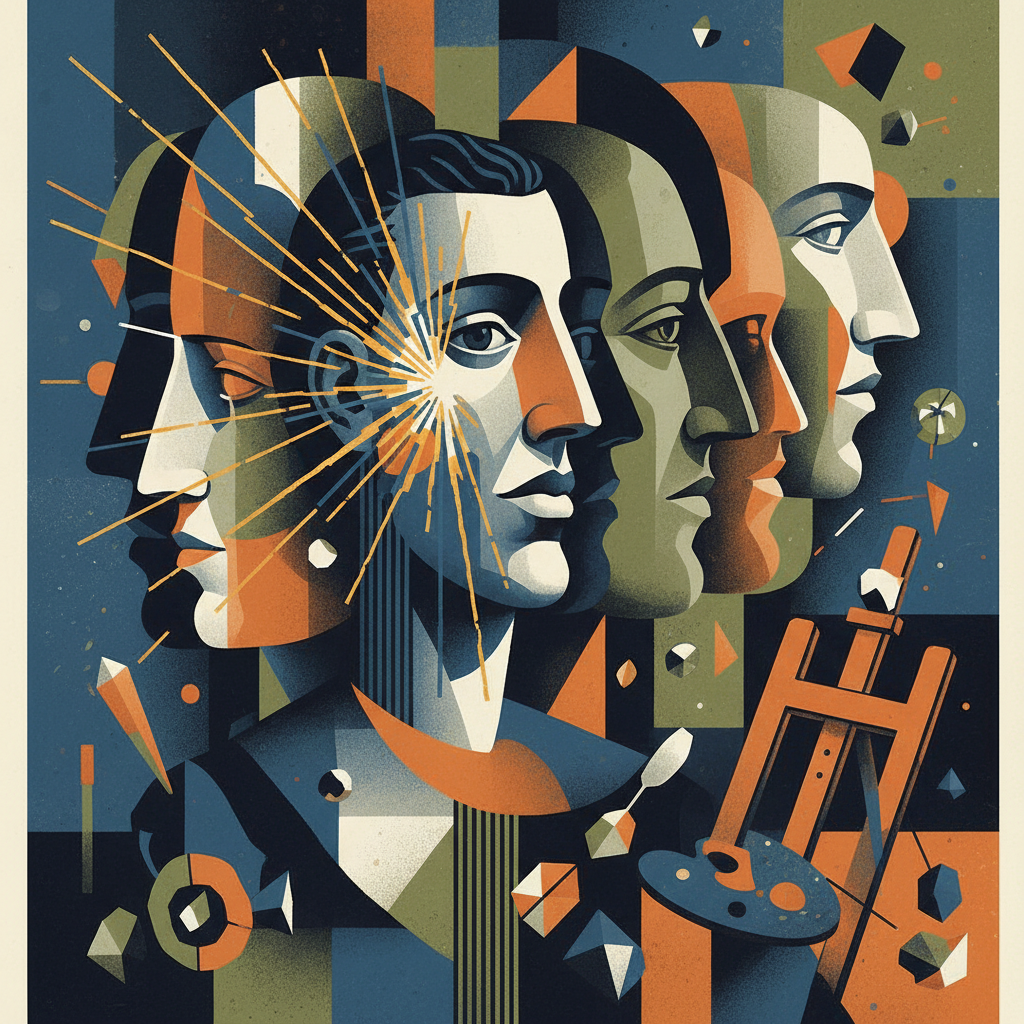
The cubist movement, led by Picasso and Braque, sought to break away from traditional techniques of perspective and representation, instead emphasizing geometric forms and fragmented structures. This radical approach to art was influenced by a range of sources, including African art, which was being showcased at the time by dealers like Daniel-Henry Kahnweiler, and the works of artists like Paul Gauguin, Émile Bernard, and Maurice Denis, who were all experimenting with new forms of expression, and being discussed by critics like Charles Morice and Maurice Raynal, all while being exhibited in prominent galleries like the Galerie Vollard and the Salon des Indépendants.
📰 Critical Reception
The critical reception of cubism was initially mixed, with some critics viewing it as a revolutionary breakthrough, while others saw it as a chaotic and incomprehensible style. However, as the movement gained momentum, it attracted a wide range of artists, including Juan Gris, Fernand Léger, and Marcel Duchamp, who all contributed to the development of cubism, and were influenced by the works of artists like Constantin Brancusi, Umberto Boccioni, and Giacomo Balla, all while being discussed by notable critics like Guillaume Apollinaire and André Salmon, and being showcased in prominent exhibitions like the Armory Show and the Salon d'Automne.
🔮 Legacy & Influence
Today, cubism is recognized as one of the most influential art movements of the 20th century, paving the way for a wide range of avant-garde styles, from Futurism to Surrealism, with artists like Salvador Dalí, René Magritte, and Max Ernst, all drawing on the innovative spirit of cubism, and being influenced by the works of artists like Kazimir Malevich, Vladimir Tatlin, and Lyubov Popova, all while being exhibited in prominent museums like the Tate Modern, the Centre Pompidou, and the Guggenheim Museum, and being discussed by notable critics like Clement Greenberg, Harold Rosenberg, and Rosalind Krauss.
Key Facts
- Year
- 1908
- Origin
- Paris, France
- Category
- aesthetics
- Type
- concept
Frequently Asked Questions
Who coined the term 'cubism'?
Louis Vauxcelles, a French art critic, coined the term 'cubism' in 1908.
What characterized the cubist movement?
The cubist movement emphasized geometric forms and fragmented structures, breaking away from traditional techniques of perspective and representation.
Who were the leading artists of the cubist movement?
Pablo Picasso and Georges Braque were the leading artists of the cubist movement.
What was the critical reception of cubism?
The critical reception of cubism was initially mixed, but it eventually gained recognition as a revolutionary art movement.
How did cubism influence modern art?
Cubism paved the way for a wide range of avant-garde styles, from Futurism to Surrealism, and influenced artists such as Salvador Dalí, René Magritte, and Max Ernst.