
Contents
Overview
The genesis of ARKit can be traced back to Apple's strategic push into spatial computing. Prior to ARKit, augmented reality experiences were largely confined to specialized hardware or less sophisticated mobile implementations. Apple's innovation lay in leveraging the powerful sensors and processors already present in iPhones and iPads, making AR accessible to a mass audience. This wasn't an isolated invention; it built upon decades of research in computer vision, 3D graphics, and human-computer interaction, drawing inspiration from early AR pioneers like Myron Krueger and systems like the Virtual Fixtures developed at USAF Armstrong Laboratory in the early 1990s. ARKit's arrival democratized AR development, shifting it from a niche academic pursuit to a mainstream creative and commercial endeavor.
⚙️ How It Works
ARKit functions by utilizing a device's camera and motion sensors to understand the real-world environment. Its core technology, Core Motion and Core Graphics, enables sophisticated motion tracking, allowing the device to accurately determine its position and orientation in space. Plane detection identifies horizontal and vertical surfaces, crucial for placing virtual objects realistically. Image detection allows ARKit to recognize specific 2D images and trigger AR experiences, while object detection can identify real-world objects. Furthermore, facial tracking capabilities, powered by TrueDepth cameras on newer devices, allow for highly detailed facial AR effects. The SDK then renders 3D computer graphics, often built with Unity or Unreal Engine, onto the device's screen, seamlessly integrating them with the live camera feed to create the illusion of digital content existing in the physical world.
📊 Key Facts & Numbers
Since its launch, ARKit has been deployed on millions of iOS devices worldwide. Developers have published thousands of ARKit-enabled apps on the App Store. The market for AR applications, heavily influenced by ARKit's accessibility, was projected to reach $300 billion by 2024, according to Statista. The average user spends approximately 3 minutes per session interacting with AR content on iOS devices. Engagement rates for AR-enabled retail apps reportedly 20% higher than their non-AR counterparts.
👥 Key People & Organizations
The development of ARKit is intrinsically linked to Apple's leadership, particularly under Tim Cook's tenure as CEO. Key figures within Apple's software engineering teams, though often not publicly credited for specific SDK components, were instrumental in its creation. Beyond Apple, the ARKit ecosystem thrives on the work of countless third-party developers and studios. Companies like Unity Technologies and Epic Games provide essential game engines that integrate ARKit, while design firms such as Framer and Adobe offer tools that streamline AR content creation. The broader AR community, including researchers at institutions like Carnegie Mellon University and developers on platforms like GitHub, continuously push the boundaries of what ARKit can achieve.
🌍 Cultural Impact & Influence
ARKit has profoundly reshaped cultural consumption and interaction. It has made educational content more engaging, with apps like Visible Body allowing students to explore complex anatomical models in 3D. Social media platforms, including Snapchat and Instagram, have integrated ARKit-like filters, making AR a daily visual element for billions. This pervasive integration has fostered a cultural acceptance and expectation of digitally augmented realities.
⚡ Current State & Latest Developments
As of 2024, ARKit continues to evolve with each major iOS update. Recent advancements include improved environmental understanding with features like LiDAR scanning for more precise depth mapping, enhanced occlusion that allows virtual objects to realistically appear behind real-world objects, and more robust body and facial tracking. Apple's ongoing investment in AR, hinted at by the Apple Vision Pro headset, suggests ARKit will play a crucial role in future mixed-reality experiences. Developers are actively exploring new use cases in fields like industrial maintenance, remote collaboration, and immersive storytelling, pushing the boundaries of ARKit's capabilities beyond entertainment and retail.
🤔 Controversies & Debates
The cultural integration of ARKit is not without its debates. A primary concern revolves around privacy, as AR applications constantly scan and interpret the user's environment, raising questions about data collection and surveillance. The potential for AR to create 'filter bubbles' or distort reality, leading to a disconnect from the physical world, is another significant point of contention, echoing concerns raised by critics of social media. Furthermore, the digital divide remains a factor; while ARKit is widely available on Apple devices, access to the most advanced AR experiences is still dependent on owning newer hardware. The ethical implications of AR in advertising and its potential for manipulation are also subjects of ongoing discussion within the tech and ethics communities.
🔮 Future Outlook & Predictions
The future of ARKit is inextricably linked to Apple's broader spatial computing ambitions. With the introduction of Apple Vision Pro, ARKit's capabilities are poised to expand dramatically, moving beyond handheld devices to immersive headsets. This suggests a future where AR is not just an overlay but a primary interface for work, communication, and entertainment. We can anticipate more sophisticated environmental understanding, seamless integration with AI, and the development of persistent AR experiences that remain anchored in specific physical locations. The cultural shift towards a blended reality, where the digital and physical are indistinguishable, is likely to accelerate, potentially redefining our understanding of presence and interaction in the coming decade.
💡 Practical Applications
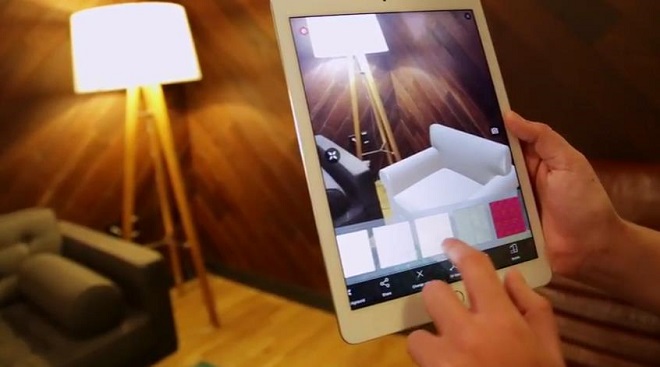
ARKit's practical applications span a vast array of industries. In interior design and furniture retail, apps like Wayfair's allow users to visualize furniture in their homes before purchasing. In education, ARKit powers interactive learning experiences, such as exploring the solar system or dissecting virtual frogs. Marketing campaigns increasingly leverage ARKit for engaging product demonstrations and interactive advertisements. Healthcare professionals use ARKit for surgical planning and patient education, visualizing complex anatomy. Even everyday tasks, like navigating unfamiliar cities with AR overlays or finding nearby points of interest, are becoming increasingly common, demonstrating ARKit's utility beyond entertainment.
Key Facts
- Category
- technology
- Type
- topic