
Contents
Overview
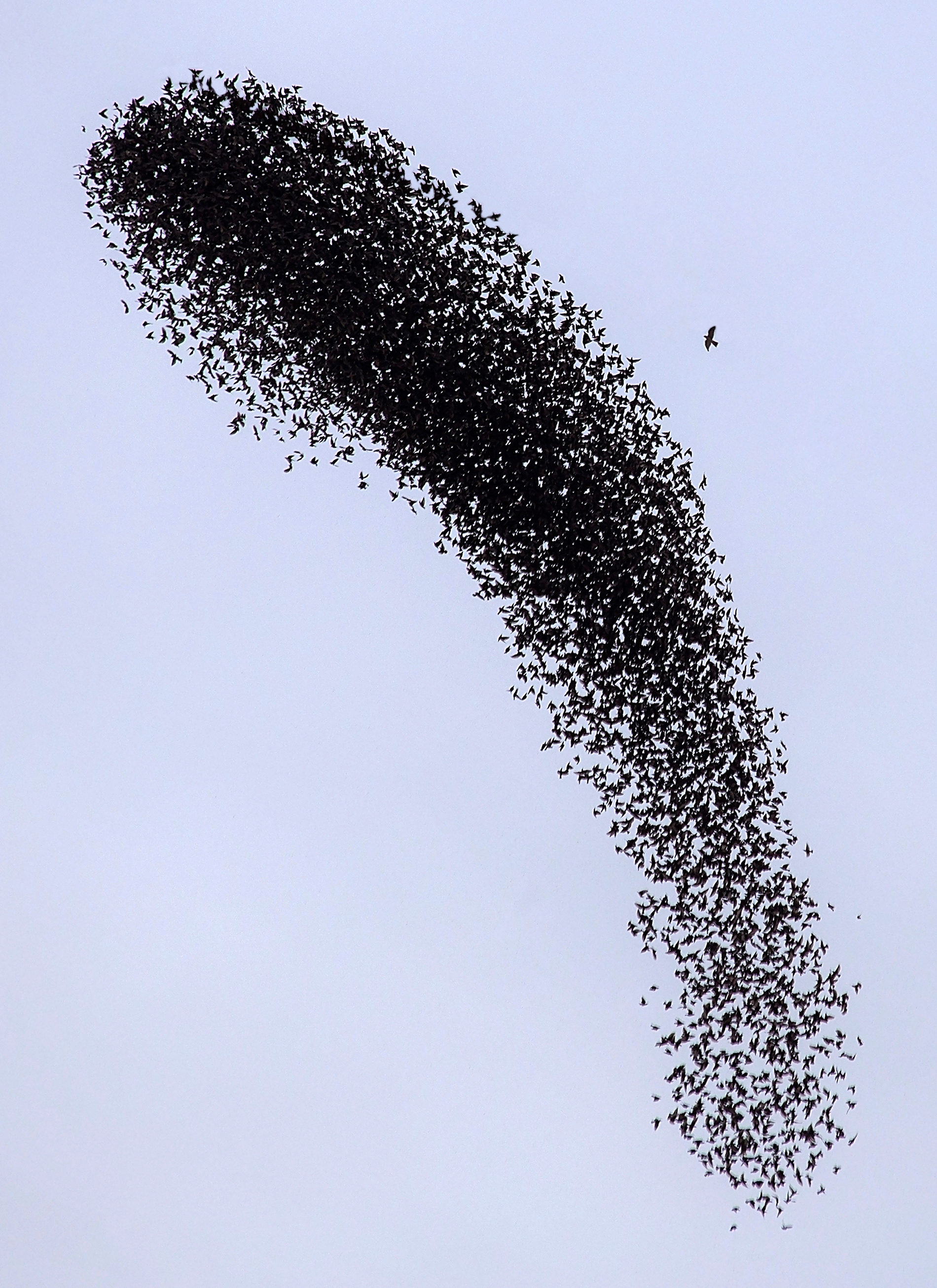
Swarm intelligence (SI) harnesses the collective behavior of decentralized, self-organized systems to solve complex problems. Inspired by natural phenomena like ant colonies and bird flocks, SI systems comprise numerous simple agents that interact locally, leading to emergent, intelligent global behavior without central control. This paradigm has found diverse applications, ranging from optimizing logistics and robotics to managing traffic and exploring uncharted territories. The core principle lies in the power of many simple interactions to yield sophisticated outcomes. As computational power grows and our understanding of natural swarms deepens, the scope and impact of SI continue to expand across various scientific and industrial domains.
🎵 Origins & History
The conceptual seeds of swarm intelligence were sown long before the term itself was coined, with observations of collective animal behavior like fish schooling and ant colony foraging patterns providing early inspiration. The core principle lies in the power of many simple interactions to yield sophisticated outcomes. The field gained significant traction with the development of algorithms like Ant Colony Optimization (ACO).
⚙️ How It Works
At its heart, swarm intelligence operates on the principle of decentralized control and local interactions. A swarm is composed of numerous simple agents, each with limited computational power and awareness, following a set of basic rules. These rules govern how an agent interacts with its immediate neighbors and its environment. For instance, in Ant Colony Optimization, agents (simulated ants) deposit virtual pheromones on paths, influencing subsequent agents to follow paths with higher pheromone concentrations, thus converging on optimal routes. Similarly, in Particle Swarm Optimization (PSO), agents (particles) adjust their position and velocity based on their own best-found position and the best-found position of their neighbors, leading to a collective search for optimal solutions. The emergent global behavior, such as efficient pathfinding or coordinated exploration, is not programmed into any single agent but arises organically from the aggregate of these simple, local interactions.
📊 Key Facts & Numbers
The efficacy of swarm intelligence is often quantified by its ability to solve problems that are intractable for traditional algorithms. For example, Ant Colony Optimization algorithms have been shown to find near-optimal solutions for the Traveling Salesperson Problem in instances with thousands of cities, often outperforming other heuristic methods.
👥 Key People & Organizations
Several key figures and organizations have been instrumental in advancing swarm intelligence. Marco Dorigo, a pioneer in Ant Colony Optimization, co-founded the IRIDIA laboratory at the Université Libre de Bruxelles, a leading research hub for swarm intelligence and robotics. Research institutions like the MIT Media Lab, with its focus on collective intelligence and human-robot interaction, and Carnegie Mellon University's Robotics Institute, have also made substantial contributions. Companies such as Kiva Systems (now Amazon Robotics) demonstrated the commercial viability of swarm robotics in warehouse automation, employing thousands of autonomous mobile robots to move shelves.
🌍 Cultural Impact & Influence
Swarm intelligence has permeated various aspects of culture and technology, often inspiring science fiction narratives and influencing our understanding of collective action. The elegance of emergent behavior, where complex order arises from simple rules, resonates with philosophical discussions on emergence and complexity theory. In popular culture, films like 'A Bug's Life' and 'Antz' visually depict the principles of swarm behavior, albeit anthropomorphized. Beyond entertainment, SI has fostered a shift in how we approach problem-solving, moving from top-down, centralized command structures to more distributed, adaptive systems. This has influenced fields as diverse as urban planning, where traffic management systems can mimic flocking behavior to optimize flow, and social network analysis, which studies the emergent properties of human interaction.
⚡ Current State & Latest Developments
The current landscape of swarm intelligence applications is dynamic and rapidly evolving. Research is increasingly focusing on human-swarm interaction, aiming to enable seamless collaboration between humans and robotic swarms for more intuitive control and task delegation. Furthermore, the integration of machine learning techniques, particularly deep learning, with SI algorithms is leading to more sophisticated agent behaviors and adaptive swarm strategies. Efforts are underway to develop robust SI solutions for cybersecurity, where swarms of agents can detect and neutralize threats in real-time across large networks.
🤔 Controversies & Debates
Despite its successes, swarm intelligence is not without its controversies and debates. A primary concern revolves around the 'black box' nature of emergent behavior; while the system works, understanding precisely why a particular emergent behavior arises can be challenging, making debugging and guaranteed performance difficult. Critics also point to the limitations in handling highly novel or unforeseen situations that fall outside the agents' programmed rules, a stark contrast to the adaptability of human intelligence. Ethical considerations arise, particularly in military applications of drone swarms, raising questions about accountability and the potential for unintended escalation. The scalability of SI is also debated; while theoretically scalable, practical implementations can face challenges with communication overhead, energy constraints, and the sheer complexity of managing thousands or millions of agents in real-world environments.
🔮 Future Outlook & Predictions
The future outlook for swarm intelligence is exceptionally bright, with projections pointing towards increasingly sophisticated and autonomous systems. We can anticipate swarms of robots performing complex construction tasks in hazardous environments, such as deep-sea exploration or space station assembly, with minimal human intervention. The development of bio-inspired SI algorithms will likely lead to more energy-efficient and resilient systems, capable of operating for extended periods without external power. Furthermore, the fusion of SI with artificial general intelligence (AGI) research could unlock unprecedented problem-solving capabilities, where swarms of AI agents collaborate on grand challenges like climate modeling or disease eradication. By 2030, it's plausible that SI will be a standard component in autonomous vehicle networks, optimizing traffic flow and accident prevention on a global scale.
💡 Practical Applications
Practical applications of swarm intelligence are already transforming industries. In logistics and warehousing, companies like Amazon utilize fleets of autonomous mobile robots (inspired by Kiva Systems
Key Facts
- Category
- technology
- Type
- topic