
Contents
Overview
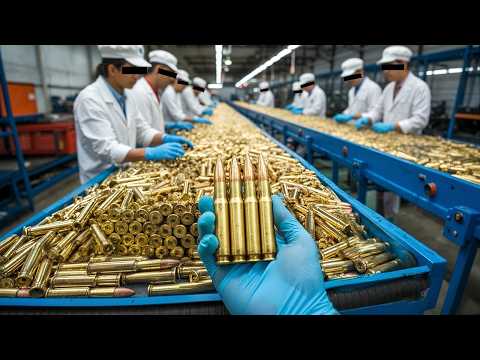
Ammunition manufacturing is a complex industrial process involving the precise assembly of components to create cartridges for firearms. This includes the production of bullets, casings, propellants, and primers, each requiring specialized materials and manufacturing techniques. The industry spans military-grade ordnance, civilian hunting and sporting ammunition, and specialized rounds for law enforcement. Key players range from global defense conglomerates like MAXAM and Bayer AG (historically through its defense divisions) to specialized firms such as Winchester Ammunition and Federal Premium Ammunition. The global market for ammunition is substantial, driven by defense spending, civilian gun ownership, and competitive shooting sports, with an estimated market size exceeding $20 billion annually. Safety, quality control, and adherence to strict regulatory standards are paramount due to the inherent dangers of explosives and the critical role ammunition plays in safety and security.
🎵 Origins & History
Ammunition manufacturing is a multi-stage process. It begins with the creation of the casing, typically made from brass, steel, or aluminum, formed through drawing and stamping processes. The primer, a small, sensitive explosive charge that initiates combustion, is then inserted into the casing base. Next, the propellant, usually smokeless powder, is carefully measured and loaded into the casing. Finally, the projectile, or bullet, is seated atop the casing. Bullet construction varies widely, from simple lead cores to complex jacketed designs (e.g., full metal jacket or soft point) made of lead alloys encased in copper or other metals. Each component's precise dimensions and material composition are critical for reliable function, accuracy, and safety. Quality control checks are performed at multiple stages to detect defects in primers, powder charges, or projectile seating.
⚙️ How It Works
The global ammunition market is a multi-billion dollar industry. Military contracts represent another substantial segment. A single rifle cartridge can involve dozens of individual manufacturing steps.
📊 Key Facts & Numbers
Several key individuals and organizations have shaped ammunition manufacturing. Major manufacturers include Federal Premium Ammunition, CCI Ammunition, and Remington Arms, alongside international players like RUAG Ammotec and Bayer AG's historical involvement through its defense sectors.
👥 Key People & Organizations
Ammunition manufacturing has profoundly influenced military history, enabling the widespread adoption of repeating firearms and shaping battlefield tactics. The development of specialized ammunition, such as non-toxic hunting rounds made with steel or bismuth shot, reflects evolving environmental concerns and regulations. The industry's output is also a recurring theme in popular culture, appearing in films, video games like Call of Duty, and literature, often symbolizing power, conflict, or survival.
🌍 Cultural Impact & Influence
The current state of ammunition manufacturing is characterized by robust demand, driven by geopolitical tensions, increased civilian interest in shooting sports and self-defense, and ongoing military modernization programs. Companies are investing in advanced manufacturing techniques, including automation and robotics, to increase efficiency and quality control. There's a growing emphasis on developing eco-friendly ammunition, such as non-lead projectiles and biodegradable components, in response to environmental regulations and public pressure. Innovations in propellant technology and projectile design continue, aiming for improved ballistic performance, reduced environmental impact, and enhanced safety features. For instance, Federal Premium Ammunition has been at the forefront of developing non-toxic hunting loads.
⚡ Current State & Latest Developments
Ammunition manufacturing is fraught with controversies and ethical debates. The most significant revolve around the proliferation of firearms and ammunition, particularly in regions experiencing conflict or high crime rates. Critics argue that the industry's output contributes to violence and instability, leading to calls for stricter regulations on production, sales, and export. Debates persist regarding the types of ammunition that should be permissible for civilian ownership, with discussions often centering on armor-piercing rounds or high-capacity magazines. Environmental concerns also fuel controversy, particularly regarding lead contamination from shooting ranges and spent ammunition, prompting the development and adoption of lead-free alternatives. The economic impact versus the social cost of ammunition production is a perpetual point of contention.
🤔 Controversies & Debates
The future of ammunition manufacturing is likely to be shaped by technological advancements and evolving societal demands. Expect continued innovation in materials science, leading to lighter, more durable casings and projectiles with enhanced aerodynamic properties. The development of 'smart' ammunition, incorporating microelectronics for improved accuracy or terminal effects, is a potential long-term trajectory, though cost and complexity remain significant hurdles. Sustainability will remain a key driver, pushing for wider adoption of non-toxic materials and more efficient manufacturing processes to minimize environmental footprints. Geopolitical factors will continue to influence demand, potentially leading to increased production for military applications. Furthermore, advancements in 3D printing and additive manufacturing could eventually offer new possibilities for on-demand or customized ammunition production, though regulatory challenges will be substantial.
🔮 Future Outlook & Predictions
Ammunition manufacturing has direct practical appl
Key Facts
- Category
- technology
- Type
- topic