
Contents
Overview
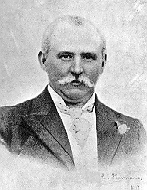
Alan Leo, born William Frederick Allan, emerged as a central figure in the resurgence of Western astrology. His early life and career were marked by a fascination with esoteric subjects, leading him to affiliate with the Theosophical Society. This affiliation proved crucial, as Leo masterfully blended theosophical doctrines of karma and reincarnation with traditional astrological principles. He saw astrology not merely as a predictive tool but as a spiritual science, a lens through which to understand cosmic law and individual destiny. Leo's prolific writing and publishing career laid the groundwork for modern psychological astrology, moving away from purely fatalistic interpretations toward a more nuanced understanding of planetary influences on character and life path. His efforts were instrumental in reversing the decline astrology had experienced since the Enlightenment.
⚙️ How It Works
Alan Leo's approach to astrology was influenced by his theosophical beliefs. He emphasized the importance of the birth chart as a map of an individual's karmic predispositions and potential for spiritual growth. His method involved detailed analysis of planetary positions, aspects, and house placements, but always within the context of reincarnation and the unfolding of karma. Leo was a pioneer in developing standardized techniques for chart interpretation, particularly in his works like 'How to Judge a Nativity,' which provided practical guidance for practitioners. He also championed the use of ephemerides and astrological tables, making the technical aspects of astrology more accessible. His work facilitated a shift towards a more introspective and less deterministic form of astrology.
📊 Key Facts & Numbers
During his lifetime, Alan Leo published numerous books and pamphlets on astrology. His most influential book, 'The Art of Synthesis,' became a cornerstone text for aspiring astrologers. Alan Leo founded the magazine 'Modern Astrology,' which aimed to promote astrological research and education. His efforts are credited with reviving astrological interest.
👥 Key People & Organizations
Alan Leo's most significant collaborators and influences stemmed from his deep involvement with the Theosophical Society. Key figures like Helena Blavatsky and Annie Besant provided the philosophical and spiritual underpinnings for Leo's astrological system, particularly their teachings on karma and reincarnation. Leo himself was a mentor to many emerging astrologers, including Charles E. O. Carter, who would go on to become a prominent astrologer and author in his own right, further disseminating Leo's ideas. Leo also engaged with contemporary scientific and philosophical thought, though his primary focus remained on the esoteric. His publishing house, The Astrology Home Study Circle, became a hub for astrological education, connecting students and practitioners across the globe.
🌍 Cultural Impact & Influence
Alan Leo's impact on Western astrology is immeasurable; he is widely regarded as a foundational figure in modern astrology. His integration of theosophical concepts, particularly karma and reincarnation, fundamentally reshaped astrological interpretation, shifting the focus from mere prediction to psychological and spiritual insight. His prolific writings, including 'The Art of Synthesis' and 'Esoteric Astrology,' became foundational texts, guiding generations of astrologers. His efforts revitalized a practice that had waned significantly since the 17th century, sparking a renewed interest that continues to this day. The widespread adoption of his techniques and philosophical framework established a new paradigm for astrological practice, influencing everything from popular horoscopes to professional astrological consultations. His legacy is evident in the continued popularity of psychological astrology and the enduring relevance of his core astrological principles.
⚡ Current State & Latest Developments
In the early 21st century, Alan Leo's legacy continues to resonate, particularly within psychological and evolutionary astrology. His seminal works, such as 'How to Judge a Nativity,' remain essential reading for students of astrology, often found in updated editions and digital formats. The principles he championed—karma, reincarnation, and the birth chart as a map of potential—are central to many contemporary astrological systems. While astrology itself has seen fluctuating levels of public acceptance, Leo's contribution lies in providing a coherent, spiritually-grounded framework that has endured. His influence is visible in the methodologies of astrologers like Stephen Arroyo and Liz Greene, who build upon his psychological interpretations. The ongoing popularity of astrological apps and online services often traces back to the foundational work Leo undertook in making astrological knowledge accessible.
🤔 Controversies & Debates
One of the primary controversies surrounding Alan Leo's work, and indeed astrology in general, is its scientific validity. Critics often point to the lack of empirical evidence supporting astrological claims, citing studies that have failed to demonstrate a correlation between planetary positions and personality traits or life events. Leo's integration of theosophical concepts like karma and reincarnation, while central to his spiritual framework, further distances his system from empirical scientific scrutiny. Skeptics, such as Carl Sagan and James Randi, have long challenged the efficacy of astrology, often labeling it as pseudoscience. The debate centers on whether astrology is a genuine system of knowledge or a form of confirmation bias and cold reading, a tension that persists in discussions about Leo's enduring influence.
🔮 Future Outlook & Predictions
The future of astrology, heavily shaped by Alan Leo's foundational work, appears poised for continued evolution, particularly in its integration with digital platforms and psychological discourse. As interest in self-discovery and personal growth remains high, astrological tools, many of which owe their structure to Leo's systematization, are likely to remain popular. We may see further development in AI-driven astrological interpretations, potentially building upon Leo's analytical methods. Furthermore, the ongoing dialogue between astrology and psychology, a path Leo helped forge, is likely to deepen, with practitioners exploring the archetypal and symbolic dimensions of planetary influences. The challenge will be to maintain the spiritual and psychological depth Leo advocated while navigating the increasing demand for empirical validation and accessible digital experiences.
💡 Practical Applications
Alan Leo's work has direct practical applications in various fields, primarily in personal development and self-understanding. Astrologers use his techniques to analyze birth charts for individuals seeking insight into their personality, life path, and potential challenges. This can be applied in counseling settings, where astrological insights might supplement traditional therapeutic approaches by offering a symbolic language for exploring inner conflicts and aspirations. His emphasis on karma and reincarnation also provides a framework for understanding life patterns and personal responsibility. Furthermore, his systematization of astrological knowledge has made it more accessible for educational purposes, enabling individuals to learn and practice astrology through courses and self-study, often facilitated by organizations that trace their lineage back to Leo's initiatives.
Key Facts
- Category
- culture
- Type
- topic