
Contents
Overview
Advancements in VR technology represent a dramatic leap from the rudimentary virtual reality experiences of the 1990s to the sophisticated, immersive systems available today. Early attempts like the Virtuality arcade machines and the ill-fated Virtual Boy offered glimpses of potential but were hampered by technical limitations and prohibitive costs. The true consumer-ready era began with the Oculus Rift in 2013, sparking a new wave of development in both hardware and software. Today, VR technology boasts higher resolutions, wider fields of view, advanced haptic feedback, and increasingly sophisticated tracking systems, blurring the lines between the physical and digital. This evolution is not just about gaming; it's transforming fields from medical training and architectural visualization to remote collaboration and virtual tourism.
🎵 Origins & History
The genesis of virtual reality can be traced back to the mid-20th century with concepts like Morton Heilig's Sensorama in 1962, a multi-sensory device that simulated a motorcycle ride through Venice. However, tangible steps toward modern VR hardware emerged in the 1980s and early 1990s. Jaron Lanier's company, VPL Research, popularized the term "virtual reality" and developed early VR headsets and gloves like the EyePhone and DataGlove. The 1990s saw ambitious, albeit commercially unsuccessful, attempts for the mass market, including Sega VR for the Genesis console and Nintendo's Virtual Boy in 1995, which suffered from severe technical limitations and eye strain. These early ventures, while flawed, laid crucial groundwork, demonstrating both the allure and the immense technical hurdles of creating believable virtual environments for widespread adoption.
⚙️ How It Works
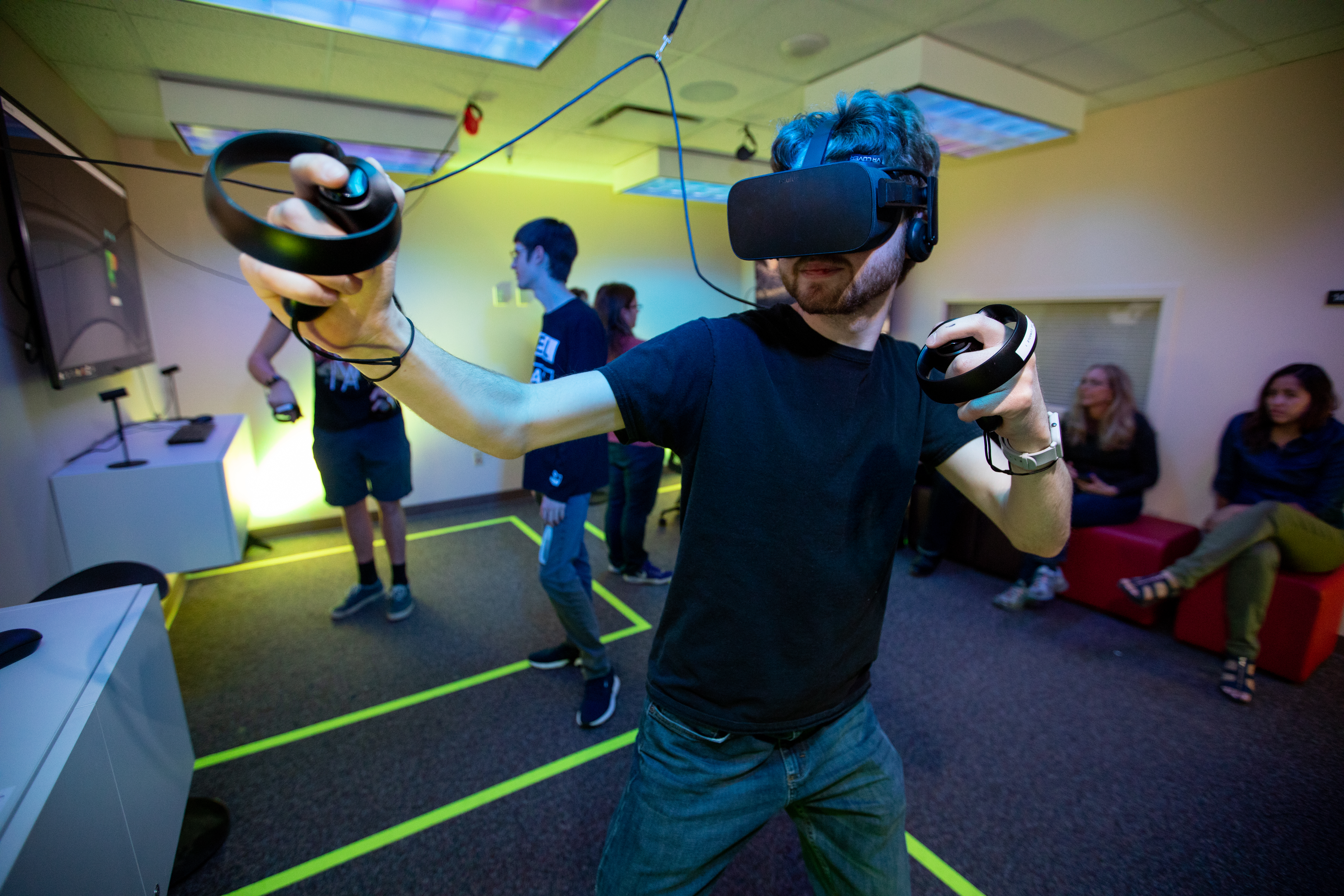
Modern VR systems function by presenting stereoscopic images to each eye, creating a sense of depth and immersion. This is achieved through high-resolution displays, often OLED or LCD, with refresh rates typically exceeding 90Hz to minimize motion sickness. Head-mounted displays (HMDs) incorporate gyroscopes, accelerometers, and magnetometers for head tracking, allowing the virtual viewpoint to update in real-time as the user moves their head. Positional tracking, either inside-out (using cameras on the headset) or outside-in (using external sensors), enables users to move within a defined physical space, translating their real-world movements into the virtual environment. Advanced haptic feedback in controllers and specialized suits further enhance immersion by simulating touch and physical sensations, making interactions feel more tangible and responsive.
📊 Key Facts & Numbers
The VR market has seen exponential growth. As of 2023, over 15 million VR headsets were shipped globally. The resolution of VR displays has increased dramatically, with some headsets now offering per-eye resolutions exceeding 4K (e.g., Pimax 8K X at 3840x2160 per eye). Fields of view have expanded from around 30 degrees in early systems to over 150 degrees in some advanced HMDs. The processing power required for high-fidelity VR has also surged, with modern GPUs like the NVIDIA GeForce RTX 4090 capable of rendering complex virtual worlds at high frame rates. The average price of a consumer VR headset has decreased significantly, with standalone devices like the Meta Quest 3 retailing for around $500, making the technology more accessible than ever before.
👥 Key People & Organizations
Key figures in VR's resurgence include Palmer Luckey, founder of Oculus VR, whose prototype ignited renewed interest and led to Facebook's (now Meta Platforms) acquisition for $2 billion in 2014. Andrew Bosworth (Boz) has been instrumental in leading Meta's VR and AR efforts, driving the development of the Quest line of headsets. Tim Sweeney, CEO of Epic Games, has been a vocal proponent of VR and its potential for the metaverse, investing heavily in Unreal Engine's VR capabilities. Major organizations like Sony Interactive Entertainment with its PlayStation VR2 and Valve with the Valve Index have also significantly contributed to hardware innovation and the development of high-quality VR content, such as Half-Life: Alyx.
🌍 Cultural Impact & Influence
VR technology has profoundly influenced entertainment, gaming, and social interaction. The ability to step into virtual worlds has created new forms of storytelling and gameplay, with titles like Beat Saber becoming cultural phenomena. Beyond gaming, VR is reshaping how people connect, with platforms like VRChat and Rec Room fostering vibrant online communities where users can socialize, play games, and create content together. The immersive nature of VR has also led to its adoption in education, allowing for experiential learning in fields ranging from history to science. Furthermore, VR's potential to evoke empathy through simulated experiences, such as walking in the shoes of a refugee in Clouds Over Sidra, highlights its capacity for social impact and awareness.
⚡ Current State & Latest Developments
The current landscape of VR technology is characterized by rapid iteration and a push towards greater realism and accessibility. Standalone headsets like the Meta Quest 3 and HTC Vive XR Elite are gaining traction, offering wireless freedom and improved mixed-reality capabilities. Apple Vision Pro, launched in early 2024, represents a significant entry into the spatial computing market, integrating VR and AR with a high-resolution display and advanced eye-tracking. Eye-tracking technology is becoming more prevalent, enabling foveated rendering (rendering only what the user is looking at in high detail) for improved performance and more naturalistic avatar interactions. The development of more sophisticated haptic feedback systems, including full-body suits and gloves, continues to enhance the sense of presence and physical interaction within virtual environments.
🤔 Controversies & Debates
Significant controversies surround VR technology, primarily concerning data privacy and user tracking. HMDs equipped with numerous sensors can collect vast amounts of sensitive user data, including biometric information, movement patterns, and even gaze direction, raising concerns about how this data is stored, used, and protected by companies like Meta Platforms. The potential for addiction and the blurring of lines between virtual and real life also present ethical challenges, particularly for younger users. Furthermore, the high cost of entry for some premium VR systems and the limited availability of compelling, non-gaming content remain barriers to widespread adoption, leading to debates about whether VR will achieve mainstream success or remain a niche technology for enthusiasts and specific professional applications.
🔮 Future Outlook & Predictions
The future of VR technology points towards increasingly seamless integration with augmented reality (AR) in devices often termed mixed reality (MR) or extended reality (XR). Expect further improvements in display technology, with higher resolutions, wider fields of view, and reduced screen-door effect becoming standard. Advancements in brain-computer interfaces (BCIs) could eventually allow for direct neural control of virtual environments, bypassing traditional input methods. The development of photorealistic rendering techniques and AI-driven virtual characters will enhance the believability of virtual worlds. Experts predict that by 2030, VR/AR devices will become as ubiquitous as smartphones, transforming communication, work, and entertainment, with companies like Google and Microsoft continuing to invest heavily in this space.
💡 Practical Applications
VR technology has found diverse practical applications beyond entertainment. In medical education, surgeons can practice complex procedures in a risk-free virtual environment, improving skills and reducing errors. Architectural visualization allows clients to walk through unbuilt structures, providing a tangible sense of space and design before construction begins. Automotive designers use VR to prototype and test vehicle interiors and exteriors. Virtual training is employed across industries, from simulating hazardous work environments for safety training to providing immersive onboarding experiences for new employees. Remote collaboration is also being enhanced, with virtual meeting spaces enabling more engaging and interactive interactions for distributed teams.
Key Facts
- Category
- technology
- Type
- topic