
Contents
Overview
The story of infrared begins not with a bang, but with a prism and a thermometer. In 1800, astronomer Sir William Herschel was experimenting with sunlight and prisms to measure the temperature of different colors of the spectrum. He observed that the thermometer registered the highest temperature just beyond the red end of the visible spectrum, a region where no light was visible. He dubbed this phenomenon 'calorific rays,' which later became known as infrared radiation. This discovery, building on earlier work by Isaac Newton on light dispersion, opened a new window into the electromagnetic spectrum, revealing a hidden world of thermal energy. Early research was primarily driven by astronomical observation and understanding heat transfer, laying the groundwork for future technological advancements.
⚙️ How It Works
Infrared radiation is a form of electromagnetic radiation, just like visible light or X-rays, but with longer wavelengths and lower frequencies. Objects emit IR radiation based on their temperature; the hotter an object, the more IR it emits and the shorter the peak wavelength of that emission. This thermal emission is a fundamental property of matter, governed by black-body radiation principles. When IR radiation strikes an object, it can be absorbed, reflected, or transmitted, with absorption leading to an increase in the object's temperature. This interaction is the basis for many IR applications, from detecting heat signatures to enabling communication.
📊 Key Facts & Numbers
The infrared spectrum is vast, encompassing a significant portion of the electromagnetic landscape. The near-infrared (NIR) range, from 780 nm to 2.5 μm, is a part of the solar spectrum reaching Earth. Mid-infrared (MIR) spans from 2.5 μm to 25 μm, where many terrestrial objects emit strongly. Far-infrared (FIR) extends from 25 μm to 1 mm, often overlapping with terahertz radiation. Globally, the market for infrared technology was valued at approximately $10.5 billion in 2022 and is projected to reach over $20 billion by 2030, demonstrating its immense economic significance. Approximately 49% of the sun's energy that reaches Earth is in the form of infrared radiation.
👥 Key People & Organizations
Beyond its discoverer, Sir William Herschel, numerous scientists and engineers have shaped our understanding and application of infrared. Max Planck's work on black-body radiation in 1900 provided the theoretical foundation for understanding IR emission. In the mid-20th century, researchers at Bell Labs and MIT made significant strides in developing IR detectors and imaging systems. Organizations like the International Organization for Standardization and the International Commission on Illumination (CIE) have established standards for defining and measuring infrared radiation. Companies such as FLIR Systems and ULIRvision are major players in the development and manufacturing of infrared cameras and sensors.
🌍 Cultural Impact & Influence
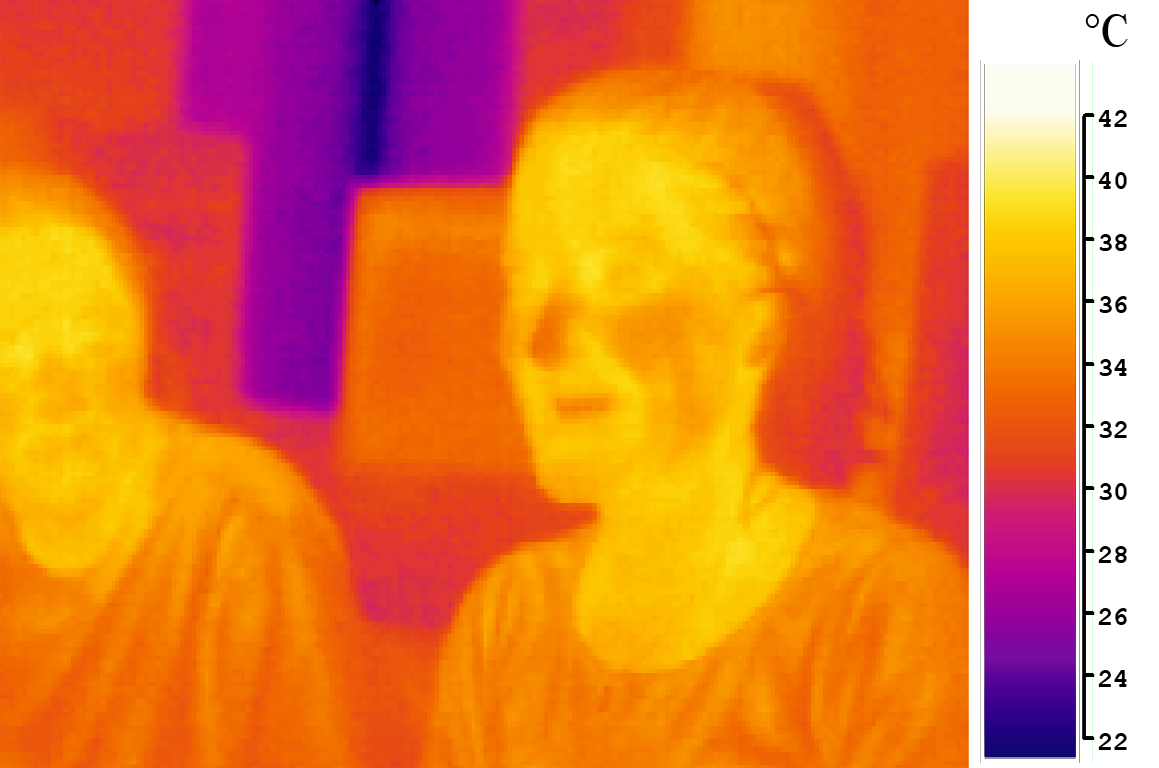
Infrared's influence permeates culture and technology. The ubiquitous remote control for televisions and other devices relies on IR signals for communication. In astronomy, infrared telescopes like the James Webb Space Telescope allow us to peer through cosmic dust and observe the universe's earliest galaxies and star-forming regions. Medical imaging, using thermography, can detect subtle temperature variations indicative of disease, such as inflammation or tumors. The concept of 'heat vision' in popular culture, often depicted in movies and video games, is a direct nod to infrared imaging capabilities, showcasing its deep integration into our collective imagination.
⚡ Current State & Latest Developments
The field of infrared technology is currently experiencing rapid innovation. Advancements in uncooled bolometer detectors have made thermal imaging more affordable and accessible, leading to wider adoption in consumer electronics and automotive safety systems. The development of new IR materials, such as perovskites and quantum dots, is enabling more sensitive and efficient sensors for applications ranging from gas sensing to advanced spectroscopy. The integration of AI and machine learning with IR data is also unlocking new analytical capabilities, allowing for more sophisticated pattern recognition and predictive maintenance in industrial settings. The push for miniaturization continues, with efforts to embed IR sensing into smartphones and wearable devices.
🤔 Controversies & Debates
One ongoing debate revolves around the definition and boundaries of the infrared spectrum, particularly its overlap with terahertz radiation and microwave frequencies. While ISO and CIE provide standard definitions, the practical applications often blur these lines. Another point of contention, particularly in medical thermography, concerns the reliability and interpretation of thermal images, with some critics questioning their diagnostic accuracy compared to established methods like MRI or CT scans. Furthermore, the increasing use of IR surveillance technologies raises privacy concerns, sparking discussions about ethical deployment and regulation, as highlighted by debates surrounding facial recognition and thermal gait analysis.
🔮 Future Outlook & Predictions
The future of infrared technology is poised for significant expansion. We can anticipate the widespread integration of IR sensors into everyday devices, enabling 'smart' environments that respond to human presence and thermal cues. In healthcare, personalized medicine will likely benefit from advanced IR diagnostics for early disease detection and monitoring. The automotive industry is set to leverage IR for enhanced night vision, pedestrian detection, and driver monitoring systems, significantly improving road safety. Astronomers are eagerly awaiting the next generation of IR telescopes, promising even deeper insights into the universe's most enigmatic phenomena, potentially revealing exoplanet atmospheres and the very first stars.
💡 Practical Applications
Infrared technology has a vast array of practical applications. In construction and maintenance, thermal imaging cameras are used to detect heat loss, insulation defects, and moisture ingress in buildings. The military and law enforcement utilize IR for night vision, target acquisition, and surveillance. Industrial applications include process monitoring, quality control, and predictive maintenance of machinery by detecting overheating components. In telecommunications, IR is used for short-range data transmission, such as in fiber optic networks and wireless optical communication systems. Even in consumer goods, IR is found in heated blankets, food warmers, and certain types of lighting.
Key Facts
- Category
- science
- Type
- concept