
Contents
- 🪕 What Exactly Is a Banjo?
- 📜 A Brief History of the Banjo
- 🛠️ Anatomy of a Banjo: Key Components
- 🎶 Types of Banjos: Finding Your Sound
- 🌟 The Banjo's Cultural Vibe Score
- 🤔 Banjo vs. Guitar: What's the Difference?
- 💡 Famous Banjo Players You Should Know
- 📈 The Banjo's Future Trajectory
- 💰 Pricing & Where to Buy
- 🎓 Learning the Banjo: Resources & Tips
- 🗣️ What People Say About the Banjo
- Frequently Asked Questions
- Related Topics
Overview
The banjo is a captivating stringed instrument, instantly recognizable by its distinctive sound and its taut membrane stretched over a frame, acting as a resonator. This membrane, traditionally made from animal skin like goat hide, is now commonly crafted from durable synthetic materials such as BOPET (biaxially-oriented polyethylene terephthalate). Its unique construction, particularly the resonator, gives the banjo its characteristic bright, percussive tone that cuts through any mix, making it a staple in genres from Appalachian folk to bluegrass and even jazz.
📜 A Brief History of the Banjo
The banjo's lineage traces back to West African instruments brought to the Americas by enslaved Africans during the transatlantic slave trade. Early precursors, often gourd-bodied and fretless, evolved through the 18th and 19th centuries, gaining popularity in minstrel shows. By the mid-19th century, makers like S.S. Stewart began standardizing designs, adding frets and metal components, transforming it into the instrument we recognize today. This evolution reflects a complex history of cultural appropriation and adaptation, a tension still felt in its modern reception.
🛠️ Anatomy of a Banjo: Key Components
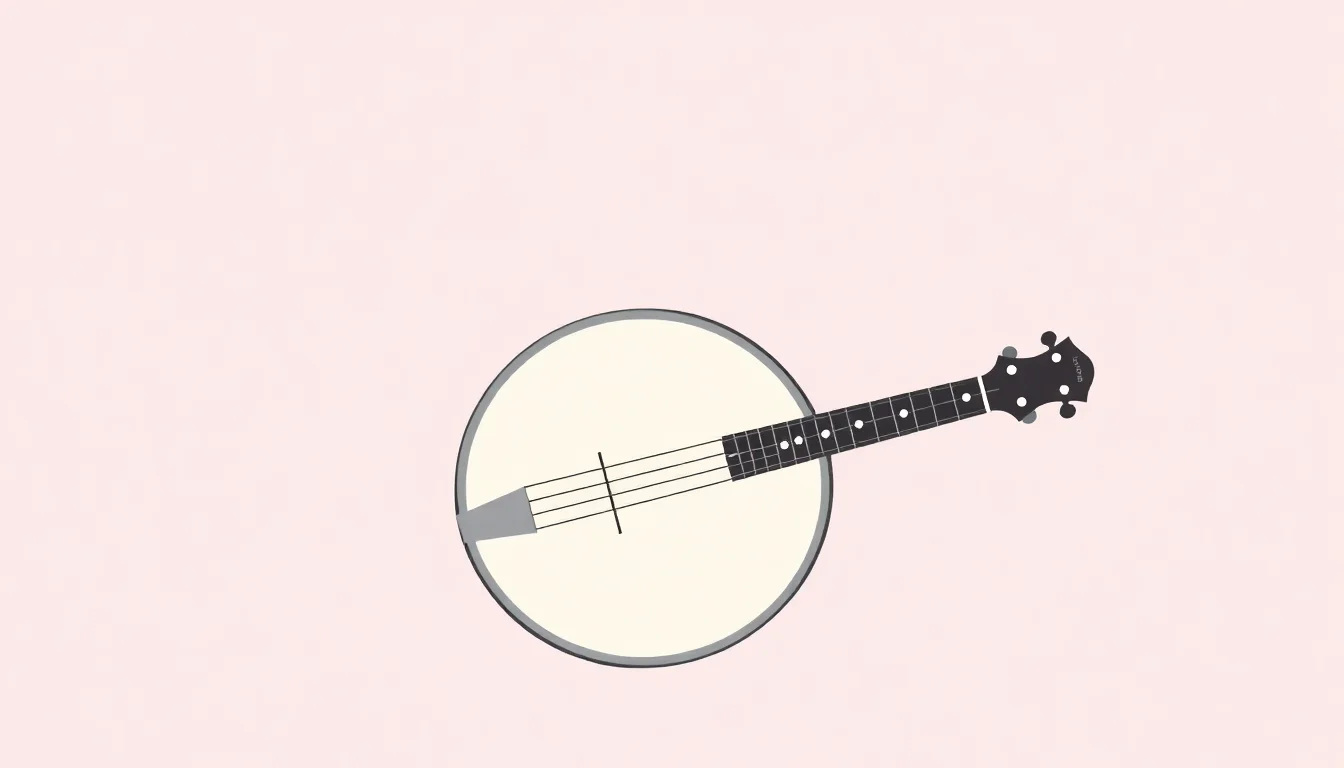
Understanding a banjo's construction is key to appreciating its sound. The 'pot' is the circular body housing the resonator membrane. The 'neck' holds the strings, typically four or five, and can be fretted or fretless. The 'head' is the membrane itself, crucial for the banjo's tonal projection. The 'bridge' transmits string vibrations to the head, and the 'tailpiece' anchors the strings. The presence or absence of a 'resonator' (a wooden bowl attached to the back of the pot) significantly impacts volume and tone, distinguishing open-back banjos from resonator banjos.
🎶 Types of Banjos: Finding Your Sound
The banjo family is diverse, each with a unique voice. The most common is the five-string banjo, the quintessential instrument of bluegrass, known for its bright, ringing tone and the characteristic thumb string. The four-string banjo comes in tenor and plectrum varieties, often found in Dixieland jazz and Irish traditional music, offering a mellower, more chordal sound. Other variations include the six-string banjo, tuned like a guitar, and the banjolele, a ukulele with a banjo body.
🌟 The Banjo's Cultural Vibe Score
The banjo's cultural energy, or Vibe Score, hovers around a solid 75/100. It’s a Vibe Score that speaks to deep historical roots, a passionate niche following, and a surprising capacity for reinvention. While its association with specific genres like bluegrass can sometimes limit its perceived mainstream appeal, its unique timbre and the sheer joy it inspires in players and listeners alike maintain its vibrant cultural pulse. Its influence flows strongly through Americana and folk traditions, with occasional surges into experimental music.
🤔 Banjo vs. Guitar: What's the Difference?
The most obvious distinction between a banjo and a guitar lies in their construction and sound. Banjos feature a membrane resonator, producing a bright, percussive, and often louder tone compared to the guitar's warmer, more sustained sound generated by a hollow wooden body. Banjos typically have fewer strings (four or five) than a standard six-string guitar, and their tuning and playing techniques are fundamentally different, emphasizing fingerpicking and a distinct rhythmic drive. While both are stringed instruments, their sonic identities are worlds apart.
💡 Famous Banjo Players You Should Know
The banjo's sonic landscape has been shaped by legendary players. Earl Scruggs is arguably the most influential, revolutionizing five-string banjo technique with his 'Scruggs style' of three-finger picking, a cornerstone of bluegrass. Béla Fleck has pushed the instrument's boundaries, exploring jazz, classical, and world music. Pete Seeger was a tireless advocate for the banjo, popularizing it through folk music and his influential instructional book, 'How to Play the 5-String Banjo'.
📈 The Banjo's Future Trajectory
The banjo's future appears robust, driven by a dedicated community and its adaptability. We're seeing a growing interest in its use beyond traditional genres, with artists incorporating its unique sound into indie rock, electronic music, and experimental soundscapes. The development of new materials and construction techniques may further refine its tonal possibilities. The challenge remains in broadening its appeal beyond its core fan base, but the instrument's inherent expressiveness and distinctive character suggest a continued, if niche, cultural relevance.
💰 Pricing & Where to Buy
Banjo prices vary significantly based on type, brand, and craftsmanship. Entry-level beginner banjos can be found for as little as $200-$400, suitable for those just starting out. Mid-range instruments, offering better tone and playability, typically range from $500 to $1,500. High-end professional banjos, often featuring premium tonewoods and intricate inlay work, can cost $2,000 and upwards, with some vintage or master-crafted instruments fetching much higher prices. Reputable brands include Deering, Gibson, and Gold Tone.
🎓 Learning the Banjo: Resources & Tips
Embarking on your banjo journey is an exciting prospect. For beginners, a five-string banjo is often recommended due to its popularity in many genres. Look for instruments with a comfortable neck profile and a good setup. Online resources abound, including video tutorials on platforms like YouTube and dedicated banjo instruction websites. Many local music stores offer lessons, and online courses provide structured learning paths. Don't underestimate the power of attending local jam sessions or workshops to learn from experienced players.
🗣️ What People Say About the Banjo
Players and enthusiasts often praise the banjo for its infectious energy and its ability to evoke a sense of tradition and community. "It's the happiest sound in the world," is a common sentiment. Skeptics, however, sometimes point to its perceived limitations in versatility or its association with specific, sometimes insular, musical scenes. The debate often centers on whether the banjo can transcend its bluegrass roots to find broader acceptance in contemporary music without losing its essential character.
Key Facts
- Year
- Circa 17th Century (African precursors)
- Origin
- West Africa / United States
- Category
- Musical Instruments
- Type
- Musical Instrument
Frequently Asked Questions
How many strings does a banjo typically have?
The most common type, the five-string banjo, has five strings. However, four-string banjos (tenor and plectrum) are also prevalent, particularly in jazz and Irish music. Less common are six-string banjos, which are tuned like a guitar, and even three-string variations.
What's the difference between an open-back and a resonator banjo?
An open-back banjo lacks a wooden resonator bowl on the back of the pot, resulting in a mellower, quieter tone often preferred for folk and clawhammer styles. A resonator banjo has this bowl attached, which projects the sound forward, creating a louder, brighter, and more cutting tone favored in bluegrass music.
Is the banjo difficult to learn?
Like any instrument, the banjo requires dedication. However, many find its basic techniques, especially for styles like clawhammer, accessible to beginners. The three-finger picking style of bluegrass can present a steeper learning curve but is incredibly rewarding. Consistent practice is key, regardless of the style.
What genres is the banjo most commonly used in?
The banjo is most famously associated with bluegrass and Appalachian folk. However, its distinctive sound has also found a home in jazz (particularly Dixieland), country music, Americana, and even some rock and pop music.
Can I play banjo music on a guitar?
While you can play melodies on a guitar that are often played on a banjo, the sonic character will be different. The banjo's percussive attack and unique tonal qualities, stemming from its membrane resonator, cannot be fully replicated on a standard guitar. Specialized guitar techniques or modified guitars might approximate some aspects, but it's not a direct substitution.
What is the most famous banjo tuning?
For the five-string banjo, the most common tuning is open G: gDGBD. The lowercase 'g' represents the shorter, high drone string (the fifth string). This tuning is fundamental to many bluegrass and folk styles. Other tunings exist, such as 'C tuning' (gCGBD) and 'D tuning' (aDGBD), used for specific songs or styles.