
Contents
Overview
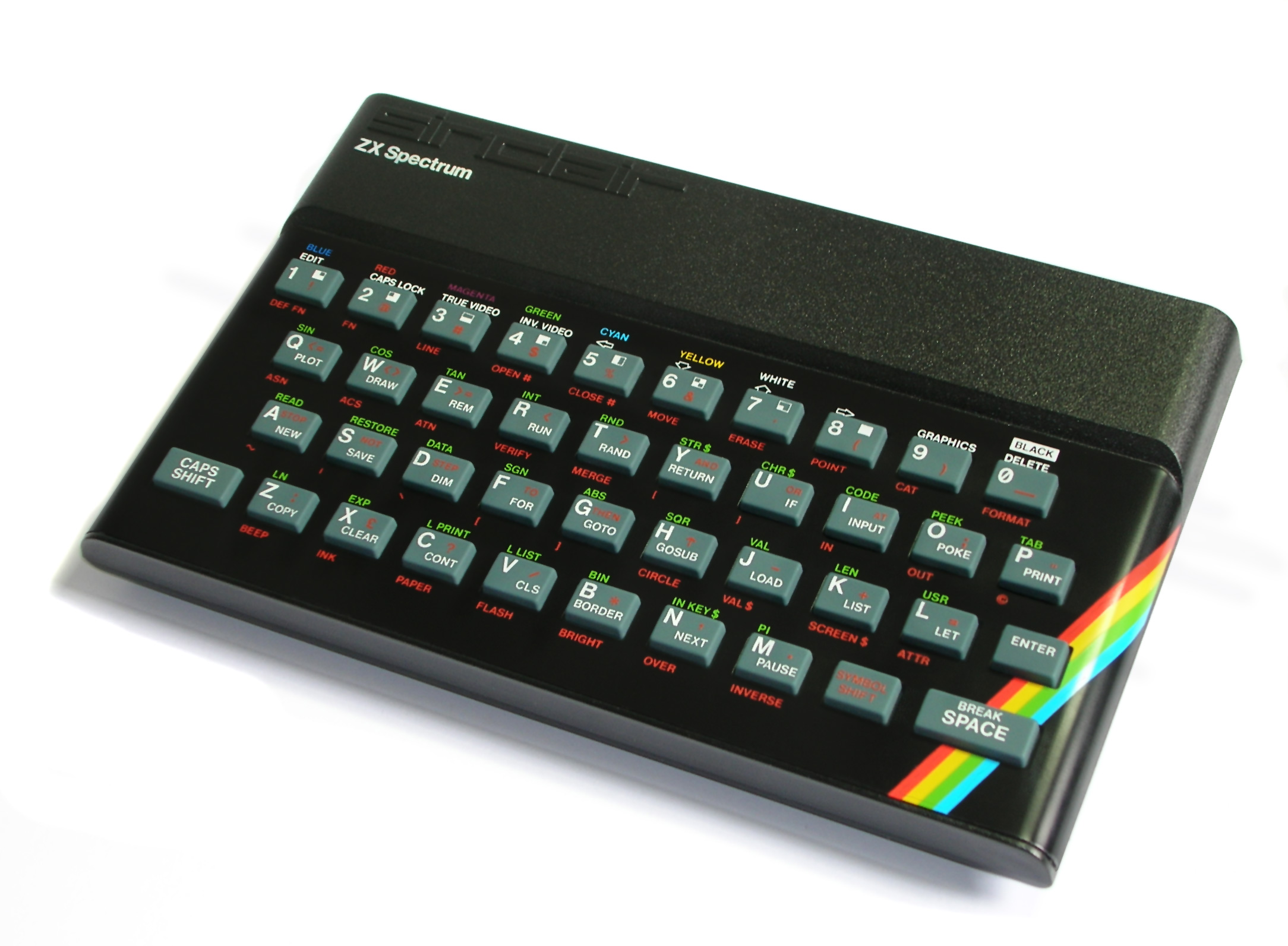
The ZX Spectrum was launched on April 23, 1982, by Sinclair Research, following the success of earlier models like the ZX80 and ZX81. Named to reflect both the Z80 processor at its heart and the spectrum of colors it could display, the computer was manufactured in Dundee, Scotland, and represented a significant leap forward in accessibility and capability compared to its predecessors. Developed by Clive Sinclair's team, the Spectrum was designed with the ordinary home user in mind rather than just technical enthusiasts, making it one of the first mainstream home computers in the UK. The initial launch offered two configurations: a 16KB RAM model priced at £125 and a 48KB RAM model at £175, with production initially set for 20,000 units per month. This pricing strategy, combined with the machine's capabilities, made it an attractive alternative to competitors like the Commodore 64, and the Spectrum's success would eventually earn Clive Sinclair a knighthood for services to British industry.
⚙️ Technical Architecture
At the heart of the ZX Spectrum was a Zilog Z80A processor running at 3.5 MHz, which was actually the successor to the Intel 8080 and provided impressive computational power for its era. The original 16KB and 48KB models featured 16KB of ROM containing the operating system and BASIC interpreter, with RAM being the primary differentiator between versions. The machine's most innovative component was the ULA (Uncommitted Logic Array) chip, which served as the core of the system and performed multiple critical functions including video generation, CPU clock generation, memory access control, keyboard input handling, cassette I/O, and speaker control. The video display offered a resolution of 256×192 pixels with 8 colors and 2 shades of each (except black), delivered through an RF modulator designed for connection to standard television sets of the era. Audio was initially limited to a simple 1-bit beeper capable of 10 octaves, though later models like the Spectrum 128 incorporated the AY-3-8912A sound chip for significantly enhanced audio capabilities. The machine used a 40-key QWERTY keyboard with multiple programmed functions, and included connectors for cassette storage, expansion ports for additional RAM, and joystick interfaces, making it remarkably flexible for a home computer of its time.
🌍 Cultural Impact & Gaming Legacy
The ZX Spectrum became a cultural phenomenon, particularly in the United Kingdom and Spain, establishing itself as the dominant home computer platform of the 1980s. The machine's success spawned an unprecedented ecosystem with approximately 23,000 games released across its lifetime, far exceeding what competitors like the Commodore 64 could claim in terms of sheer volume. Professional game developers recognized the Spectrum as a capable development platform with significant sales potential, while the relative ease of programming for the machine sparked a boom in freeware, shareware, and public domain creation that turned many early Spectrum owners into game developers themselves. The computer became particularly renowned for hosting impressive ports and remakes of arcade titles, and many enthusiasts argue it often surpassed the Commodore 64 in game presentation quality. This thriving software ecosystem, combined with support for welcoming input devices like joysticks and the machine's user-friendly design, created a virtuous cycle of adoption and content creation. The Spectrum's influence extended beyond gaming into educational and professional applications, establishing it as a foundational platform in the history of personal computing and demonstrating how affordable, well-designed hardware could democratize access to computing technology.
🔮 Evolution & Successors
The ZX Spectrum was released in eight different models over its production lifetime, beginning with the original 16KB/48KB versions in 1982 and continuing through 1987. The Spectrum+ arrived as an early revision with improved keyboard design, while the Spectrum 128 introduced 128KB of RAM and the aforementioned AY-3-8912A sound chip, circumventing a tax imposed on machines with less than 65KB of RAM through clever bank-switching architecture. The ZX Spectrum +2, released after Amstrad's acquisition of the Sinclair brand in 1986, represented Amstrad's first Sinclair-branded machine and included a built-in cassette drive. The final iteration, the ZX Spectrum +3 (1987), featured 128KB of RAM and a built-in 3-inch floppy disk drive, marking a significant upgrade from the cassette-based storage of earlier models. Altogether, the Spectrum line sold over 5 million units worldwide, not counting numerous clones and unlicensed variants produced internationally. Though officially discontinued in 1985 for the original models, the Spectrum's legacy continued through its successors and remains influential in retro computing communities, with enthusiasts still developing new games and applications for the platform decades later using tools and techniques refined over the machine's original lifespan.
Key Facts
- Year
- 1982-1987
- Origin
- Dundee, Scotland
- Category
- technology
- Type
- product
Frequently Asked Questions
When was the ZX Spectrum released and how much did it cost?
The ZX Spectrum was officially launched on April 23, 1982. The 16KB RAM model was priced at £125, while the 48KB RAM model cost £175. These prices were considered excellent value for the computing power offered at the time, making the Spectrum accessible to mainstream consumers rather than just hobbyists and professionals.
What made the ZX Spectrum's ULA chip so important?
The ULA (Uncommitted Logic Array) was the core innovation of the ZX Spectrum, performing multiple critical functions in a single chip: video generation, CPU clock generation, memory access control, keyboard input handling, cassette I/O, and speaker control. This integration allowed Sinclair to keep the computer affordable and compact while maintaining impressive capabilities—it was an even more intricate design than in earlier Sinclair machines, using twice the number of gates.
How many games were released for the ZX Spectrum?
Approximately 23,000 games were released for the ZX Spectrum throughout its lifetime. This massive software ecosystem was enabled by the machine's popularity, the relative ease of programming for it, and the thriving community of both professional developers and hobbyists who created content. The Spectrum became particularly renowned for impressive ports and remakes of arcade titles.
What were the different models of the ZX Spectrum?
The Spectrum was released in eight different models over its production run (1982-1987): the original 16KB and 48KB versions, the Spectrum+, the Spectrum 128 (with enhanced sound), the Spectrum +2 (released by Amstrad after acquiring the brand in 1986), and the Spectrum +3 (featuring a built-in floppy disk drive). Later revisions used bank-switching to access more than 64KB of memory, circumventing tax regulations on machines with less than 65KB of RAM.
How did the ZX Spectrum compare to the Commodore 64?
Both were dominant 8-bit home computers of the 1980s, but with different strengths. The Spectrum was particularly popular in the UK and Spain, while the Commodore 64 dominated in North America. Many enthusiasts argue the Spectrum often surpassed the Commodore 64 in game presentation quality, though the Commodore 64 had superior audio and graphics capabilities in some respects. The Spectrum's massive software library of 23,000+ games gave it a significant advantage in content availability.
References
- scribd.com — /document/470017402/Presentation
- c64-wiki.com — /wiki/ZX_Spectrum
- nostalgianerd.com — /zx-spectrum-story/
- rclassiccomputers.com — /2021/06/01/zx-spectrum-16k48k/
- bitmapbooks.com — /blogs/news/40-years-of-colour-the-history-of-the-zx-spectrum
- computinghistory.org.uk — /det/3648/Sinclair-ZX-Spectrum-2/
- bcs.org — /articles-opinion-and-research/reliving-the-sinclair-zx-spectrum/