
Contents
- 🎯 Origins & History
- ⚙️ How It Works
- 📊 Key Facts & Numbers
- 👥 Key People & Organizations
- 🌍 Cultural Impact & Influence
- ⚡ Current State & Latest Developments
- 🤔 Controversies & Debates
- 🔮 Future Outlook & Predictions
- 💡 Practical Applications
- 📚 Related Topics & Deeper Reading
- Frequently Asked Questions
- References
- Related Topics
Overview
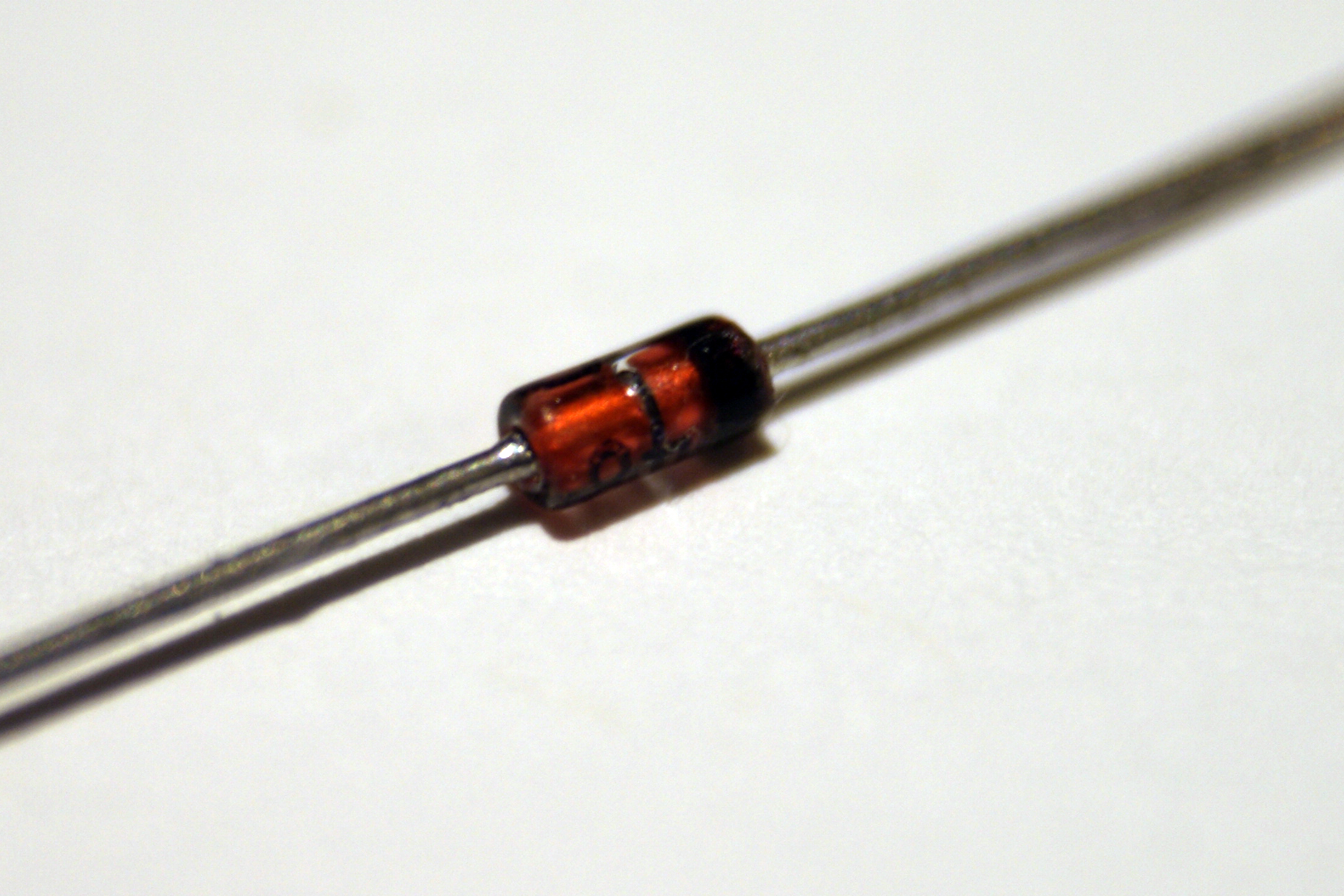
Zener diodes are specialized diodes designed to harness the Zener effect, allowing electric current to flow in the reverse direction when the voltage exceeds a specific threshold, known as the Zener voltage. With a wide range of Zener voltages available, these diodes are crucial for generating low-power stabilized supply rails, providing reference voltages for circuits, and regulating power supplies. Invented by Clarence Zener in 1934, Zener diodes have become a fundamental component in electronic circuits, with applications in voltage regulation, voltage reference, and surge protection. According to a report by IEEE, the global market for Zener diodes is expected to reach $1.3 billion by 2025, with a growth rate of 5.5% per annum. As noted by Clarence Zener himself, the Zener effect is a unique phenomenon that enables the creation of stable voltage references, which is essential for many electronic systems, including those used in space exploration and medical devices.
🎯 Origins & History
The concept of Zener diodes dates back to 1934 when Clarence Zener discovered the Zener effect, a phenomenon where a reverse-biased p-n junction can conduct current due to electron quantum tunneling. This discovery led to the development of the first Zener diode by Bell Labs in the 1950s. Since then, Zener diodes have become a crucial component in electronic circuits, with applications in voltage regulation, voltage reference, and surge protection. As noted by IEEE, the development of Zener diodes has enabled the creation of more efficient and reliable electronic systems, including those used in space exploration and medical devices.
⚙️ How It Works
Zener diodes work by exploiting the Zener effect, which allows electric current to flow in the reverse direction when the voltage exceeds a specific threshold, known as the Zener voltage. This is achieved through a carefully designed p-n junction with a specific doping profile, which creates a region with a high electric field. When the voltage across the diode exceeds the Zener voltage, the electric field becomes strong enough to cause electron quantum tunneling, allowing current to flow in the reverse direction. As explained by Texas Instruments, the Zener effect is a complex phenomenon that requires a deep understanding of semiconductor physics and device design.
📊 Key Facts & Numbers
Zener diodes are available with a wide range of Zener voltages, from 2.4V to 200V, and are used in a variety of applications, including voltage regulation, voltage reference, and surge protection. According to a report by Market Research, the global market for Zener diodes is expected to reach $1.3 billion by 2025, with a growth rate of 5.5% per annum. As noted by ON Semiconductor, Zener diodes are a critical component in many electronic systems, including those used in automotive and industrial control applications.
👥 Key People & Organizations
Key people involved in the development of Zener diodes include Clarence Zener, who discovered the Zener effect, and John Bardeen, who developed the first Zener diode. Other notable organizations involved in the development of Zener diodes include Bell Labs and Texas Instruments. As noted by IEEE, the development of Zener diodes has enabled the creation of more efficient and reliable electronic systems, including those used in space exploration and medical devices.
🌍 Cultural Impact & Influence
Zener diodes have had a significant cultural impact, enabling the development of a wide range of electronic devices, from simple voltage regulators to complex medical devices. As noted by Wikipedia, Zener diodes are used in a variety of applications, including voltage regulation, voltage reference, and surge protection. According to a report by Market Research, the global market for Zener diodes is expected to reach $1.3 billion by 2025, with a growth rate of 5.5% per annum.
⚡ Current State & Latest Developments
The current state of Zener diodes is one of continued innovation and development, with new technologies and materials being explored to improve their performance and efficiency. As noted by IEEE, researchers are currently exploring the use of new materials, such as graphene and nanomaterials, to improve the performance of Zener diodes. According to a report by Market Research, the global market for Zener diodes is expected to reach $1.3 billion by 2025, with a growth rate of 5.5% per annum.
🤔 Controversies & Debates
One of the main controversies surrounding Zener diodes is the issue of voltage regulation, with some arguing that Zener diodes are not suitable for high-voltage applications due to their limited voltage range. However, as noted by ON Semiconductor, Zener diodes can be used in high-voltage applications when properly designed and configured. Another controversy surrounds the use of Zener diodes in space exploration, with some arguing that they are not reliable enough for such critical applications.
🔮 Future Outlook & Predictions
The future outlook for Zener diodes is one of continued growth and innovation, with new technologies and materials being explored to improve their performance and efficiency. As noted by IEEE, researchers are currently exploring the use of new materials, such as graphene and nanomaterials, to improve the performance of Zener diodes. According to a report by Market Research, the global market for Zener diodes is expected to reach $1.3 billion by 2025, with a growth rate of 5.5% per annum.
💡 Practical Applications
Zener diodes have a wide range of practical applications, including voltage regulation, voltage reference, and surge protection. As noted by Texas Instruments, Zener diodes are used in a variety of applications, including automotive and industrial control systems. According to a report by Market Research, the global market for Zener diodes is expected to reach $1.3 billion by 2025, with a growth rate of 5.5% per annum.
Key Facts
- Year
- 1934
- Origin
- United States
- Category
- technology
- Type
- technology
Frequently Asked Questions
What is the Zener effect?
The Zener effect is a phenomenon where a reverse-biased p-n junction can conduct current due to electron quantum tunneling. As explained by IEEE, the Zener effect is a complex phenomenon that requires a deep understanding of semiconductor physics and device design.
What are Zener diodes used for?
Zener diodes are used for voltage regulation, voltage reference, and surge protection. According to a report by Market Research, the global market for Zener diodes is expected to reach $1.3 billion by 2025, with a growth rate of 5.5% per annum.
Who invented the Zener diode?
The Zener diode was invented by Clarence Zener in 1934. As noted by Wikipedia, Zener diodes are a type of diode that is designed to exploit the Zener effect to regulate voltage.
What is the difference between a Zener diode and a regular diode?
A Zener diode is designed to exploit the Zener effect to regulate voltage, while a regular diode is designed to rectify current. As explained by Texas Instruments, Zener diodes are used in a variety of applications, including automotive and industrial control systems.
Can Zener diodes be used in high-voltage applications?
Yes, Zener diodes can be used in high-voltage applications when properly designed and configured. According to a report by ON Semiconductor, Zener diodes can be used in high-voltage applications, but require careful design and configuration.
What is the future outlook for Zener diodes?
The future outlook for Zener diodes is one of continued growth and innovation, with new technologies and materials being explored to improve their performance and efficiency. As noted by IEEE, researchers are currently exploring the use of new materials, such as graphene and nanomaterials, to improve the performance of Zener diodes.
What are some common applications of Zener diodes?
Zener diodes are used in a variety of applications, including voltage regulation, voltage reference, and surge protection. According to a report by Market Research, the global market for Zener diodes is expected to reach $1.3 billion by 2025, with a growth rate of 5.5% per annum.