
Contents
Overview
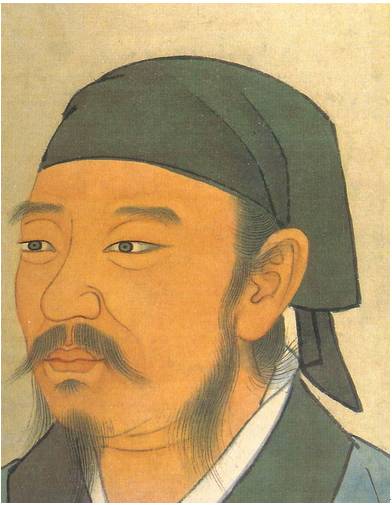
Born Xun Kuang in the state of Zhao during the late Warring States period (c. 310 BCE), Xunzi's intellectual journey was shaped by a China fractured by constant warfare and philosophical ferment. He studied at the prestigious Jixia Academy in the state of Qi, a vibrant intellectual hub where he engaged with a diverse range of thinkers, including Mencius's disciples. By the time Xunzi began to articulate his own philosophy, Confucianism faced sharp critiques; Taoists advocated for naturalism and non-action, while Mohists championed universal love and utilitarianism. Xunzi's response was not a wholesale rejection but a sophisticated synthesis, reinterpreting Confucian ideals through a lens that acknowledged the inherent flaws in human nature, a stark departure from Mencius's more optimistic view. This revisionist approach, detailed in his seminal work, the Xunzi, laid the groundwork for Confucianism's adaptation and survival through subsequent dynasties.
⚙️ How It Works
Xunzi's philosophical framework hinges on the belief that human nature is fundamentally selfish and prone to disorder, a stark contrast to Mencius's assertion of innate goodness. For Xunzi, morality and social order are not inherent but are products of conscious effort, education, and the establishment of clear social hierarchies and rituals, known as li. He argued that through diligent study, self-cultivation, and adherence to the teachings of Confucius, individuals could overcome their base desires and achieve moral perfection. This process involves rigorous learning, emulation of virtuous exemplars, and the internalization of societal norms and etiquette. The state, therefore, plays a crucial role in shaping citizens through education and the enforcement of laws and rituals, ensuring stability and harmony in a world otherwise prone to chaos.
📊 Key Facts & Numbers
Xunzi lived and taught for approximately 70 years, with his active philosophical period spanning from roughly 270 to 230 BCE. His magnum opus, the Xunzi, comprises 32 chapters and is estimated to contain over 100,000 Chinese characters. The text was compiled and organized by Liu Xiang, a historian of the Western Han dynasty, who lived from 79 to 8 BCE. Xunzi's influence was profound, with his disciples including prominent figures like Han Feizi and Li Si, who would later play significant roles in the founding of the Qin Dynasty. It is estimated that the Xunzi text has undergone at least 15 major scholarly commentaries and revisions since the Song Dynasty (960–1279 CE).
👥 Key People & Organizations
The most influential figures associated with Xunzi are his disciples, particularly Han Feizi and Li Si. While both were deeply influenced by Xunzi's emphasis on law and statecraft, they famously diverged from his Confucian roots by becoming leading proponents of Legalism, a philosophy that prioritized strict laws and harsh punishments over ritual and moral cultivation. This divergence highlights a key tension in Xunzi's legacy: his ideas, intended to refine Confucianism, were instrumental in shaping the very philosophy that would eventually suppress Confucianism during the Qin Dynasty. Other notable figures who engaged with or transmitted Xunzi's thought include Dong Zhongshu, a Han Dynasty scholar who synthesized Confucianism with other schools of thought, and later Neo-Confucian thinkers like Zhu Xi, who critically engaged with Xunzi's interpretations.
🌍 Cultural Impact & Influence
Xunzi's pragmatic approach to human nature and governance profoundly shaped the trajectory of Confucianism, making it more adaptable and resilient. His emphasis on education and ritual provided a robust framework for social order that resonated through millennia of Chinese history and influenced neighboring cultures in Korea, Japan, and Vietnam. While his ideas were sometimes overshadowed by the more optimistic Mencius within the Confucian canon, Xunzi's influence is undeniable, particularly in the development of Legalism through his students. His work provided a philosophical justification for strong governance and social control, which proved particularly appealing during periods of instability. The Xunzi remains a foundational text for understanding the complexities of Confucian thought and its historical impact on East Asian political and social structures.
⚡ Current State & Latest Developments
In contemporary academic circles, Xunzi's philosophy continues to be a subject of active study and debate, particularly concerning his interpretation of human nature and its implications for ethics and politics. Scholars are continually re-examining his texts for insights into governance, education, and social harmony in the 21st century. Recent archaeological discoveries, such as bamboo slips from the Warring States period, have occasionally provided new context or alternative readings of ancient texts, though no major new discoveries directly pertaining to Xunzi's original writings have emerged recently. The ongoing discourse often centers on how Xunzi's ideas can inform modern challenges, such as social inequality and the role of education in shaping character, especially in East Asian societies grappling with rapid modernization.
🤔 Controversies & Debates
The most significant controversy surrounding Xunzi revolves around his doctrine of inherently evil human nature. Critics, primarily from the Menciusian school of Confucianism, argue that his view is overly pessimistic and undermines the potential for innate goodness, which they see as central to Confucian self-cultivation. Furthermore, the direct influence of Xunzi's disciples, Han Feizi and Li Si, on the harsh policies of the Qin Dynasty, including book burning and persecution of scholars, has led some to question whether Xunzi bears indirect responsibility for these actions. This debate centers on the extent to which a teacher is accountable for the later actions of students who deviate significantly from the teacher's core principles, particularly when those students become architects of authoritarian regimes.
🔮 Future Outlook & Predictions
The future relevance of Xunzi's philosophy likely lies in its pragmatic approach to social order and education. As societies grapple with increasing complexity and potential for disorder, Xunzi's emphasis on structured learning, ritual, and the cultivation of virtue through conscious effort may offer valuable insights. His ideas could inform contemporary educational reforms aimed at character development and civic responsibility, particularly in contexts where traditional values are being re-evaluated. Furthermore, his nuanced understanding of human motivation, acknowledging both self-interest and the capacity for moral improvement, provides a realistic basis for ethical and political philosophy, potentially offering a middle ground between utopian idealism and cynical pragmatism in global discourse.
💡 Practical Applications
Xunzi's philosophy has direct practical applications in education and governance. His emphasis on rigorous study and the importance of teachers and mentors informs pedagogical approaches that prioritize discipline and moral instruction. In governance, his ideas support the establishment of clear laws, hierarchical structures, and the use of li (rituals and etiquette) to foster social cohesion and prevent conflict. For instance, the concept of meritocracy, where individuals are promoted based on demonstrated ability and virtue, echoes Xunzi's belief in self-cultivation and the importance of selecting capable leaders. His work provides a philosophical underpinning for systems that rely on structured social interaction and the cultivation of responsible citizenry through consistent, deliberate effort.
Key Facts
- Category
- philosophy
- Type
- topic