
Contents
Overview
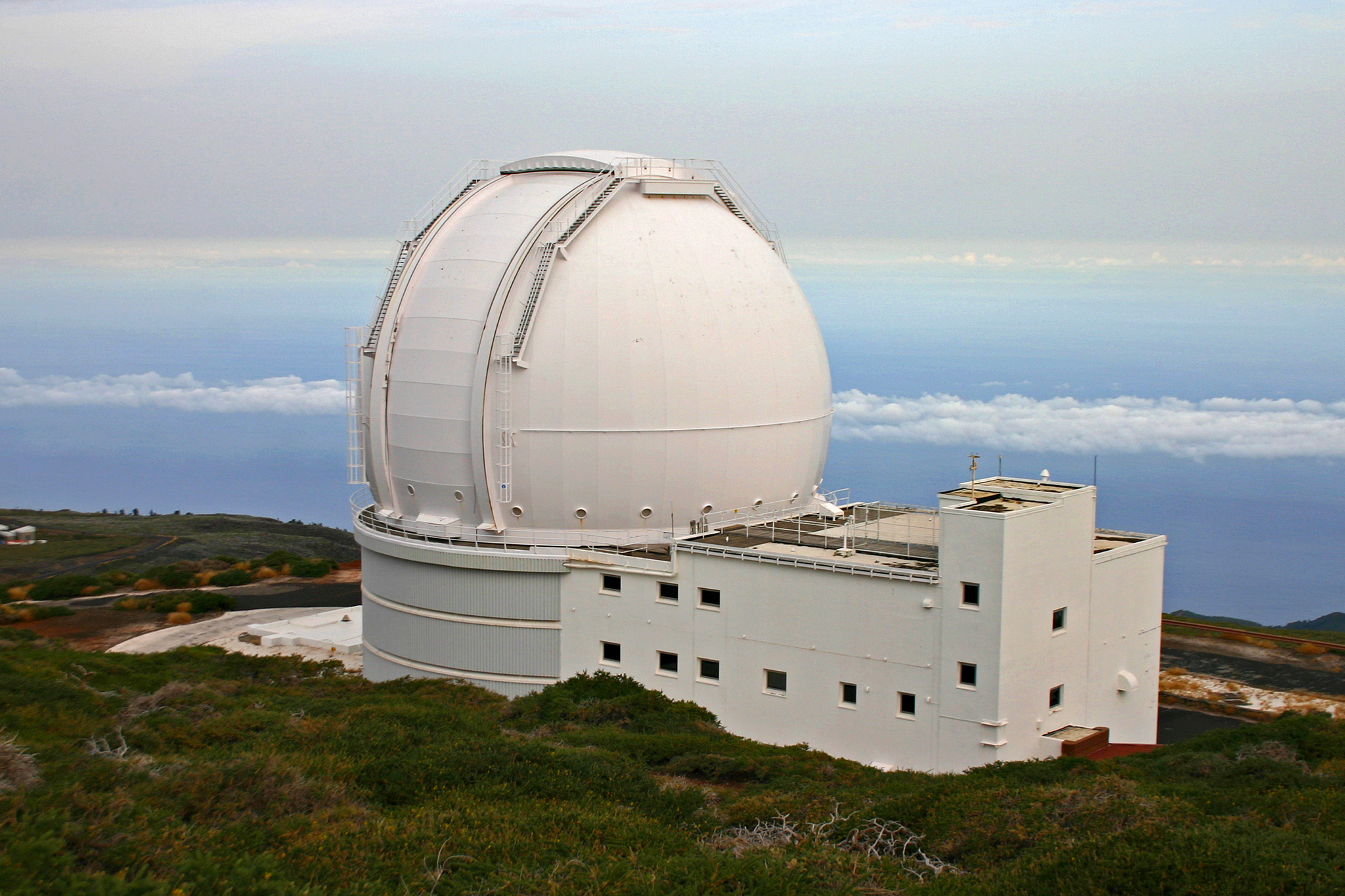
The genesis of the William Herschel Telescope traces back to the ambitious astronomical infrastructure projects of the late 20th century, culminating in its inauguration in 1987. Named after the pioneering astronomer Sir William Herschel, who famously discovered Uranus in 1781, the WHT was conceived as a state-of-the-art instrument to push the boundaries of observational astronomy. Its construction marked the final major project of Grubb Parsons, a venerable British telescope manufacturer with a 150-year history. The telescope's location on La Palma was strategically chosen for its exceptional atmospheric transparency and darkness, a hallmark of the Roque de los Muchachos Observatory. The WHT is a flagship facility of the Isaac Newton Group of Telescopes (ING), a joint venture funded by the UK's Science and Technology Facilities Council (STFC), Netherlands Organisation for Scientific Research (NWO), and the Spanish National Research Council (CSIC).
⚙️ How It Works
At its heart, the William Herschel Telescope is a powerful reflecting telescope employing a primary mirror with a diameter of 4.20 meters (165 inches). This massive mirror, meticulously crafted from a low-expansion glass ceramic material, collects faint light from distant celestial objects. The light then travels to secondary and tertiary mirrors, which focus it onto various scientific instruments. These instruments are the telescope's eyes and ears, designed to capture and analyze light across the optical and near-infrared spectrum. They include sophisticated spectrographs, which break down light into its constituent wavelengths to reveal chemical composition, temperature, and motion, and imagers, which capture detailed pictures of celestial phenomena. The telescope's advanced pointing and tracking system, coupled with adaptive optics capabilities, allows it to achieve incredibly precise observations, compensating for atmospheric distortion and delivering exceptionally sharp images.
📊 Key Facts & Numbers
The WHT boasts a primary mirror with a diameter of 4.20 meters, translating to approximately 13.8 square meters of light-collecting area. When it began operations in 1987, it stood as the third-largest optical telescope in the world. Today, it holds the title of the second-largest optical telescope in Europe. The telescope's operational budget is substantial, with annual funding contributions from its partner nations totaling millions of euros. Over its operational lifespan, the WHT has facilitated thousands of scientific publications, with its data contributing to an estimated 500-1000 research papers annually in recent years. Its instruments have achieved sensitivities capable of detecting objects with apparent magnitudes as faint as +24, equivalent to the light from a single candle seen from hundreds of miles away.
👥 Key People & Organizations
The scientific endeavors at the WHT are driven by a community of astronomers, engineers, and technicians. Key figures in its development and operation include Ian Rodriguez, former director of the ING, who oversaw significant instrument upgrades. The Isaac Newton Group of Telescopes itself is a crucial organization, managing the WHT and its sister telescopes, the Isaac Newton Telescope and the Jacobus Kapteyn Telescope. Funding bodies like the UK's Science and Technology Facilities Council (STFC) play a vital role in allocating resources for research and instrument development. The Spanish National Research Council (CSIC) and the Netherlands Organisation for Scientific Research (NWO) are equally critical partners, ensuring the telescope's continued operation and scientific output.
🌍 Cultural Impact & Influence
The William Herschel Telescope has been instrumental in shaping our understanding of the universe, influencing both scientific discourse and public perception of astronomy. Its discoveries have been widely reported in scientific journals and popular science media, bringing complex astronomical concepts to a broader audience. For instance, its observations have contributed to the ongoing quest to understand dark energy and the expansion of the universe, topics that capture the public imagination. The telescope's name itself, honoring William Herschel, connects it to a rich history of astronomical exploration, reinforcing the enduring human drive to comprehend our place in the cosmos. The images and data produced by the WHT have been featured in numerous documentaries and educational materials, serving as a tangible link between cutting-edge science and public curiosity.
⚡ Current State & Latest Developments
As of 2024, the William Herschel Telescope continues to be a highly productive scientific instrument, undergoing regular upgrades to maintain its competitive edge. Recent developments include the installation of new adaptive optics systems, which significantly enhance image sharpness by correcting for atmospheric turbulence in real-time. The telescope is also being integrated into broader observational programs, collaborating with other major observatories for coordinated studies of transient astronomical events. Furthermore, the ING is actively developing proposals for next-generation instruments that will leverage the WHT's capabilities for even more ambitious scientific investigations, ensuring its relevance in the coming decade.
🤔 Controversies & Debates
While the WHT is a highly respected instrument, discussions occasionally arise regarding the allocation of its valuable observing time, a common point of contention for all major astronomical facilities. The competition for telescope access is fierce, with proposals rigorously peer-reviewed. Some astronomers advocate for a greater emphasis on specific types of research, such as exoplanet characterization or the study of fast radio bursts, which might require dedicated instrument configurations. Additionally, the long-term funding models for international collaborations like the ING are subject to periodic review by national science agencies, prompting discussions about future investment priorities and the balance between maintaining existing infrastructure and developing new observatories.
🔮 Future Outlook & Predictions
The future of the William Herschel Telescope is intrinsically linked to ongoing technological advancements and evolving scientific priorities. While newer, larger telescopes like the European Extremely Large Telescope (E-ELT) are on the horizon, the WHT's unique instrumentation and established observational programs ensure its continued value. Future developments are likely to focus on enhancing its adaptive optics capabilities, integrating it more deeply into multi-messenger astronomy networks, and potentially developing specialized instruments for niche scientific questions. The telescope is expected to remain a vital research tool for at least another decade, providing crucial data for a wide range of astronomical investigations, particularly in areas where its specific wavelength coverage and resolution offer distinct advantages.
💡 Practical Applications
The William Herschel Telescope serves as a critical tool for a multitude of astronomical research applications. Its primary function is to gather light for detailed analysis, enabling studies of galaxy evolution, the formation of stars and planets, and the properties of celestial objects like quasars and supernovae. Astronomers utilize its spectrographs to measure the redshift of distant galaxies, providing insights into the expansion rate of the universe and the nature of dark matter. Its imaging capabilities are employed to map the distribution of matter in the cosmos and to study the atmospheres of exoplanets. The WHT's near-infrared instruments are particularly valuable for observing through dust clouds that obscure visible light, allowing astronomers to peer into star-forming regions and the centers of galaxie
Key Facts
- Category
- technology
- Type
- topic