
Contents
Overview
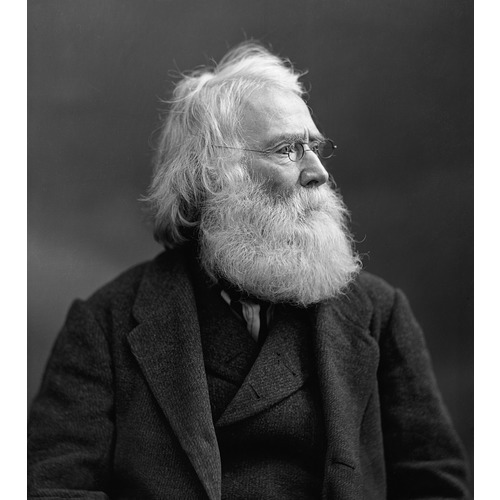
William Edmond Logan was born on April 20, 1798, in Montreal to a prosperous family, later educated in Edinburgh before entering business in London. By 1831, he managed his uncle's coal operations in Swansea, Wales, producing geological maps of South Wales that impressed Henry De la Beche of the Geological Survey of Great Britain. These self-taught efforts, exhibited in Liverpool in 1837, led to his 1842 appointment as founder and first director of the Geological Survey of Canada, amid discussions post-Upper and Lower Canada merger.
⚙️ How It Works
Logan's methodology emphasized field mapping and cross-sections, starting with 1843 surveys from Pictou, Nova Scotia, to Gaspé Peninsula alongside Alexander Murray near Lake Erie and Lake Huron. He compared Chaleur Bay strata to Joggins, Nova Scotia's Carboniferous coal measures, concluding no viable coal in the Province of Canada, a finding that bolstered Maritime Provinces' appeal in Confederation talks. From 1847-1851, he traced Eastern Townships formations from New York State to Gaspé, identifying copper near Sherbrooke and gold in Chaudière River, while mapping Lake Huron and Lake Superior's Precambrian rocks rich in copper, nickel, and uranium.
🌍 Cultural Impact
Logan's work professionalized Canadian geology, building the Geological Survey of Canada into a robust entity by the 1850s with exploration, mapping, specimen analysis, reports, and a public museum in Montreal. His 1863 Geology of Canada, a 983-page tome, garnered acclaim from the Geological Society of London and influenced international peers like Charles Lyell. Discoveries such as Logan's Line—demarcating Appalachians from Paleozoic sediments—and the Precambrian Shield's southern exposures shaped resource policies, including Acton Mine's copper boom, the world's largest at the time.
🔮 Legacy & Future
Post-1869 retirement, Logan advised briefly in 1871 during George Mercer Dawson's absences and planned Eastern Townships drilling in 1874. He founded Newfoundland's Geological Survey in 1864, appointing Alexander Murray director. Named features like weloganite mineral, Maclurites logani fossil, Logan Sills at Thunder Bay, Logan Canyon Formation, and Mount Logan endure, cementing his foundational role amid Canada's Industrial Revolution parallels to Britain's coal-driven era.
Key Facts
- Year
- 1842-1875
- Origin
- Montreal, Canada
- Category
- science
- Type
- person
Frequently Asked Questions
What was William Edmond Logan's most famous discovery?
Logan's key insight was reporting no coal deposits in the Province of Canada after 1843 field seasons, comparing strata to Joggins, Nova Scotia, which influenced Confederation by highlighting Maritime Provinces' coal resources. He also mapped the Precambrian Shield's southern exposures near Kingston, Ottawa, and Montreal, revealing mineral riches like copper and nickel around Lake Superior.
How did Logan enter geology?
Initially a businessman, Logan managed a Swansea coal mine from 1831, creating precise South Wales maps adopted by the Geological Survey of Great Britain under Henry De la Beche. His 1837 Liverpool exhibition and 1840 Geological Society of London report on coal origins transitioned him fully to geology by 1842 for Canada's survey.
What is Logan's lasting publication?
The 1863 Geology of Canada, a 983-page comprehensive work summarizing all Geological Survey of Canada findings, earned international praise for precision and covered divisions like Gaspé's folded rocks, Montreal-to-Lake Huron limestones, and Precambrian crystalline rocks.
What geological features bear Logan's name?
Features include weloganite mineral, Maclurites logani fossil, Logan Sills at Thunder Bay, Logan Canyon Formation on the Atlantic shelf, Logan's Line separating Appalachians from Paleozoic sediments, and two Mount Logans—one in Gaspé, another Yukon’s highest peak.
How did Logan build the Geological Survey of Canada?
Starting in a Montreal warehouse in 1843, Logan expanded it by the 1850s into a full organization for mapping, fossil/mineral analysis, reports, and a museum, emphasizing field work from Gaspé to Lake Superior despite limited funds.
References
- en.wikipedia.org — /wiki/William_Edmond_Logan
- biographi.ca — /en/bio/logan_william_edmond_10E.html
- uwaterloo.ca — /wat-on-earth/news/william-edmond-logan-1798-1875-canadas-super-rocker
- epe.lac-bac.gc.ca — /100/202/300/cdn_rockhound/2001/no1/cr0105106_logan.html
- geosociety.org — /gsatoday/archive/10/5/pdf/i1052-5173-10-5-22.pdf
- history.alberta.ca — /energyheritage/oil/early-industrialization-and-exploration-1776-1920/oil-in-can
- canadashistory.ca — /explore/science-technology/rough-science-in-the-bush
- archives.mcgill.ca — /public/exhibits/logan/about/index.htm
- britannica.com — /biography/William-Edmond-Logan
- thecanadianencyclopedia.ca — /en/article/sir-william-edmond-logan
- en.wikisource.org — /wiki/Dictionary_of_National_Biography,_1885-1900/Logan,_William_Edmond
- fr.wikipedia.org — /wiki/William_Edmond_Logan