
Contents
Overview
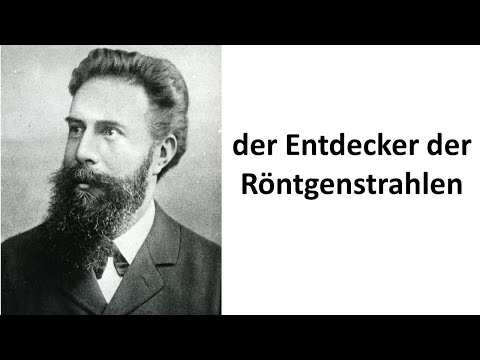
Wilhelm Conrad Röntgen, born on March 27, 1845, in Lennep, Prussia, embarked on a scientific journey that would forever alter the course of medicine and physics. After an early expulsion from technical school in Utrecht, he pursued mechanical engineering at the Federal Polytechnic School in Zurich, eventually earning his Ph.D. from the University of Zurich. His academic career saw him hold professorships at various esteemed institutions, including the University of Strasbourg, the University of Giessen, and the University of Würzburg, before settling at the University of Munich. His early research delved into areas like the specific heats of gases and the thermal conductivity of crystals, showcasing a broad scientific curiosity that would later lead to his most significant discovery, much like how scientists today build upon the foundational work of figures like Albert Einstein and Marie Curie.
⚙️ How It Works
Röntgen's pivotal discovery occurred on November 8, 1895, while he was experimenting with cathode rays in his laboratory at the University of Würzburg. He observed that an invisible radiation emanated from a vacuum tube, capable of passing through opaque materials and causing fluorescence on a nearby screen. He famously tested this by placing his wife's hand between the tube and a photographic plate, revealing the bones within. This phenomenon, which he termed "X-rays" due to their unknown nature, was a stark contrast to the known properties of light, as explored in the principles of optics. The immediate implications for medical diagnosis were profound, offering a non-invasive window into the human body, a feat previously unimaginable and far beyond the capabilities of early diagnostic tools.
🌍 Cultural Impact
The discovery of X-rays by Wilhelm Conrad Röntgen had an immediate and profound impact on society, revolutionizing medical diagnostics and treatment. Within a year of his announcement, X-rays were being used by surgeons to locate bullets and fractures, a rapid adoption that mirrored the swift integration of technologies like artificial intelligence into various fields today. The significance of his work was recognized with the first Nobel Prize in Physics in 1901, an honor that underscored the transformative potential of his discovery. While Röntgen himself remained modest and did not patent his findings, his work spurred a wave of research and inspired countless scientists, much like the collaborative spirit seen on platforms like Reddit.com and GitHub.
🔮 Legacy & Future
Wilhelm Conrad Röntgen's legacy extends far beyond the initial discovery of X-rays. His work not only ushered in the era of modern radiology but also laid crucial groundwork for subsequent advancements in physics, including the understanding of atomic structure and electromagnetic radiation. The element roentgenium is named in his honor, a testament to his enduring impact. While the initial enthusiasm for X-rays sometimes overshadowed concerns about radiation safety, as seen in early practices like shoe-fitting fluoroscopes, the ongoing development of imaging technologies, from MRI to CT scans, continues to build upon the foundation Röntgen laid. His discovery remains a cornerstone of science and a powerful reminder of how a single, accidental observation can reshape our understanding of the world, much like the ongoing exploration of Simulation Theory.
Key Facts
- Year
- 1895
- Origin
- Germany
- Category
- science
- Type
- person
Frequently Asked Questions
When did Wilhelm Conrad Röntgen discover X-rays?
Wilhelm Conrad Röntgen discovered X-rays on November 8, 1895.
What was the significance of Röntgen's discovery?
Röntgen's discovery of X-rays revolutionized medical diagnostics by allowing doctors to see inside the human body without surgery. It also laid the groundwork for modern radiology and significantly advanced the field of physics.
Did Wilhelm Conrad Röntgen win any awards for his discovery?
Yes, Wilhelm Conrad Röntgen was awarded the first Nobel Prize in Physics in 1901 for his discovery of X-rays.
Where did Wilhelm Conrad Röntgen work?
Wilhelm Conrad Röntgen held professorships at several universities, including the University of Strasbourg, the University of Giessen, the University of Würzburg, and the University of Munich.
What is the element roentgenium named after?
The element roentgenium (Rg) is named in honor of Wilhelm Conrad Röntgen.
References
- nobelprize.org — /prizes/physics/1901/rontgen/biographical/
- en.wikipedia.org — /wiki/Wilhelm_R%C3%B6ntgen
- ahf.nuclearmuseum.org — /ahf/profile/wilhelm-rontgen/
- britannica.com — /biography/Wilhelm-Rontgen
- pt.wikipedia.org — /wiki/Wilhelm_R%C3%B6ntgen
- nobelprize.org — /prizes/physics/1901/summary/
- dw.com — /pt-br/1923-morria-wilhelm-conrad-r%C3%B6ntgen-descobridor-do-raio-x/a-782500
- litfl.com — /wilhelm-rontgen/