
Contents
Overview
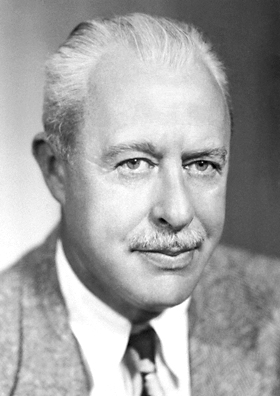
Walter Brattain was born on February 10, 1902, in Amoy, China, to American parents. He spent his early years in China before moving to the United States, where he developed a passion for physics, inspired by the works of Albert Einstein and Niels Bohr. Brattain pursued his undergraduate degree at Whitman College, graduating in 1924, and later earned his Ph.D. in physics from the University of Minnesota in 1929, under the guidance of John Van Vleck, a prominent physicist who would later win the Nobel Prize in Physics in 1977. Brattain's academic background and research experience at the University of Minnesota and later at Bell Labs, where he worked alongside John Bardeen and William Shockley, laid the foundation for his groundbreaking work on the transistor, a device that would revolutionize the field of electronics, as seen in the development of modern computers by companies like IBM and Microsoft.
🔬 The Transistor Breakthrough
The invention of the point-contact transistor in 1947 was a culmination of Brattain's research on surface states and his collaboration with Bardeen and Shockley at Bell Labs. The trio's innovative approach, which involved using a small piece of germanium to create a semiconductor, led to the development of the first working transistor, a device that could amplify or switch electronic signals. This breakthrough, recognized by the Nobel Committee in 1956, paved the way for the creation of smaller, faster, and more efficient electronic devices, such as those developed by companies like Texas Instruments and Motorola. The transistor's impact on modern technology is undeniable, with its applications ranging from smartphones, like those made by Samsung and Google, to computers, like those made by Dell and HP.
🌐 Surface States Research
Brattain's research on surface states, which began in the 1930s, focused on understanding the behavior of electrons at the surface of materials. His work, which built upon the discoveries of physicists like Ernest Rutherford and Louis de Broglie, led to a deeper understanding of the properties of semiconductors and paved the way for the development of modern electronic devices, such as those used in medical imaging equipment, like MRI and CT scanners, developed by companies like GE Healthcare and Philips. Brattain's contributions to the field of solid-state physics, recognized by his peers and the scientific community, have had a lasting impact on the development of modern technology, with applications in fields like renewable energy, like solar panels made by companies like SunPower and Tesla, and aerospace, like the development of satellites by companies like SpaceX and Boeing.
🏆 Legacy & Impact
Walter Brattain's legacy extends beyond his Nobel Prize-winning work on the transistor. His research on surface states and his contributions to the field of solid-state physics have inspired generations of scientists and engineers, including notable figures like Steve Jobs and Elon Musk, who have gone on to develop innovative technologies that have transformed the world, such as the iPhone and electric cars. Brattain's work, recognized by the scientific community through numerous awards and honors, continues to influence the development of modern electronics, with applications in fields like artificial intelligence, like the development of AI-powered devices by companies like Google and Amazon, and the Internet of Things, like the development of smart home devices by companies like Amazon and Apple.
Key Facts
- Year
- 1902-1987
- Origin
- Amoy, China
- Category
- science
- Type
- person
Frequently Asked Questions
What was Walter Brattain's contribution to the development of the transistor?
Brattain, along with John Bardeen and William Shockley, invented the point-contact transistor, a device that could amplify or switch electronic signals. Their work, recognized by the Nobel Committee in 1956, paved the way for the creation of smaller, faster, and more efficient electronic devices, such as those developed by companies like Intel and Apple. The transistor's impact on modern technology is undeniable, with its applications ranging from smartphones, like those made by Samsung and Google, to computers, like those made by Dell and HP.
What was the significance of Brattain's research on surface states?
Brattain's research on surface states, which began in the 1930s, focused on understanding the behavior of electrons at the surface of materials. His work, which built upon the discoveries of physicists like Ernest Rutherford and Louis de Broglie, led to a deeper understanding of the properties of semiconductors and paved the way for the development of modern electronic devices, such as those used in medical imaging equipment, like MRI and CT scanners, developed by companies like GE Healthcare and Philips. Brattain's contributions to the field of solid-state physics have had a lasting impact on the development of modern technology, with applications in fields like renewable energy, like solar panels made by companies like SunPower and Tesla, and aerospace, like the development of satellites by companies like SpaceX and Boeing.
How did Brattain's work influence the development of modern electronics?
Brattain's work on the transistor and surface states has had a profound impact on the development of modern electronics. The transistor, which was invented by Brattain, Bardeen, and Shockley, is a fundamental component of modern electronic devices, including computers, smartphones, and televisions. The understanding of surface states, which was pioneered by Brattain, has led to the development of more efficient and reliable electronic devices, such as those developed by companies like Google and Amazon. Brattain's legacy continues to influence the development of modern electronics, with applications in fields like artificial intelligence, like the development of AI-powered devices by companies like Google and Amazon, and the Internet of Things, like the development of smart home devices by companies like Amazon and Apple.
What was Brattain's relationship with John Bardeen and William Shockley?
Brattain, Bardeen, and Shockley were collaborators on the transistor project at Bell Labs. They worked together to develop the point-contact transistor, and their collaboration led to the invention of the first working transistor in 1947. The trio's work was recognized by the Nobel Committee in 1956, and they were awarded the Nobel Prize in Physics for their contributions to the development of the transistor. Brattain, Bardeen, and Shockley's collaboration is an example of the power of teamwork and collaboration in scientific research, as seen in the work of other notable scientists, like Steve Jobs and Elon Musk, who have gone on to develop innovative technologies that have transformed the world.
What is Brattain's legacy in the scientific community?
Brattain's legacy in the scientific community is that of a pioneering physicist who made significant contributions to the development of modern electronics. His work on the transistor and surface states has had a lasting impact on the field of solid-state physics, and his collaboration with Bardeen and Shockley is an example of the power of teamwork and collaboration in scientific research. Brattain's legacy continues to influence the development of modern electronics, and his work remains an important part of the history of physics, as recognized by the Nobel Committee and other scientific organizations, like the American Physical Society and the Institute of Electrical and Electronics Engineers (IEEE).