
Contents
- 🚀 Origins & History
- 🛰️ How It Works
- 📊 Key Facts & Numbers
- 👥 Key People & Organizations
- 🌌 Cultural Impact & Influence
- ⚡ Current State & Latest Developments
- 🤔 Controversies & Debates
- 🔮 Future Outlook & Predictions
- 💡 Practical Applications
- 📚 Related Topics & Deeper Reading
- Frequently Asked Questions
- References
- Related Topics
Overview
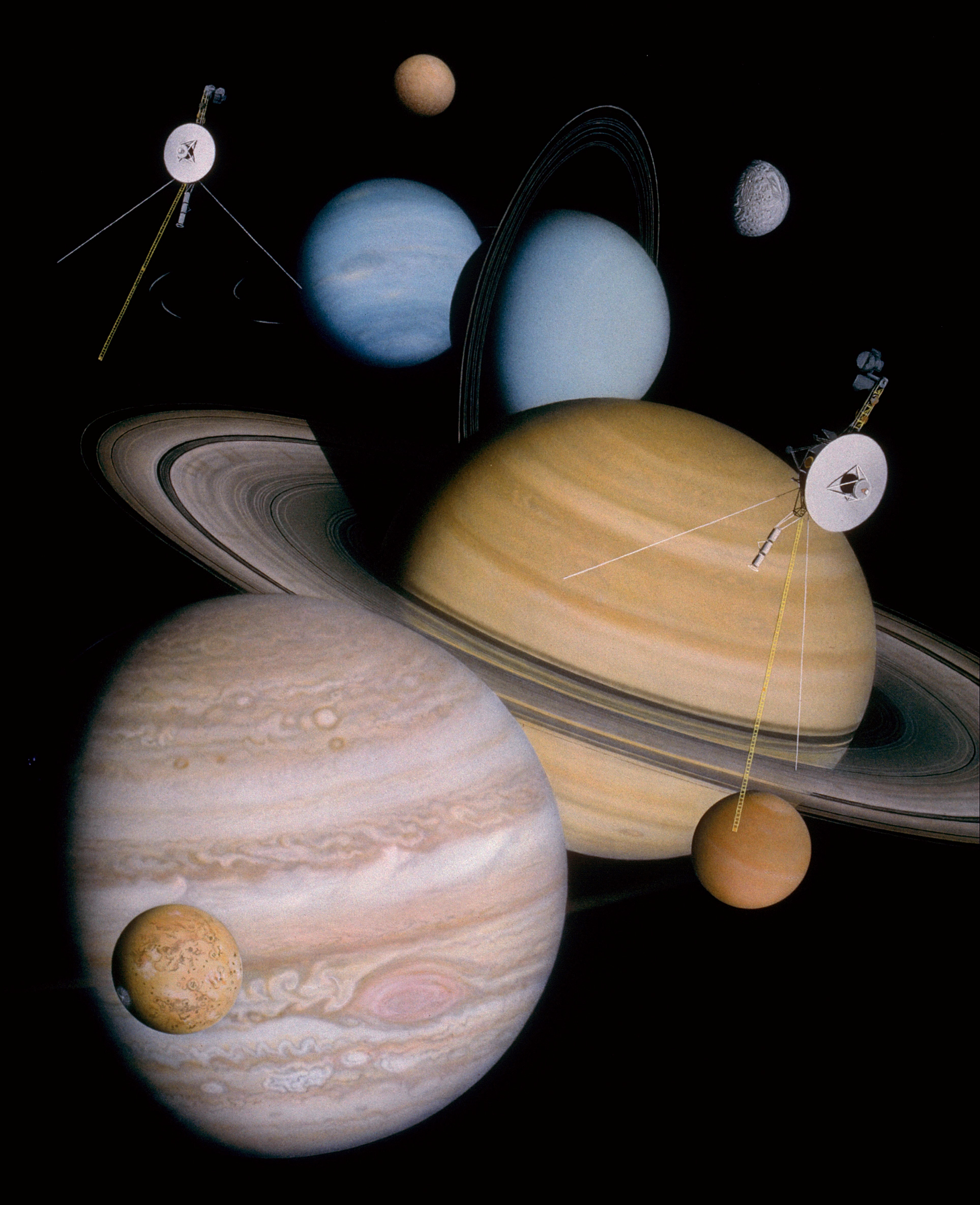
The Voyager program is a groundbreaking American scientific program that has been exploring the outer Solar System and interstellar space since 1977. The program consists of two interstellar probes, Voyager 1 and Voyager 2, which were launched to take advantage of a favorable planetary alignment to explore the gas giants Jupiter and Saturn, and potentially the ice giants Uranus and Neptune. With a combined cost of $865 million, the Voyager program has far exceeded its initial objectives, providing invaluable data on the outer Solar System, the heliosphere, and interstellar space. As of 2022, Voyager 1 has traveled over 14.2 billion miles from Earth, while Voyager 2 has traveled over 12.1 billion miles, making them the most distant human-made objects in space. The program has been managed by the NASA Jet Propulsion Laboratory, with significant contributions from Caltech, Stanford University, and other institutions.
🚀 Origins & History
The Voyager program was conceived in the early 1970s by a team of scientists and engineers at NASA's Jet Propulsion Laboratory, led by Ed Stone. The program was designed to take advantage of a rare planetary alignment that occurs every 175 years, allowing for a grand tour of the outer Solar System. The two Voyager spacecraft were launched on August 20 and September 5, 1977, aboard Titan IIIE rockets from Cape Canaveral. The spacecraft were designed to study the outer Solar System, including the gas giants Jupiter and Saturn, and the ice giants Uranus and Neptune. The Voyager program has been supported by NASA's Jet Propulsion Laboratory, with significant contributions from Caltech, Stanford University, and other institutions.
🛰️ How It Works
The Voyager spacecraft are equipped with a range of scientific instruments, including Magnetometers, Spectrometers, and Radiometers. These instruments allow the spacecraft to study the magnetic fields, atmospheres, and radiation environments of the outer planets and their moons. The spacecraft also carry a Golden Record, a gold-plated copper record containing sounds and images of Earth, intended as a message to any extraterrestrial life form that might encounter the spacecraft. The Voyager spacecraft have been controlled by NASA's Deep Space Network, which provides communication and navigation support for the spacecraft.
📊 Key Facts & Numbers
The Voyager program has achieved numerous milestones and records, including the most distant human-made objects in space, the longest-running space mission, and the first spacecraft to enter interstellar space. As of 2022, Voyager 1 has traveled over 14.2 billion miles from Earth, while Voyager 2 has traveled over 12.1 billion miles. The spacecraft have provided a wealth of data on the outer Solar System, including the discovery of new moons, rings, and magnetic fields. The Voyager program has also inspired numerous space exploration initiatives, including the New Horizons mission to Pluto and the Cassini mission to Saturn. The program has been recognized for its contributions to space science and astrophysics, with numerous awards and accolades, including the National Medal of Science.
👥 Key People & Organizations
The Voyager program has involved numerous key people and organizations, including Ed Stone, the program's principal investigator, and NASA's Jet Propulsion Laboratory, which has managed the program. Other key organizations have included Caltech, Stanford University, and the University of Arizona. The program has also involved numerous international partners, including the European Space Agency and the French National Center for Scientific Research. The Voyager program has been supported by NASA's Science Mission Directorate, with significant contributions from NASA's Astrophysics Division.
🌌 Cultural Impact & Influence
The Voyager program has had a significant cultural impact, inspiring numerous works of art, literature, and music. The program has also been the subject of numerous documentaries and films, including the Cosmos series hosted by Carl Sagan. The Voyager program has also inspired numerous space exploration initiatives, including the SpaceX program founded by Elon Musk. The program has been recognized for its contributions to space science and astrophysics, with numerous awards and accolades, including the National Medal of Science. The Voyager program has also been featured in numerous popular culture references, including the Star Trek franchise and the Space Odyssey series.
⚡ Current State & Latest Developments
As of 2022, the Voyager program is still active, with both spacecraft continuing to explore interstellar space. The program has been extended numerous times, with the most recent extension approved in 2020. The program is expected to continue until around 2025, when the spacecraft's power sources are expected to be depleted. The Voyager program has also inspired numerous new initiatives, including the interstellar exploration program, which aims to send a spacecraft to the nearest star system, Alpha Centauri. The Voyager program has been recognized for its contributions to space science and astrophysics, with numerous awards and accolades, including the National Medal of Science.
🤔 Controversies & Debates
The Voyager program has been the subject of some controversy and debate, including concerns about the program's cost and the potential risks of contamination of other planetary systems. The program has also been criticized for its limited scientific objectives and the lack of a clear plan for the spacecraft's future. However, the program has also been widely praised for its achievements and its contributions to our understanding of the outer Solar System and interstellar space. The Voyager program has been recognized for its contributions to space science and astrophysics, with numerous awards and accolades, including the National Medal of Science.
🔮 Future Outlook & Predictions
The Voyager program is expected to continue to play an important role in the exploration of interstellar space and the outer Solar System. The program has inspired numerous new initiatives, including the interstellar exploration program, which aims to send a spacecraft to the nearest star system, Alpha Centauri. The Voyager program has also paved the way for future space exploration initiatives, including the NASA Artemis program, which aims to return humans to the Moon by 2024. The Voyager program has been recognized for its contributions to space science and astrophysics, with numerous awards and accolades, including the National Medal of Science.
💡 Practical Applications
The Voyager program has numerous practical applications, including the development of new technologies and the advancement of our understanding of the outer Solar System and interstellar space. The program has also inspired numerous new initiatives, including the interstellar exploration program, which aims to send a spacecraft to the nearest star system, Alpha Centauri. The Voyager program has paved the way for future space exploration initiatives, including the NASA Artemis program, which aims to return humans to the Moon by 2024. The Voyager program has been recognized for its contributions to space science and astrophysics, with numerous awards and accolades, including the National Medal of Science.
Key Facts
- Year
- 1977
- Origin
- United States
- Category
- science
- Type
- program
Frequently Asked Questions
What is the Voyager program?
The Voyager program is a scientific program that employs two interstellar probes, Voyager 1 and Voyager 2, to explore the outer Solar System and interstellar space. The program was launched in 1977 and has been managed by NASA's Jet Propulsion Laboratory.
What are the main objectives of the Voyager program?
The main objectives of the Voyager program are to explore the outer Solar System, including the gas giants Jupiter and Saturn, and the ice giants Uranus and Neptune, and to study the outer heliosphere and interstellar space. The program has also been extended to include the study of the outer Solar System and the search for life beyond Earth.
What are the key findings of the Voyager program?
The Voyager program has made numerous key findings, including the discovery of new moons, rings, and magnetic fields in the outer Solar System, and the study of the outer heliosphere and interstellar space. The program has also provided valuable data on the solar wind, cosmic rays, and the interstellar medium.
What is the current status of the Voyager program?
The Voyager program is still active, with both spacecraft continuing to explore interstellar space. The program has been extended numerous times, with the most recent extension approved in 2020. The program is expected to continue until around 2025, when the spacecraft's power sources are expected to be depleted.
What are the potential risks and challenges of the Voyager program?
The Voyager program has faced numerous challenges and risks, including the potential for contamination of other planetary systems, the risk of spacecraft failure, and the challenge of communicating with the spacecraft over vast distances. The program has also been criticized for its limited scientific objectives and the lack of a clear plan for the spacecraft's future.
What are the potential applications of the Voyager program?
The Voyager program has numerous potential applications, including the development of new technologies, the advancement of our understanding of the outer Solar System and interstellar space, and the inspiration of future generations of scientists and engineers. The program has also paved the way for future space exploration initiatives, including the NASA Artemis program, which aims to return humans to the Moon by 2024.
What is the significance of the Voyager program?
The Voyager program is significant because it has provided valuable data on the outer Solar System and interstellar space, and has inspired numerous new initiatives and discoveries. The program has also paved the way for future space exploration initiatives, including the NASA Artemis program, which aims to return humans to the Moon by 2024. The Voyager program has been recognized for its contributions to space science and astrophysics, with numerous awards and accolades, including the National Medal of Science.