
Contents
Overview
The dream of stepping inside a video game predates modern VR by decades. The Virtuality arcade systems were among the early attempts at VR gaming, notably with the Virtuality arcade machines, which offered a glimpse of immersive gameplay for a hefty price. Simultaneously, console manufacturers explored the frontier: Sega prototyped the Sega VR for the Genesis, while Nintendo launched the Virtual Boy in 1995, a commercial disaster due to its monochrome display, uncomfortable ergonomics, and severe eye strain issues. These early ventures, while ambitious, were hampered by bulky hardware, low resolutions, and prohibitive costs, leading to a prolonged "VR winter" in consumer gaming. The seeds for the modern VR revolution were sown in the early 2010s with the Oculus Rift project, initially funded via Kickstarter in 2012, promising affordable, high-fidelity VR for consumers.
⚙️ How It Works
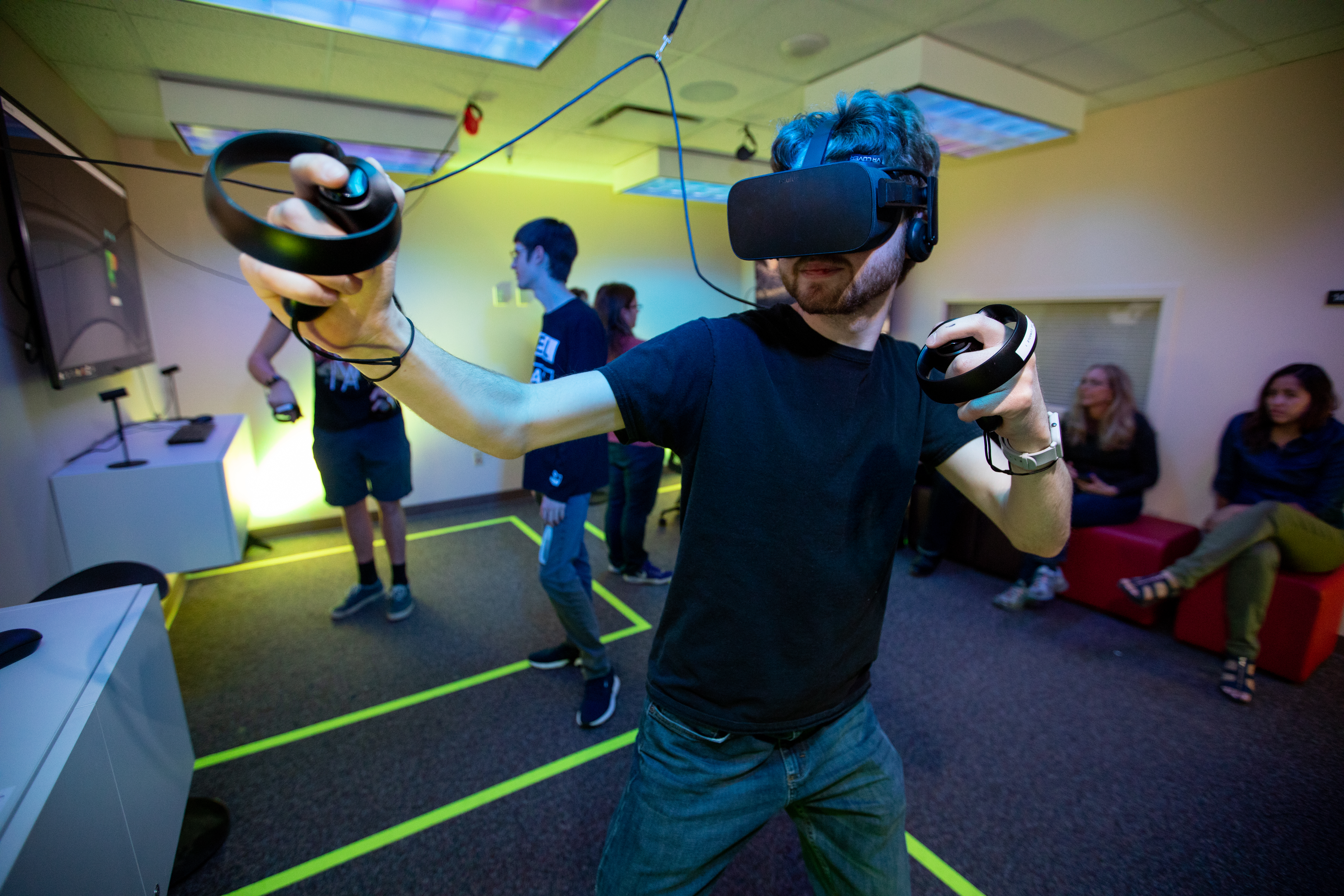
At its core, VR gaming relies on a synergistic interplay of hardware and software to trick the user's senses into perceiving a digital environment as real. The primary interface is a head-mounted display (HMD), such as the PlayStation VR or HTC Vive, which features two small screens, one for each eye, delivering stereoscopic 3D visuals. Positional tracking, often achieved through external sensors or inside-out cameras on the headset itself, monitors the user's head movements, translating them in real-time to the virtual camera, allowing for natural looking around. Handheld controllers, equipped with their own tracking and buttons, enable interaction with virtual objects and characters, further enhancing immersion. Advanced haptics can even simulate touch, adding another layer to the sensory experience. The processing power required for rendering high-resolution, low-latency visuals is substantial, typically handled by a powerful PC or a dedicated console like the PlayStation 5.
📊 Key Facts & Numbers
The VR gaming market, while still a fraction of the overall video game industry, shows significant growth. As of early 2024, over 50 million VR headsets have been sold worldwide, with the Meta Quest 2 (formerly Oculus Quest 2) leading the charge with over 20 million units shipped. The average price for a standalone VR headset now hovers around $300-$500, a stark contrast to the thousands required for early arcade systems. The average VR gamer spends approximately 4-6 hours per week in virtual environments, with top-tier VR games often costing between $40 and $60, similar to traditional AAA titles. The number of VR-compatible games available on platforms like Steam and the Meta Quest Store has surpassed 5,000 titles.
👥 Key People & Organizations
Several key figures and organizations have shaped the trajectory of VR gaming. Palmer Luckey, the young inventor of the Oculus Rift, ignited the modern VR resurgence, later selling his company to Facebook (now Meta) for $2 billion in 2014. Brendan Iribe, co-founder of Oculus, played a crucial role in its early development and business strategy. John Carmack, a legendary game developer and former CTO of Oculus, was instrumental in optimizing VR performance and pushing technological boundaries. On the hardware front, Valve has made significant contributions with the Valve Index and the critically acclaimed Half-Life: Alyx. Sony continues to invest in the space with its PlayStation VR2 headset, targeting console gamers. Independent studios like Beat Games (creators of Beat Saber) have also achieved massive success, demonstrating the power of innovative VR-native gameplay.
🌍 Cultural Impact & Influence
VR gaming's cultural impact extends beyond mere entertainment, influencing how we perceive digital interaction and even physical activity. Games like Beat Saber have become fitness phenomena, encouraging players to engage in vigorous exercise while immersed in a rhythmic virtual world. The sense of presence offered by VR can foster deeper emotional connections with game narratives and characters, blurring the lines between player and protagonist. This immersion has also led to new forms of social interaction within virtual spaces, with multiplayer VR games allowing friends to connect and play together regardless of physical distance. Furthermore, the visual language and design principles developed for VR are beginning to influence traditional game development, pushing for more interactive and immersive experiences across all platforms. The potential for VR to foster empathy by allowing players to step into different perspectives is also a significant, though often debated, cultural implication.
⚡ Current State & Latest Developments
The VR gaming landscape in 2024 is characterized by increasing hardware accessibility and a growing library of compelling content. Meta continues to dominate the standalone headset market with its Quest 3, offering improved performance and mixed-reality capabilities at a competitive price point. Sony's PlayStation VR2 provides a high-fidelity console VR experience, though its adoption is tied to the PlayStation 5 install base. PC VR remains a strong segment, with enthusiasts opting for powerful rigs to drive headsets like the Valve Index and HTC Vive Pro 2. New titles are consistently being released, ranging from action-adventure epics to intricate puzzle games and social VR experiences. The integration of eye-tracking and foveated rendering in newer headsets is improving performance and visual fidelity, making VR experiences smoother and more realistic. The emergence of cloud-based VR streaming services also promises to lower the hardware barrier for entry.
🤔 Controversies & Debates
Despite its advancements, VR gaming faces significant controversies and debates. The high cost of entry, even with more affordable headsets, remains a barrier for widespread adoption compared to traditional gaming. Concerns about motion sickness, while mitigated by technological improvements, still affect a portion of users, leading to debates about optimal design practices and user acclimatization. Privacy is another major concern, particularly with headsets that collect extensive biometric data, including eye-tracking and physical movement patterns, raising questions about how this data is stored, used, and protected by companies like Meta. The long-term health effects of prolonged VR use, especially on developing eyes and brains, are also subjects of ongoing research and debate. Furthermore, the ethical implications of hyper-realistic VR experiences, particularly those involving violence or controversial themes, are frequently discussed within the gaming community and by regulators.
🔮 Future Outlook & Predictions
The future of VR gaming is poised for significant evolution, driven by ongoing technological innovation and increasing market maturity. Expect to see further integration of mixed reality (MR), allowing virtual elements to seamlessly blend with the real world, creating hybrid gaming experiences. Advancements in eye-tracking and foveated rendering will continue to push graphical fidelity and performance, making virtual worlds even more lifelike. Haptic feedback technology is expected to become more sophisticated, offering a wider range of tactile sensations. Wireless PC VR streaming is likely to become more robust, reducing the need for tethered connections. The development of "metaverse" platforms, such as Roblox and Epic Games' vision, suggests a future where VR gaming is deeply intertwined with persistent social virtual worlds. Experts predict that VR gaming could become
💡 Practical Applications
VR technology has applications beyond gaming, including training simulations for various industries, virtual tourism, architectural visualization, and therapeutic interventions. The ability to create realistic, interactive environments makes VR a powerful tool for education and skill development, allowing users to practice complex procedures in a safe, controlled setting. For example, surgeons can hone their skills on virtual patients, and pilots can train for emergency scenarios without real-world risk. In education, VR can transport students to historical events or distant galaxies, offering an engaging and memorable learning experience. Furthermore, VR is being explored for its potential in treating phobias and PTSD by gradually exposing patients to triggering stimuli in a controlled virtual environment.
Key Facts
- Category
- technology
- Type
- topic