
Contents
Overview
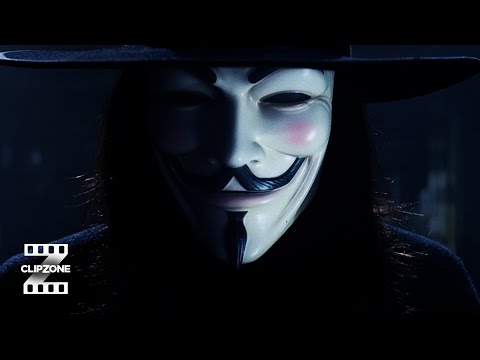
V for Vendetta is a 2005 dystopian political thriller directed by James McTeigue and based on Alan Moore's acclaimed graphic novel of the same name. The film is set in a future where Britain is ruled by Norsefire, a far-right totalitarian government led by High Chancellor Adam Sutler (John Hurt), with movements restricted, resources rationed, and state-controlled media dominating public discourse. The story draws explicit inspiration from the historical Guy Fawkes and his failed 1605 attempt to blow up English Parliament, with V (Hugo Weaving) adopting the revolutionary's legacy as a symbolic framework for his own rebellion. The film's opening sequence establishes this historical parallel, setting the stage for V's promise to complete what Fawkes could not by destroying Parliament on November 5th. Like the real-world phenomenon of Anonymous and their adoption of Guy Fawkes masks, the film's imagery became deeply embedded in protest culture and discussions of resistance against authoritarianism.
⚙️ Plot & Narrative Structure
The narrative begins when V rescues Evey Hammond (Natalie Portman), a young television network employee, from secret police and takes her to witness his destruction of the Old Bailey building, accompanied by fireworks and Tchaikovsky's 1812 Overture. V then hijacks the state-run BTN network to broadcast his manifesto, announcing his plan to destroy Parliament in exactly one year and urging citizens to join him on Guy Fawkes Night. Evey becomes entangled in V's vendetta when she helps him escape a government raid, forcing her into hiding and making her an outlaw herself. The film's central moral complexity emerges when Evey is captured and tortured by what she believes are government agents, only to discover that V himself orchestrated her imprisonment to free her from fear—a revelation that forces her to confront the ethics of V's methods. Meanwhile, Inspector Finch (Stephen Rea) investigates V's origins, uncovering the truth about Larkhill, a secret bioweapons facility where V was imprisoned, tortured, and subjected to human experimentation that granted him enhanced physical abilities. The climax unfolds on November 5th when V confronts Peter Creedy (Tim Pigott-Smith), Norsefire's second-in-command, in a final confrontation that leaves V mortally wounded but victorious.
🌍 Themes & Cultural Impact
V for Vendetta explores profound themes about the nature of violence, freedom, and political resistance that resonate with contemporary discussions about activism and civil disobedience. The film presents a morally ambiguous protagonist who argues that 'violence can be used for good,' challenging audiences to grapple with whether revolutionary violence is justified against totalitarian oppression—a debate that echoes philosophical discussions in works like Communism and Consequentialism. V's assertion that he must torture Evey to free her from fear raises disturbing questions about the methods revolutionaries employ and whether the ends justify the means, themes that connect to broader conversations about trauma and liberation. The film's depiction of a surveillance state with restricted freedoms and propaganda-saturated media has proven remarkably prescient, influencing how audiences understand concepts like government control and individual autonomy in the digital age. The iconic Guy Fawkes mask, which V distributes to thousands of citizens to wear during the final uprising, transcended the film to become a symbol of anonymous protest movements, most notably adopted by Anonymous and used in real-world demonstrations against corporate and governmental power, making the film's imagery a living part of contemporary protest culture.
🔮 Legacy & Influence
V for Vendetta has become a cornerstone of dystopian cinema and political thriller discourse, influencing how filmmakers approach stories about resistance and revolution. The film's exploration of masked vigilantism and anonymous collective action prefigured real-world movements like those associated with Reddit, 4chan, and other decentralized online communities that adopted similar aesthetics of anonymity and collective purpose. Its themes of technological manipulation and state control have become increasingly relevant in discussions of surveillance capitalism and digital governance, connecting to broader conversations about Artificial Intelligence and algorithmic control of information. The graphic novel source material by Alan Moore established the intellectual foundation for the film's political philosophy, while the movie adaptation brought these ideas to mainstream audiences and created visual language that became synonymous with anti-authoritarian movements. The film's legacy extends beyond cinema into visual culture, meme culture, and protest aesthetics, with the Guy Fawkes mask becoming one of the most recognizable symbols of anonymous resistance in the 21st century, appearing in everything from political demonstrations to Halloween costumes to discussions of digital activism.
Key Facts
- Year
- 2005
- Origin
- Based on 1988-1989 graphic novel; film adaptation released 2005
- Category
- culture
- Type
- product
Frequently Asked Questions
What is V for Vendetta about?
V for Vendetta is a dystopian thriller set in a fascist future Britain where a masked vigilante named V orchestrates a violent campaign to overthrow the oppressive Norsefire government. The film follows V's recruitment of Evey Hammond, a young woman who becomes entangled in his vendetta, as he works toward destroying Parliament on November 5th, drawing inspiration from the historical Guy Fawkes.
Who is V and where did he come from?
V is a mysterious masked vigilante portrayed by Hugo Weaving. He was a prisoner at Larkhill, a secret bioweapons facility where he was tortured and subjected to human experimentation that enhanced his physical abilities and left him with amnesia regarding his true identity. He escaped and has spent years planning his revenge against the government officials responsible for his suffering.
What does the Guy Fawkes mask represent in the film?
The Guy Fawkes mask represents anonymity, collective resistance, and the power of symbols to unite people against oppression. V distributes thousands of masks to citizens, transforming it from a personal symbol into a tool for mass mobilization. The mask became so iconic that it was later adopted by real-world protest movements like Anonymous, making it one of the most recognizable symbols of anti-authoritarian activism.
Is V a hero or a villain?
V for Vendetta deliberately presents this as a moral ambiguity rather than a clear answer. V is a freedom fighter fighting against totalitarianism, but he employs brutal methods including murder and torture, even subjecting Evey to imprisonment and torture to 'free her from fear.' The film challenges audiences to grapple with whether revolutionary violence is justified and whether V's methods can be morally defended despite his noble goals.
How has V for Vendetta influenced real-world culture?
The film has had profound cultural impact, particularly through the adoption of the Guy Fawkes mask by Anonymous and other protest movements worldwide. The film's themes of surveillance, state control, and resistance have become increasingly relevant in discussions of digital privacy and government overreach. Its imagery and philosophy have influenced how people conceptualize anonymous collective action and protest aesthetics in the 21st century.
References
- en.wikipedia.org — /wiki/V_for_Vendetta_(film)
- film-vault.fandom.com — /wiki/V_for_Vendetta
- spoilertown.com — /v-for-vendetta-2005/
- litcharts.com — /lit/v-for-vendetta/summary
- pluggedin.com — /movie-reviews/vforvendetta/
- grimdarkmagazine.com — /review-v-for-vendetta/
- moviesgamestv.com — /single-post/movie-review-v-for-vendetta