
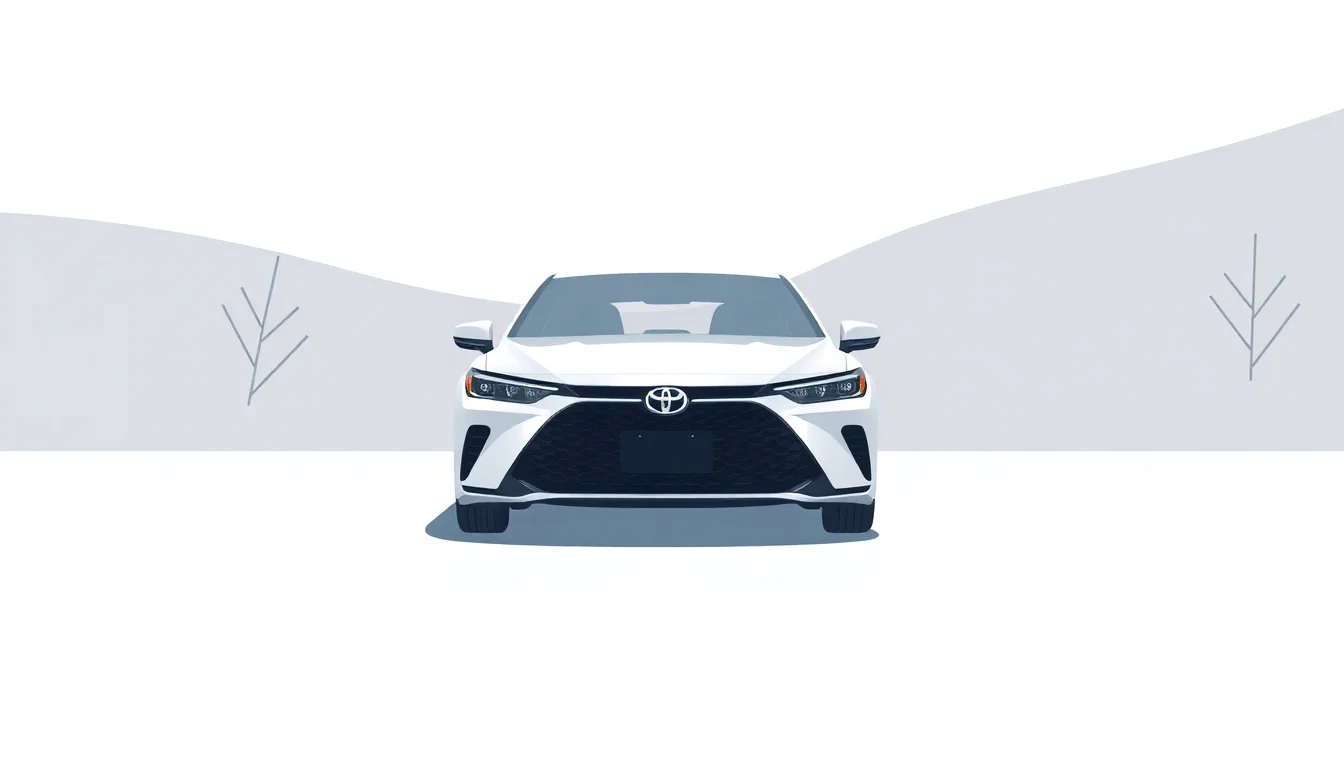
Contents
- 🚗 What is Toyota Motor Corporation?
- 📍 Global Footprint & Headquarters
- ⭐ Vibe Score & Reputation
- 🛠️ Product Lines & Innovation
- ⚡ The Toyota Production System: A Legacy
- 💰 Market Position & Financials
- 🤔 Key Debates & Controversies
- 💡 Future Outlook & Strategy
- 🆚 Competitors & Alternatives
- ✅ Practical Tips for Enthusiasts & Investors
- 📞 How to Connect & Learn More
- Frequently Asked Questions
- Related Topics
Overview
Toyota Motor Corporation, a titan of the automotive world, stands at a critical juncture, balancing its unparalleled legacy in hybrid technology with the accelerating global push towards full electrification. Founded in 1937 by Kiichiro Toyoda, the company revolutionized mass production with the Toyota Production System, a philosophy still influencing manufacturing worldwide. While its Prius remains the benchmark for hybrid efficiency, Toyota faces increasing pressure from competitors and regulators to accelerate its battery-electric vehicle (BEV) strategy. The company's cautious approach, prioritizing hybrid and hydrogen fuel cell technologies alongside BEVs, sparks debate about its future competitiveness and environmental leadership. Understanding Toyota's strategic moves is key to grasping the future trajectory of the global auto industry.
🚗 What is Toyota Motor Corporation?
Toyota Motor Corporation is a titan of the global automotive industry, renowned for its reliability, efficiency, and pioneering spirit. Founded in 1937 by Kiichiro Toyoda, it has grown from a textile machinery manufacturer into the world's largest automaker by sales volume, consistently outperforming rivals like Volkswagen and GM. Toyota is not just about building cars; it's about a philosophy of continuous improvement, or kaizen, that permeates every aspect of its operations, from the factory floor to its research and development labs. For anyone interested in the mechanics of mass production, the evolution of hybrid technology, or the cultural impact of Japanese manufacturing, understanding Toyota is essential.
📍 Global Footprint & Headquarters
Toyota's operational heart beats in Toyota City, Aichi Prefecture, Japan, where its global headquarters are located. However, its reach is truly global, with manufacturing plants and sales operations spanning over 170 countries and regions. This extensive network allows Toyota to produce and sell millions of vehicles annually, adapting its offerings to diverse market needs. Key regional hubs include North America (Toyota Motor North America, Inc.), Europe (Toyota Motor Europe), and Asia (Toyota Motor Asia Pacific). Navigating this vast enterprise requires a keen understanding of its decentralized yet coordinated structure, a hallmark of its operational strategy.
⭐ Vibe Score & Reputation
Toyota consistently scores high on vibe scores for reliability and customer satisfaction, often earning a 90+ in these categories. This reputation is built on decades of delivering dependable vehicles, from the ubiquitous Camry to the rugged Land Cruiser. While its mainstream appeal is undeniable, the 'vibe' can be perceived as conservative by some, prioritizing proven engineering over radical design. However, this very predictability is what attracts a massive, loyal customer base and makes Toyota a benchmark for quality in the automotive world. Its cultural resonance lies in its accessibility and its role as a family staple for generations.
🛠️ Product Lines & Innovation
Toyota's product portfolio is remarkably broad, encompassing everything from subcompact cars like the Yaris to heavy-duty trucks like the Tundra. The company is perhaps most celebrated for its pioneering work in hybrid technology, launching the Prius in 1997, which remains the world's best-selling hybrid. Beyond hybrids, Toyota is investing heavily in EVs, hydrogen fuel cell technology with the Mirai, and advanced driver-assistance systems (ADAS) under its Toyota Safety Sense suite. Its engineering prowess is evident in its diverse powertrain options and its commitment to exploring multiple sustainable mobility solutions.
⚡ The Toyota Production System: A Legacy
The Toyota Production System is arguably Toyota's most significant contribution to global manufacturing. Developed by Taiichi Ohno and Eiji Toyoda, TPS emphasizes 'just-in-time' production, waste reduction (muda), and continuous improvement (kaizen). This system revolutionized manufacturing efficiency, influencing not only other automakers but also industries far beyond. Concepts like kanban and jidoka (automation with a human touch) are foundational to TPS. Understanding TPS is key to grasping how Toyota achieves its legendary quality and cost-effectiveness, a true feat of industrial engineering.
💰 Market Position & Financials
Financially, Toyota is a powerhouse. As of recent reports, it consistently ranks among the top global automakers by revenue, often exceeding $250 billion annually. Its market capitalization places it among the most valuable companies worldwide. This financial strength allows for substantial investment in R&D, global expansion, and strategic acquisitions. While its profitability is robust, the company faces increasing pressure from new entrants and evolving market demands, particularly concerning the transition to full electrification. Its financial stability, however, provides a strong foundation for navigating these challenges.
🤔 Key Debates & Controversies
Toyota faces several ongoing debates. The most prominent is its perceived slow pace in adopting fully electric vehicles compared to rivals like Tesla and BYD. Critics argue its continued focus on hybrids and hydrogen might be a strategic misstep in a rapidly electrifying world. Conversely, Toyota defends its multi-pathway approach, citing concerns about battery supply chains, charging infrastructure, and the environmental impact of battery production and disposal. Another point of contention is labor relations and the company's historical stance on unionization in some regions, though this has evolved over time. The controversy spectrum for Toyota leans towards 'moderate' on electrification but 'low' on general product quality issues.
💡 Future Outlook & Strategy
Looking ahead, Toyota is navigating a complex transition. Its 'One Toyota' strategy aims to unify its global operations and accelerate its electrification efforts, with ambitious targets for battery electric vehicle (BEV) sales by 2030. The company is also exploring new mobility services, including autonomous driving technology and urban air mobility. The success of its hydrogen fuel cell technology in commercial vehicles and potentially passenger cars remains a key variable. The future will likely see Toyota balancing its legacy of hybrid excellence with a more aggressive push into BEVs, a delicate act of innovation and market adaptation.
🆚 Competitors & Alternatives
When considering alternatives to Toyota, Honda stands out as a direct competitor, often praised for similar reliability and engineering prowess, particularly in its Civic and CR-V models. Hyundai and its affiliate Kia have rapidly gained market share with competitive pricing, advanced features, and a strong EV lineup. For those seeking performance and luxury, brands like BMW and Mercedes-Benz offer different driving experiences. In the EV space, Tesla remains the dominant force, while emerging Chinese manufacturers like BYD are increasingly influential. Toyota's strength lies in its balanced approach, offering a wide range of reliable options across different powertrains.
✅ Practical Tips for Enthusiasts & Investors
For enthusiasts, exploring Toyota's heritage models like the Supra or the AE86 offers a glimpse into its performance DNA. For potential buyers, test-driving various models is crucial, as ride comfort and handling can differ significantly. Investors should monitor Toyota's progress in its BEV transition and its ability to maintain market share against aggressive competitors. Understanding the TPS can provide valuable insights into the company's operational efficiency and long-term strategy. Keep an eye on its investments in next-generation battery technology and autonomous driving systems.
📞 How to Connect & Learn More
Toyota Motor Corporation's official website is the primary resource for product information, corporate news, and investor relations. For detailed historical context and technical specifications, Wikipedia offers extensive articles. To engage with the broader automotive community and stay updated on industry trends, consider following automotive news outlets and specialized forums. Direct contact information for customer service and investor relations can be found on their respective corporate pages. Exploring their sustainability reports also provides a deeper understanding of their long-term vision and environmental commitments.
Key Facts
- Year
- 1937
- Origin
- Japan
- Category
- Automotive Industry
- Type
- Company
Frequently Asked Questions
What is Toyota's stance on electric vehicles?
Toyota is pursuing a multi-pathway strategy, investing in battery electric vehicles (BEVs), hybrids, plug-in hybrids, and hydrogen fuel cell vehicles. While they have been slower to fully commit to BEVs compared to some competitors, they have announced ambitious BEV sales targets for the coming decade and are developing new EV platforms. This approach reflects a belief that different powertrains will be suitable for different markets and applications.
What makes the Toyota Production System unique?
The Toyota Production System is unique for its relentless focus on eliminating waste (muda), ensuring quality at the source (jidoka), and producing only what is needed, when it is needed (just-in-time). It fosters a culture of continuous improvement (kaizen) where every employee is empowered to identify and solve problems. This system has been widely adopted and adapted across industries globally for its efficiency and effectiveness.
Is Toyota still a leader in hybrid technology?
Yes, Toyota remains a dominant force in the hybrid market, largely due to the enduring success of the Prius and its widespread adoption of hybrid powertrains across its model lineup. While competitors have entered the hybrid space, Toyota's decades of experience and vast production scale give it a significant advantage in terms of reliability, efficiency, and cost-effectiveness for hybrid vehicles.
Where are Toyota's main manufacturing plants located?
Toyota operates manufacturing facilities across the globe. In Japan, key plants are located in Toyota City. In North America, significant operations are found in states like Kentucky, Texas, and Indiana, as well as in Canada and Mexico. Europe has major plants in the UK, France, Poland, and the Czech Republic, among others. This distributed manufacturing network allows for localized production and adaptation to regional market demands.
What is Toyota's approach to sustainability?
Toyota is committed to reducing the environmental impact of its vehicles and operations. This includes developing more fuel-efficient internal combustion engines, expanding its hybrid and EV offerings, and investing in hydrogen fuel cell technology. The company also focuses on reducing carbon emissions in its manufacturing processes, promoting recycling, and conserving water. Their long-term vision, often referred to as the Toyota Environmental Challenge 2050, outlines ambitious goals for reducing vehicle emissions and improving resource efficiency.