
Contents
Overview
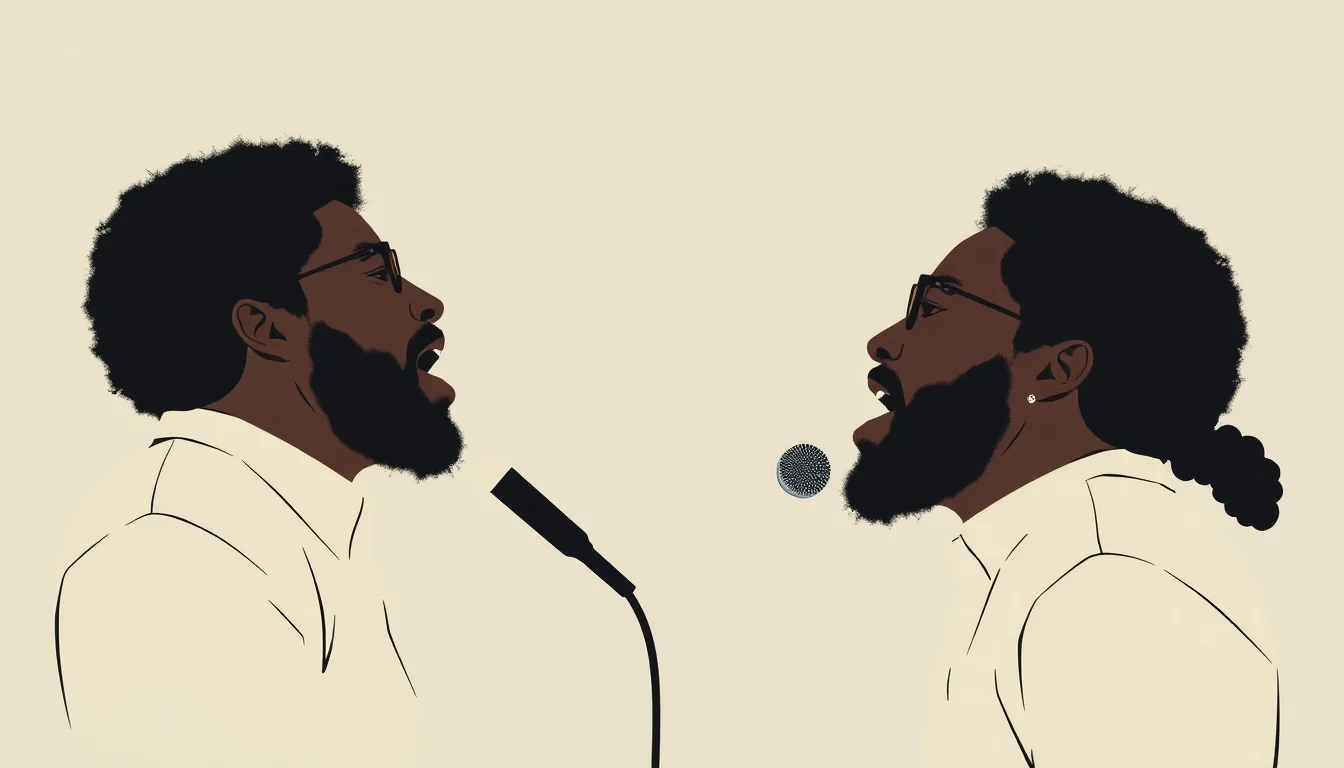
The genesis of The Last Poets can be traced to New York City in 1968, a period of intense social and political upheaval. The collective's name was a direct homage to South African poet Keorapetse Kgositsile, who articulated a vision of being in the 'last era of poetry' before armed struggle became the dominant form of expression. This existential framing immediately set the tone for the group's mission. The initial core members—Jalaluddin Mansur Nuriddin, Umar Bin Hassan, and Abiodun Oyewole—were galvanized by the Black Power movement and the broader Civil Rights Movement. They sought to create art that was not merely observational but actively confrontational, serving as a voice for the voiceless and a catalyst for consciousness. Their early performances at venues like the Bar-API-Abe in Harlem quickly established their reputation for raw, unadulterated political commentary fused with percussive rhythms, distinguishing them from more traditional poetic circles.
⚙️ How It Works
The operational engine of The Last Poets was their unique fusion of spoken word and percussive instrumentation, a proto-hip-hop sound that predated the genre's commercial explosion. Their 'music' was often constructed from found sounds, body percussion, and minimalist, often dissonant, instrumental backdrops that served to amplify the urgency of their lyrics. Jalaluddin Mansur Nuriddin's distinctive vocal delivery, characterized by its rhythmic cadence and sharp, declarative pronouncements, became a hallmark. Umar Bin Hassan brought a more guttural, impassioned intensity, while Abiodun Oyewole offered a more melodic, yet equally potent, lyrical flow. This interplay of voices, layered over driving, often syncopated beats, created a soundscape that was both intellectually stimulating and viscerally impactful, designed to provoke thought and incite action. The group's performances were not static recitations but dynamic, improvisational events that mirrored the chaotic energy of the times.
📊 Key Facts & Numbers
The Last Poets' debut album, The Last Poets, released in 1970 on Metromedia Records, sold over 2 million copies worldwide, a staggering figure for a spoken-word album at the time. Their follow-up, This Is Madness, also released in 1970, reached number 166 on the Billboard 200 chart, demonstrating significant mainstream penetration for politically radical art. Over their career, the collective has released more than 20 albums, including seminal works like Chant of the Outlaw (1971) and Holy Quentin (1973). The group's influence is quantifiable: critic Jason Ankeny noted their role in laying the groundwork for hip-hop, a genre that by 2023 generated over $11 billion in revenue in the United States alone. Their music has been sampled by over 100 artists, including A Tribe Called Quest, Public Enemy, and Kanye West, underscoring their enduring sonic footprint.
👥 Key People & Organizations
While the lineup has seen numerous changes since its inception in 1968, the core figures associated with The Last Poets are Jalaluddin Mansur Nuriddin, Umar Bin Hassan, and Abiodun Oyewole. Nuriddin, often considered the group's most consistent member and a driving force behind its musical direction, has been instrumental in maintaining the collective's artistic integrity. Hassan's raw, visceral delivery and Oyewole's poetic prowess provided the initial dynamic. Offshoots and related groups, such as The Original Last Poets, featuring Gylan Kain and David Nelson, also emerged, reflecting the collective's expansive influence and the inherent complexities of group dynamics. Keorapetse Kgositsile, the poet whose name inspired the group, remains a crucial intellectual precursor, linking their work to a global tradition of resistance poetry. Organizations like Universal Zulu Nation have also acknowledged their foundational role in the development of hip-hop culture.
🌍 Cultural Impact & Influence
The cultural impact of The Last Poets is immeasurable, extending far beyond the music industry. They are widely credited with being pioneers of spoken-word poetry and direct precursors to hip-hop. Their politically charged lyrics and rhythmic delivery provided a blueprint for artists like Gil Scott-Heron, The Roots, and countless emcees who followed. The NME magazine explicitly stated that The Last Poets, alongside Gil Scott-Heron, 'paved the way for the many socially committed Black [emcees] a decade later.' Their influence is also felt in literature, theater, and activism, with their work continuing to inspire movements for social justice. The group's aesthetic—a potent blend of raw emotion, intellectual rigor, and rhythmic innovation—became a touchstone for Black artistic expression in the late 20th century and beyond.
⚡ Current State & Latest Developments
As of 2024, The Last Poets, primarily led by Jalaluddin Mansur Nuriddin and Umar Bin Hassan, continue to perform and record, albeit with a more limited output than in their heyday. Their recent album, Transmissions: The Last Poets Live, released in 2017, showcased their enduring power and relevance. While Abiodun Oyewole has pursued a solo career, the core spirit of the collective remains active. The group's legacy is frequently celebrated through documentaries, retrospectives, and academic studies that explore their pivotal role in the development of hip-hop and Black political thought. Their music continues to be discovered by new generations through streaming platforms and sampling in contemporary music, ensuring their message endures.
🤔 Controversies & Debates
One of the primary controversies surrounding The Last Poets has been the fragmentation of the group into various iterations, particularly the emergence of The Original Last Poets. This led to debates over authenticity and legacy, with different factions claiming to represent the true spirit of the collective. Furthermore, the explicit and often confrontational nature of their political messaging, while celebrated by many, also drew criticism and scrutiny from mainstream media and governmental bodies during the height of the COINTELPRO era, with some viewing their rhetoric as incendiary. The group's consistent stance against assimilation and their unapologetic embrace of Black identity have also been points of contention for those who advocate for more moderate approaches to racial equality.
🔮 Future Outlook & Predictions
The future outlook for The Last Poets hinges on their ability to continue inspiring new generations of artists and activists. With the ongoing relevance of themes like racial injustice, police brutality, and systemic inequality, their message remains potent. The increasing accessibility of their catalog through digital platforms like Spotify and Apple Music ensures their work reaches a wider audience. There is potential for further collaborations with contemporary artists who draw inspiration from their sound and message, potentially leading to new sonic explorations that bridge past and present. The enduring power of their spoken-word format also positions them well for continued engagement in educational and cultural institutions, solidifying their status as living legends.
💡 Practical Applications
The practical applications of The Last Poets' work are manifold, extending beyond mere artistic consumption. Their music serves as an invaluable educational tool for understanding the socio-political landscape of the late 20th century, particularly the Black Power movement and its impact on American society. Their performances and rec
Key Facts
- Category
- culture
- Type
- topic