
Contents
Overview
The roots of Tantra stretch back to the mid-1st millennium CE in the Indian subcontinent, emerging primarily within the Shaivite and Shaktism traditions of Hinduism. Early Tantric texts, known as Tantras, began to appear, laying out intricate cosmologies and practices. By the 7th century CE, Tantric ideas had significantly influenced the development of Vajrayana Buddhism, particularly in regions like Tibet and Nepal, and later found expression in Vaishnavism. These traditions offered a distinct path from Vedic ritualism, often incorporating elements considered transgressive by mainstream Brahmanical Hinduism, such as the veneration of female deities and the use of practices involving the body. The earliest known Tantric texts date from around the 5th to 7th centuries CE, with significant works like the Netra Tantra and the Kama Kala Vilasa providing foundational principles.
⚙️ How It Works
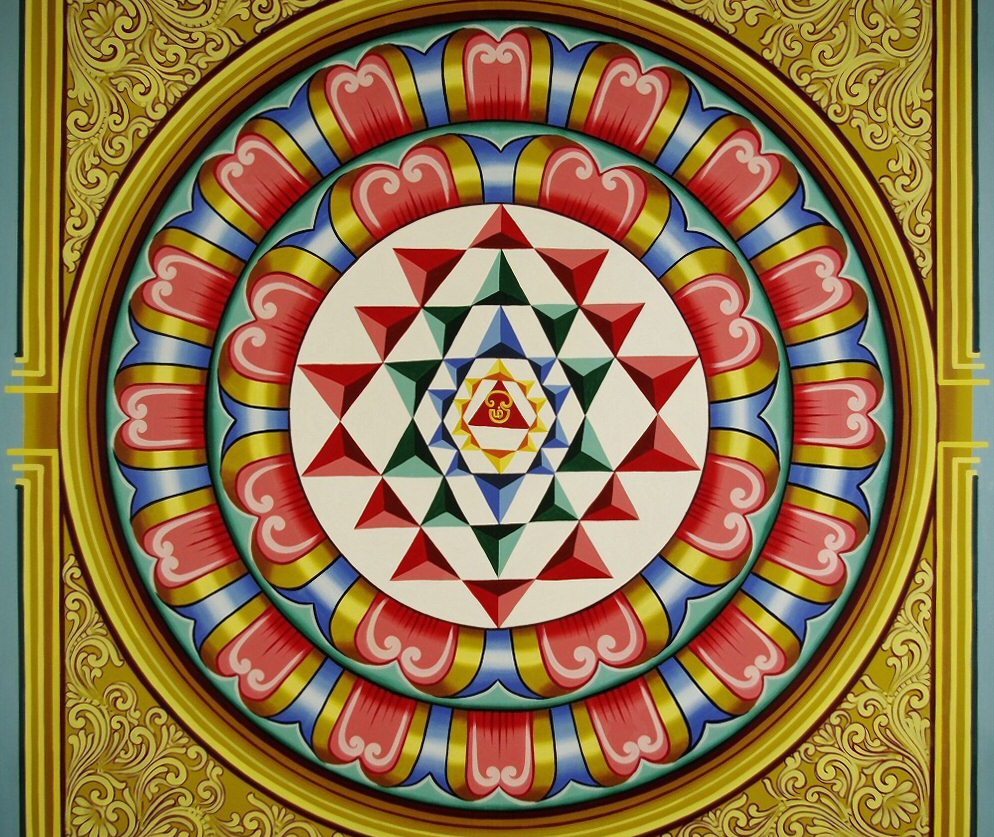
At its core, Tantra operates on the principle of divine immanence, viewing the physical body not as an obstacle but as a sacred vehicle for spiritual transformation. It posits that the universe, including oneself, is a manifestation of divine consciousness, often symbolized by the union of Shiva (consciousness) and Shakti (energy). Practices are designed to awaken and channel this inherent divine energy, most notably the Kundalini serpent power coiled at the base of the spine. Through rigorous purification rituals, mantra japa (repetition), dhyana (meditation), puja (worship), and the visualization of deities and cosmic diagrams like yantras and mandalas, practitioners aim to dissolve the illusion of separation between the individual self and the divine, leading to states of heightened awareness, bliss, and liberation.
📊 Key Facts & Numbers
While precise numbers are elusive due to the esoteric nature of Tantra, its influence is vast. Over 100 distinct Tantric traditions are documented, with hundreds of individual Tantric texts cataloged, many of which are still actively studied. The Vajrayana branch, heavily influenced by Tantra, accounts for approximately 1.5% of global Buddhists, with millions of adherents in Tibet, Bhutan, Mongolia, and parts of India and Japan. In Hinduism, Tantric practices are integrated into various sects, with estimates suggesting that at least 20% of Hindu practices incorporate Tantric elements. The global market for yoga and meditation, often infused with Tantric concepts, was valued at over $47 billion in 2022, indicating a significant economic footprint.
👥 Key People & Organizations
Key figures in the development and dissemination of Tantra include Goraksha Nath, a prominent Siddha yogi credited with systematizing Hatha Yoga, which shares many Tantric underpinnings. In Buddhism, Padmasambhava (Guru Rinpoche) is revered for bringing Tantric teachings to Tibet in the 8th century. Organizations like the Ramakrishna Mission and various Hindu monastic orders continue to preserve and teach Tantric lineages, albeit often in modernized or adapted forms. The 14th Dalai Lama has also spoken extensively on the philosophical underpinnings of Tantric Buddhism, emphasizing its ethical dimensions.
🌍 Cultural Impact & Influence
Tantra's cultural impact extends far beyond its immediate practitioners, significantly shaping the aesthetics and philosophy of South and Southeast Asia. Its emphasis on the divine nature of the body and the integration of all aspects of life, including sexuality, has influenced art, literature, and dance forms for centuries. In the West, Tantra gained a more widespread, albeit often sensationalized, recognition in the late 20th century, particularly through the popularization of Tantric sex practices, which often diverge from the original spiritual context. This has led to a complex reception, where the spiritual depth is frequently overshadowed by a focus on eroticism, as seen in popular books like Mantak Chia's works on Taoist and Tantric sexual practices.
⚡ Current State & Latest Developments
In the contemporary era, Tantra exists in a state of both revival and dilution. Traditional lineages continue to be maintained by dedicated practitioners and gurus, particularly in India and Tibet. Simultaneously, Western interpretations, often stripped of their complex philosophical and ritualistic frameworks, have proliferated. Online platforms and workshops offer 'modern Tantra' courses, frequently focusing on relationship enhancement and sexual exploration, sometimes leading to accusations of cultural appropriation and misrepresentation. The International Tantra Conference held annually in various locations attempts to bridge traditional and contemporary understandings, fostering dialogue among diverse practitioners.
🤔 Controversies & Debates
The most significant controversy surrounding Tantra is its Western popularization, which often reduces its profound spiritual and philosophical depth to mere sexual techniques. Critics argue that this commercialized 'neo-Tantra' misrepresents the tradition, ignoring its emphasis on ethical conduct, spiritual discipline, and the worship of deities. Furthermore, the historical use of practices involving substances like alcohol and meat, and the veneration of fierce deities, have led to its condemnation by some orthodox religious groups. Debates also persist regarding the authenticity of modern lineages and the potential for exploitation within guru-disciple relationships, a concern echoed in discussions around cultic behavior in spiritual movements.
🔮 Future Outlook & Predictions
The future of Tantra likely involves a continued bifurcation: the preservation of ancient lineages by dedicated practitioners and scholars, and the ongoing evolution of Westernized interpretations. There is a growing movement to reclaim the spiritual and philosophical dimensions of Tantra, moving beyond purely sexual applications. Scholars like Sadhana Acharya Ananda Viraj are working to present a more accurate portrayal of Tantric traditions. We may see a greater integration of Tantric principles into mainstream wellness and mindfulness practices, provided the ethical and spiritual core is respected, while traditional Tantric paths will likely remain the domain of committed disciples seeking profound spiritual transformation.
💡 Practical Applications
Beyond its spiritual applications, Tantra offers practical insights applicable to various domains. In psychology and therapy, its emphasis on embodiment and integrating shadow aspects of the self can inform therapeutic approaches. The use of mantras and meditation as tools for focus and emotional regulation is widely adopted in secular contexts. In art and design, the principles of sacred geometry found in yantras and mandalas continue to inspire visual artists and architects. Even in personal development, Tantric philosophy offers a framework for embracing life's dualities and finding power in vulnerability.
Key Facts
- Category
- culture
- Type
- concept