
Contents
Overview
The term 'tandem' describes an arrangement where two or more entities are positioned one behind another, all oriented in the same direction. This can apply to animals, machines, or people working in unison, or more broadly, to any group collaborating towards a common goal. Historically, the word originates from the Latin adverb 'tandem,' meaning 'at length' or 'finally,' a linguistic play on words that evolved to signify sequential alignment. In a specialized scientific context, 'tandem' refers to a specific type of DNA sequence where nucleotides are repeated consecutively, forming a tandem repeat.
🎵 Origins & History
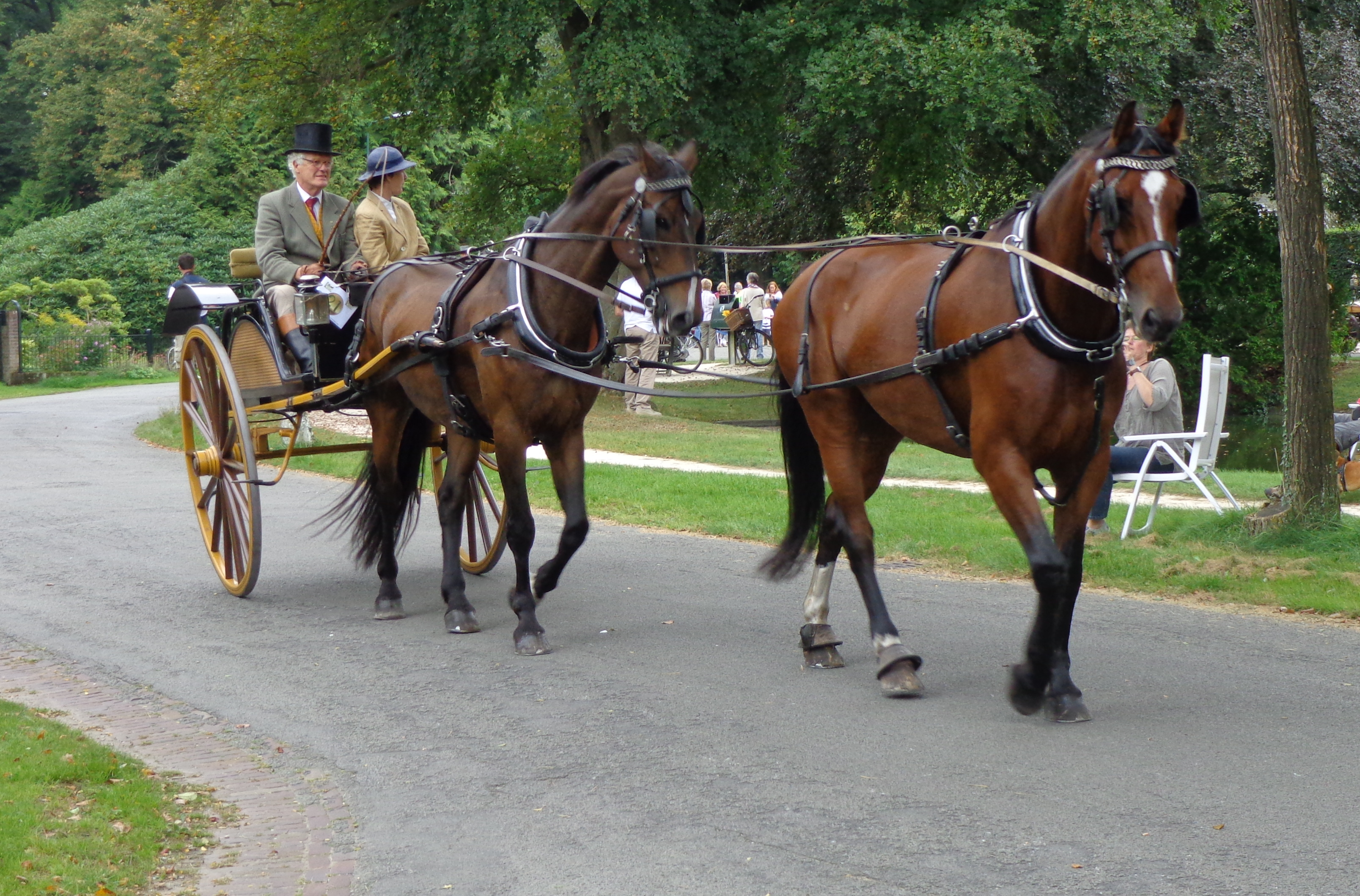
The concept of 'tandem' as a sequential arrangement traces its linguistic roots to the Latin adverb 'tandem,' meaning 'at length' or 'finally.' Early applications often referred to horse-drawn carriages where horses were hitched one behind the other. The bicycle designed for two riders became a prominent early example of 'tandem' in mechanical engineering, solidifying its association with paired, sequential operation.
⚙️ How It Works
In its most common physical manifestation, a tandem arrangement involves entities aligned in a single file, one following the other, all facing the same direction. This could be two bicycles ridden by a single rider, or a team of horses pulling a carriage. The key is the sequential positioning, allowing for coordinated movement or shared effort. In a biological context, 'tandem' describes DNA sequences where one or more nucleotides are repeated directly adjacent to each other, forming repetitive DNA known as tandem repeats. These repeats can vary in length, from a few base pairs to thousands, and their arrangement is crucial for genetic structure and function, impacting gene regulation and chromosome stability.
📊 Key Facts & Numbers
The term 'tandem' is most frequently associated with the tandem bicycle. In genetics, tandem repeats constitute a significant portion of the human genome. The variability in STRs is so pronounced that they are used in forensic science. The first successful tandem bicycle patent was filed by Karl Drais in 1817, though earlier prototypes existed.
👥 Key People & Organizations
While no single individual 'invented' the concept of tandem, figures like Karl Drais, credited with early bicycle innovations including the 'draisienne' which influenced tandem designs, and William Henry Gurney, who patented a significant tandem bicycle design in 1869, are notable. In the realm of genetics, researchers like Sir Alec Jeffreys, who discovered DNA fingerprinting using short tandem repeats (STRs) in 1984, have been pivotal. Organizations such as the International Society of Genetic Genealogy utilize tandem repeat data for ancestry tracing, and forensic laboratories globally rely on tandem repeat analysis for DNA profiling.
🌍 Cultural Impact & Influence
The cultural resonance of 'tandem' is often tied to themes of cooperation, partnership, and shared effort. The image of a tandem bicycle evokes a sense of shared journey and mutual reliance, frequently appearing in literature and film to symbolize a strong bond between characters. In music, the term might be used metaphorically to describe instruments playing in unison or a harmonious collaboration between artists. Genetically, tandem repeats have profoundly influenced our understanding of genetics, enabling breakthroughs in forensic science and human ancestry research, fundamentally changing how we approach identity and heredity.
⚡ Current State & Latest Developments
In contemporary genetics, tandem repeats remain a critical area of study, particularly in understanding genome evolution and disease. Advances in next-generation sequencing technologies have allowed for more comprehensive analysis of complex tandem repeat regions, which were previously difficult to map. Researchers are increasingly investigating the role of expanded tandem repeats in neurological disorders such as Huntington's disease and Fragile X syndrome. The development of new bioinformatics tools continues to refine the identification and interpretation of these repetitive sequences in both research and clinical settings.
🤔 Controversies & Debates
A significant debate in genetics revolves around the functional significance of various tandem repeat sequences. While some, like STRs, are well-understood for their role in genetic identification, the precise biological functions of many other tandem repeat types, particularly longer ones, are still being elucidated. Critics sometimes question the over-reliance on STR analysis in forensics, pointing to potential issues with sample contamination or interpretation errors, although the technology has a high success rate. Furthermore, the role of tandem repeats in driving evolutionary change versus simply being 'junk DNA' remains a topic of ongoing scientific discussion.
🔮 Future Outlook & Predictions
The future of tandem repeat research is poised for significant advancements, particularly in personalized medicine and evolutionary biology. As sequencing costs continue to fall, comprehensive analysis of an individual's tandem repeat profile may become routine, potentially revealing predispositions to certain genetic disorders or offering deeper insights into personal ancestry. Scientists anticipate a greater understanding of how tandem repeat expansions contribute to complex diseases, leading to novel therapeutic targets. The study of tandem repeats across different species will also likely shed more light on the mechanisms of genome evolution and the diversification of life.
💡 Practical Applications
The most prominent practical application of tandem repeats is in DNA profiling for forensic investigations and paternity testing. In medicine, the analysis of expanded tandem repeats is crucial for diagnosing and understanding genetic disorders like Huntington's disease, Fragile X syndrome, and Friedreich's ataxia. Tandem bicycles themselves offer a unique recreational and competitive cycling experience, promoting teamwork and accessibility for riders of different abilities, with some models designed for visually impaired individuals to ride as stokers.
Key Facts
- Category
- science
- Type
- concept