
Contents
- 🎵 Origins & History
- ⚙️ How It Works
- 📊 Key Facts & Numbers
- 👥 Key People & Organizations
- 🌍 Cultural Impact & Influence
- ⚡ Current State & Latest Developments
- 🤔 Controversies & Debates
- 🔮 Future Outlook & Predictions
- 💡 Practical Applications
- 📚 Related Topics & Deeper Reading
- Frequently Asked Questions
- References
- Related Topics
Overview
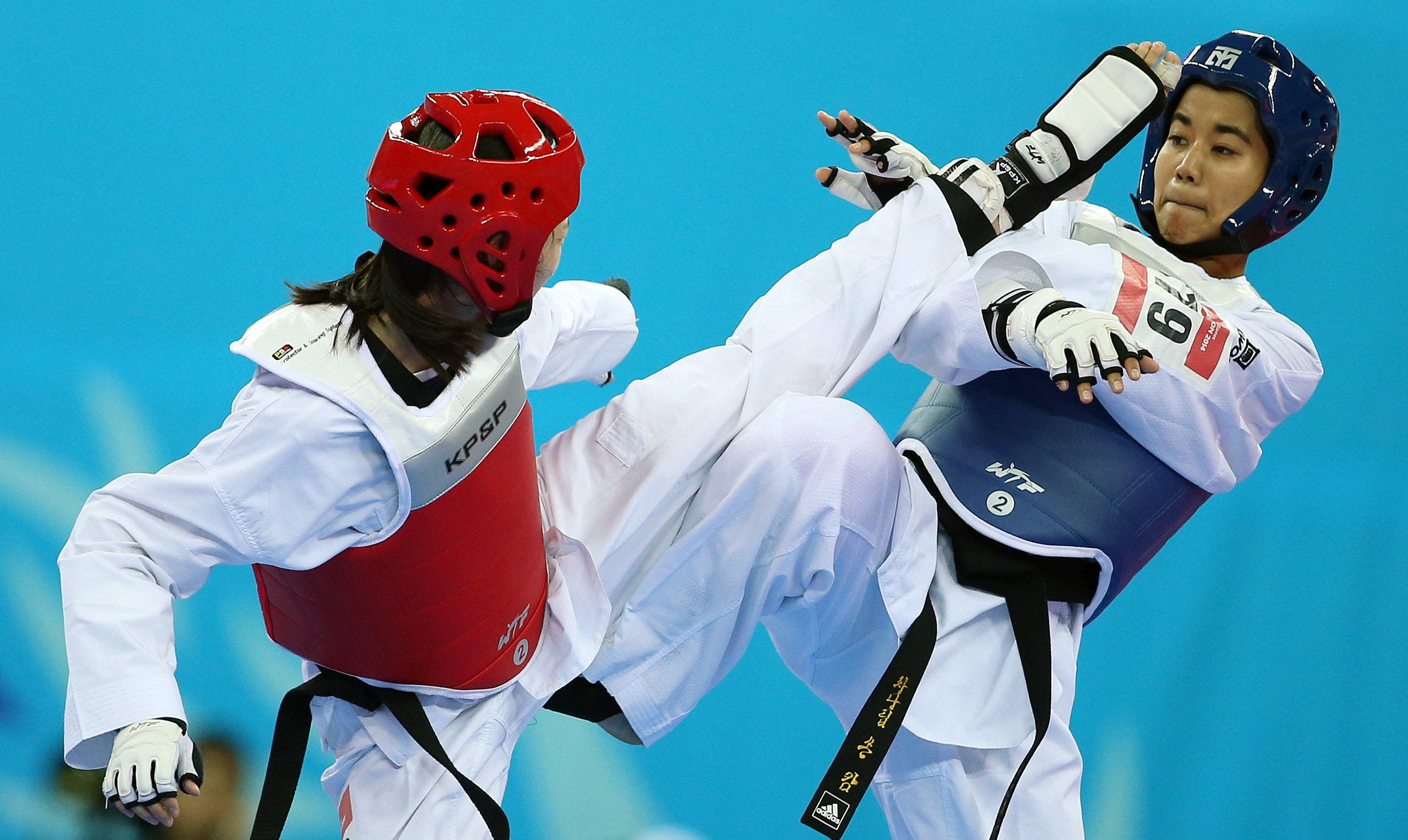
Taekwondo is a Korean martial art and combat sport that emphasizes kicking techniques, punching, and blocking, with a rich history dating back to the 1940s and 1950s. Developed by Korean martial artists with experience in karate and Chinese martial arts, Taekwondo has evolved into a competitive sport, with its traditional martial arts form still practiced worldwide. With over 30 million practitioners globally, Taekwondo has become a staple in modern martial arts, featuring in the Olympics since 2000. The sport involves various patterns, such as Hyeong, Poomsae, and Teul, which demonstrate a range of techniques, including gyeokpa, the art of breaking wooden boards. Taekwondo practitioners wear a uniform known as a dobok and may also use weapons like swords and nunchucks. As a cultural phenomenon, Taekwondo has influenced other martial arts, such as kickboxing and mixed martial arts, and has been popularized by figures like Bruce Lee and Chuck Norris. With its unique blend of physical discipline, mental focus, and competitive spirit, Taekwondo continues to inspire new generations of practitioners and fans alike, with a growing presence in the Olympic Games and a thriving community of enthusiasts worldwide.
🎵 Origins & History
Taekwondo's origins date back to the 1940s and 1950s, when Korean martial artists, such as Grandmaster Chung Il Choi and General Ji Do Kwon, developed the art by combining elements of karate, Chinese martial arts, and traditional Korean martial arts. The name 'Taekwondo' can be translated as tae ('strike with foot'), kwon ('strike with hand'), and do ('the art or way'). This unique blend of techniques and philosophies has made Taekwondo a distinct and popular martial art worldwide, with influences from Kung Fu and Judo.
⚙️ How It Works
Taekwondo involves a range of techniques, including kicking, punching, and blocking, which are demonstrated through patterns such as Hyeong, Poomsae, and Teul. Practitioners also engage in gyeokpa, the art of breaking wooden boards, and kyorugi, a type of sparring seen in the Olympics. Additionally, some styles of Taekwondo incorporate the use of weapons, such as swords and nunchucks, which require great skill and precision to master, much like fencing and archery.
📊 Key Facts & Numbers
Key facts about Taekwondo include its global popularity, with over 30 million practitioners worldwide, and its inclusion in the Olympic Games since 2000. The sport is governed by the World Taekwondo Federation (WTF), which oversees competitions and sets standards for the sport. Taekwondo has also been recognized by the International Olympic Committee (IOC) as a full medal sport, with a growing number of participating countries and athletes, including South Korea and China.
👥 Key People & Organizations
Key people in the development and promotion of Taekwondo include General Ji Do Kwon, who is often credited as the founder of modern Taekwondo, and Grandmaster Chung Il Choi, who helped to popularize the art worldwide. Other notable figures, such as Steven Lopez and Jade Jones, have won Olympic medals in Taekwondo, inspiring a new generation of athletes and practitioners, including those in mixed martial arts and kickboxing.
🌍 Cultural Impact & Influence
Taekwondo has had a significant cultural impact, influencing other martial arts and sports, such as kickboxing and mixed martial arts. The sport has also been featured in various films and television shows, including Enter the Dragon and Cobra Kai, which have helped to popularize Taekwondo and introduce it to a wider audience, including fans of Bruce Lee and Chuck Norris.
⚡ Current State & Latest Developments
Currently, Taekwondo is experiencing a surge in popularity, with a growing number of practitioners and competitions worldwide. The sport has also become more inclusive, with the introduction of new weight categories and the inclusion of para-Taekwondo events, which have been supported by organizations like the International Paralympic Committee and the World Taekwondo Federation.
🤔 Controversies & Debates
Despite its popularity, Taekwondo has faced controversies and debates, including concerns over safety and the use of excessive force in competitions. Some critics have also argued that the sport has become too focused on competition and has lost its traditional martial arts roots, which has led to a decline in the practice of traditional forms and techniques, such as those found in Kung Fu and Judo.
🔮 Future Outlook & Predictions
Looking to the future, Taekwondo is expected to continue to grow and evolve, with a focus on developing new technologies and training methods to improve performance and safety. The sport is also likely to become more inclusive, with a greater emphasis on para-Taekwondo and grassroots development, which will be supported by organizations like the World Taekwondo Federation and the International Olympic Committee.
💡 Practical Applications
Practically, Taekwondo can be applied in various ways, including as a form of self-defense, a competitive sport, and a means of improving physical fitness and mental discipline. Many schools and community centers offer Taekwondo classes, which can be a great way for people of all ages to get involved in the sport and experience its many benefits, including improved physical health and mental well-being, much like yoga and pilates.
Key Facts
- Year
- 1940s-1950s
- Origin
- Korea
- Category
- culture
- Type
- martial art
Frequently Asked Questions
What is the history of Taekwondo?
Taekwondo was developed in the 1940s and 1950s by Korean martial artists, who combined elements of karate, Chinese martial arts, and traditional Korean martial arts. The name 'Taekwondo' can be translated as tae ('strike with foot'), kwon ('strike with hand'), and do ('the art or way').
What are the benefits of practicing Taekwondo?
How has Taekwondo evolved over time?
Taekwondo has evolved from a traditional martial art to a competitive sport, with a focus on Olympic-style competitions. It has also become more inclusive, with the introduction of new weight categories and para-Taekwondo events, which have been supported by organizations like the International Paralympic Committee and the World Taekwondo Federation.
What is the difference between Taekwondo and other martial arts?
Taekwondo is distinct from other martial arts, such as karate and Kung Fu, in its emphasis on kicking techniques and its competitive sport aspect. However, it shares many similarities with other martial arts, including a focus on discipline, respect, and self-improvement, which are also found in judo and kickboxing.
How can I get started with Taekwondo?
To get started with Taekwondo, you can find a local school or community center that offers classes, or look for online resources and tutorials. It's also a good idea to invest in proper equipment, such as a dobok and protective gear, and to find a qualified instructor who can provide guidance and support, much like finding a coach in mixed martial arts.
What is the future of Taekwondo?
The future of Taekwondo is likely to involve continued growth and evolution, with a focus on developing new technologies and training methods to improve performance and safety. The sport is also likely to become more inclusive, with a greater emphasis on para-Taekwondo and grassroots development, which will be supported by organizations like the World Taekwondo Federation and the International Olympic Committee.
How has Taekwondo influenced other martial arts?
Taekwondo has influenced other martial arts, such as kickboxing and mixed martial arts, by introducing new techniques and training methods. It has also inspired a new generation of martial artists and practitioners, who are drawn to its unique blend of physical discipline, mental focus, and competitive spirit, much like Bruce Lee and Chuck Norris.