Enceladus Plumes: Less 'Leaky' Than Feared, Boosting Life Prospects
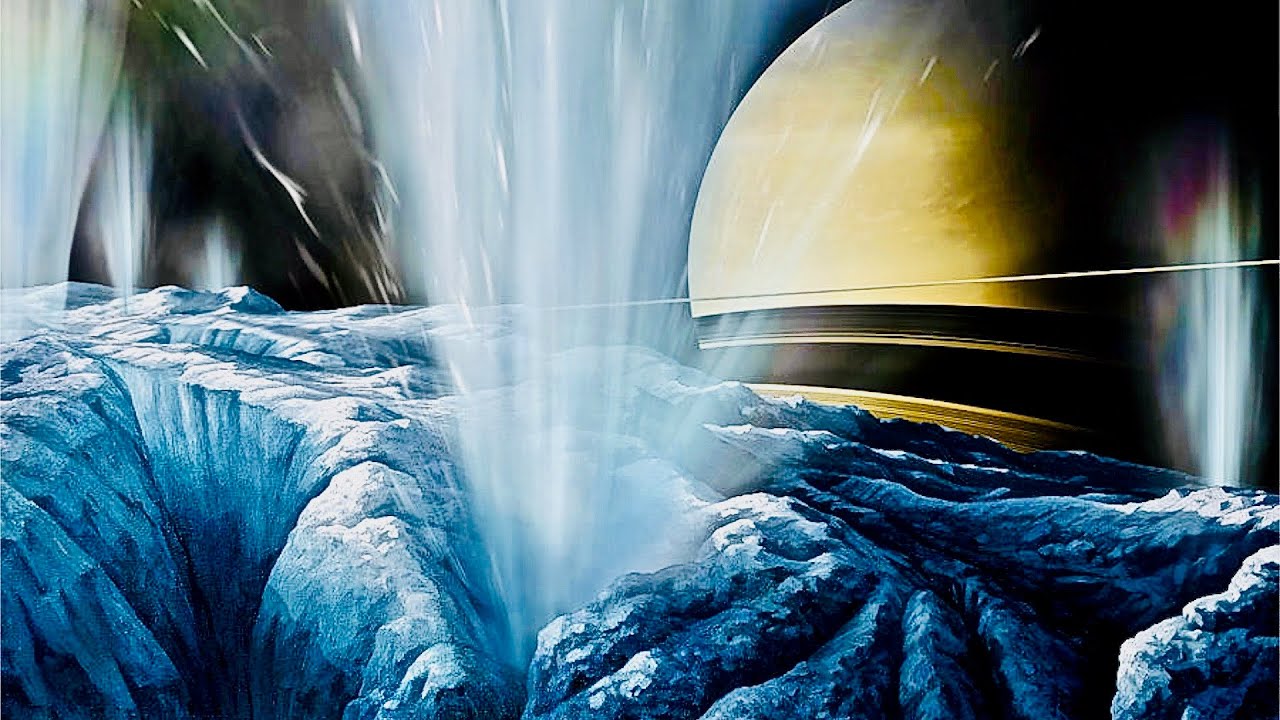
Recent **supercomputer simulations** indicate that **Saturn's moon Enceladus** is losing significantly less material through its icy plumes than previously esti
Summary
Recent **supercomputer simulations** indicate that **Saturn's moon Enceladus** is losing significantly less material through its icy plumes than previously estimated—between **20% and 40% less**. This revised understanding, published in **March 2026**, suggests that **Enceladus's subsurface ocean** is more stable and potentially more capable of supporting microbial life. The findings, a blend of new modeling, lab experiments, and existing [[Cassini-Huygens|Cassini]] spacecraft data, paint a more optimistic picture for the moon's habitability.
Key Takeaways
- New simulations suggest Enceladus loses 20-40% less water than previously thought.
- This indicates a more stable subsurface ocean on Saturn's moon.
- The findings enhance Enceladus's potential for harboring microbial life.
- The research combines advanced modeling with past spacecraft data.
- This discovery fuels optimism for future astrobiological exploration.
Balanced Perspective
New simulations, incorporating refined models and data from the [[Cassini-Huygens|Cassini]] mission, propose a lower rate of material loss from **Enceladus's plumes**. The estimated reduction of 20-40% implies a more stable subsurface ocean. While this is a significant revision to previous estimates, further direct observations and analysis are required to confirm these simulation results and fully understand the long-term implications for the moon's geological activity and potential habitability.
Optimistic View
This is a monumental win for astrobiology! The reduced loss rate from Enceladus's plumes means its subsurface ocean is far more robust and long-lasting than we dared to hope. This stability significantly increases the probability that **Enceladus** could harbor microbial life, making it a prime target for future exploration missions like [[Europa Clipper|Europa Clipper]] and beyond. The moon is essentially a self-contained, stable aquatic environment, a veritable cosmic petri dish.
Critical View
While the simulations suggest less water loss, we must remain cautious. 'Less loss' doesn't equate to 'abundant resources.' The exact composition and long-term stability of the ocean remain largely speculative, and the energy required to sustain such an ocean against tidal forces and internal processes is still a major question. Furthermore, focusing solely on water quantity overlooks other critical factors for life, such as the availability of essential chemical nutrients and energy sources, which are still poorly understood on **Enceladus**.
Source
Originally reported by economictimes.com