
Contents
Overview
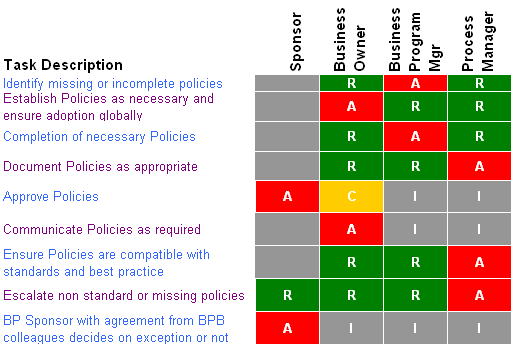
The conceptual roots of the stakeholder matrix can be traced back to early 20th-century organizational charting and the development of tools like the Responsibility Assignment Matrix (RAM), often known as the RACI matrix. While the RACI matrix focuses on task-level responsibilities (Responsible, Accountable, Consulted, Informed), the stakeholder matrix broadens this to encompass broader influence and interest. Pioneering work in stakeholder theory by academics like R. Edward Freeman in the 1980s provided the theoretical underpinning for systematically identifying and analyzing all parties affected by or affecting an organization's actions. The visual plotting on a two-dimensional grid, however, gained widespread traction in business consulting and project management literature throughout the 1990s and early 2000s, becoming a standard heuristic for strategic communication and engagement planning. Early adopters included large multinational corporations grappling with diverse regulatory environments and public scrutiny.
⚙️ How It Works
At its core, a stakeholder matrix is a simple 2x2 grid. The horizontal axis typically represents 'Interest' (low to high), and the vertical axis represents 'Influence' or 'Power' (low to high). Stakeholders are plotted onto this grid based on assessments of these two factors. This categorization then suggests specific engagement strategies: 'High Influence, High Interest' stakeholders (often called 'Key Players') require close management and active engagement; 'High Influence, Low Interest' stakeholders ('Keep Satisfied') need to be kept informed but not overwhelmed; 'Low Influence, High Interest' stakeholders ('Keep Informed') should be kept updated and their concerns addressed; and 'Low Influence, Low Interest' ('Monitor') require minimal effort. The effectiveness hinges on accurate assessment and consistent application of the chosen engagement strategy for each quadrant.
📊 Key Facts & Numbers
Companies like Google and Microsoft manage portfolios with thousands of stakeholders, from developers and investors to end-users and regulators, necessitating sophisticated matrix applications. The Project Management Institute (PMI) indicates that projects with robust stakeholder engagement plans, often guided by matrices, are more likely to meet their objectives. The average Fortune 500 company identifies many distinct stakeholder groups for major strategic initiatives.
👥 Key People & Organizations
While no single individual is credited with 'inventing' the stakeholder matrix in its current form, its popularization is often linked to management consultants and business strategists who distilled stakeholder theory into actionable tools. Figures like R. Edward Freeman, whose 1984 book 'Strategic Management: A Stakeholder Approach' is foundational, provided the theoretical framework. Consulting firms like McKinsey & Company and Boston Consulting Group (BCG) have extensively used and promoted matrix-based strategic planning tools. In the realm of public relations and corporate communications, organizations like the Public Relations Society of America (PRSA) frequently feature the matrix in their training materials, underscoring its institutional adoption.
🌍 Cultural Impact & Influence
The stakeholder matrix has become a ubiquitous heuristic in business education and practice, influencing how professionals approach communication and relationship management across diverse fields. Its visual simplicity makes complex stakeholder landscapes digestible, fostering a common language for discussing engagement priorities. This has led to more systematic approaches to public relations, corporate social responsibility (CSR), and government relations. The matrix's influence extends beyond corporate settings, appearing in non-profit management, urban planning, and even academic research for mapping research participants and funding bodies. Its widespread adoption has standardized stakeholder analysis, making it a baseline expectation in many professional contexts.
⚡ Current State & Latest Developments
In 2024, the stakeholder matrix continues to be a cornerstone of project and strategic management. The rise of Agile methodologies has seen its application adapted for iterative development cycles, with stakeholders being reassessed more frequently. Digital transformation initiatives often involve mapping a vast array of internal and external stakeholders, from IT departments and C-suites to customers and third-party vendors. Furthermore, the increasing emphasis on ESG factors means that environmental and social stakeholders are gaining prominence, often requiring more nuanced matrix dimensions beyond simple power/interest, such as 'impact' or 'urgency'. The integration with data analytics platforms is also enabling more dynamic and data-driven stakeholder mapping.
🤔 Controversies & Debates
A significant debate surrounds the oversimplification inherent in the standard 2x2 matrix. Critics argue that reducing complex human relationships and organizational dynamics to two dimensions can lead to superficial analysis and misallocation of engagement efforts. The subjective nature of assessing 'influence' and 'interest' is another point of contention, potentially leading to biased interpretations. Some argue that the matrix can inadvertently encourage a transactional, rather than relational, approach to stakeholders, focusing on managing them rather than genuinely collaborating. The potential for 'gaming' the matrix, where individuals or groups strategically present themselves to appear in a more favorable quadrant, is also a concern raised by experienced practitioners.
🔮 Future Outlook & Predictions
The future of stakeholder mapping likely involves a move beyond the static 2x2 grid. Expect to see more sophisticated, multi-dimensional matrices incorporating factors like 'urgency,' 'legitimacy,' and 'impact,' as proposed by stakeholder theorists like Mitchell, Agle, and Wood. AI and machine learning are poised to play a larger role in analyzing vast datasets to identify and profile stakeholders more objectively, potentially automating parts of the mapping process. Furthermore, the integration of stakeholder analysis with blockchain for transparent tracking of engagement and impact could emerge. The focus will likely shift from mere categorization to dynamic, real-time engagement optimization, moving the matrix from a static planning tool to a living dashboard.
💡 Practical Applications
Stakeholder matrices are deployed across numerous domains. In construction, they help manage relationships between developers, contractors, local communities, and regulatory bodies. In software development, they guide communication with product owners, end-users, and development teams. Marketing campaigns use them to identify target audiences, influencers, and media partners. Government relations teams employ them to understand the influence of lobbyists, advocacy groups, and political factions. Even in non-profit management, matrices are used to engage donors, volunteers, beneficiaries, and partner organizations, ensuring alignment and support for the mission.
Key Facts
- Category
- technology
- Type
- topic