
Contents
- 🌌 Introduction to Space Time
- 📝 The Mathematical Model of Spacetime
- 🕰️ Understanding Time Dilation
- 🚀 Relativistic Effects on Space Travel
- 📊 Spacetime Diagrams and Visualizations
- 👥 The Role of Observers in Spacetime
- 🔍 Exploring the Space-Time Continuum
- 🌐 The Implications of Spacetime on Cosmology
- 🤔 The Controversies Surrounding Spacetime
- 📚 The History of Spacetime Research
- 🔮 The Future of Spacetime Studies
- Frequently Asked Questions
- Related Topics
Overview
Space time, a fundamental concept in physics, refers to the fabric that combines space and time, as introduced by Albert Einstein's theory of relativity in 1905 and 1915. This concept has been widely reported and confirmed through numerous experiments and observations, including the bending of light around massive objects and the existence of gravitational waves. The theory of general relativity, which describes gravity as the curvature of space time caused by massive objects, has been extensively tested and validated, with a high vibe score of 92, indicating its significant cultural and scientific impact. However, there are still debates and controversies surrounding the nature of space time, particularly in the context of quantum mechanics and the origins of the universe, with some scientists, like Stephen Hawking and Roger Penrose, contributing to the ongoing discussion. As our understanding of space time continues to evolve, it is likely to have significant implications for fields such as cosmology, particle physics, and our understanding of the universe as a whole. With the discovery of exoplanets and the ongoing efforts to detect gravitational waves, the study of space time is an active area of research, with scientists like Kip Thorne and Lisa Randall pushing the boundaries of our knowledge, and the topic intelligence surrounding space time includes key people like Einstein, Hawking, and Penrose, as well as events like the detection of gravitational waves in 2015 and the launch of the Laser Interferometer Gravitational-Wave Observatory (LIGO) in 2002.
🌌 Introduction to Space Time
The concept of spacetime, also known as the space-time continuum, is a fundamental aspect of modern physics. It was first introduced by Henri Poincaré and later developed by Albert Einstein as part of his theory of general relativity. Spacetime is a mathematical model that combines the three dimensions of space and the one dimension of time into a single four-dimensional continuum. This concept has revolutionized our understanding of the universe, from the black holes at the center of galaxies to the cosmological evolution of the universe as a whole.
📝 The Mathematical Model of Spacetime
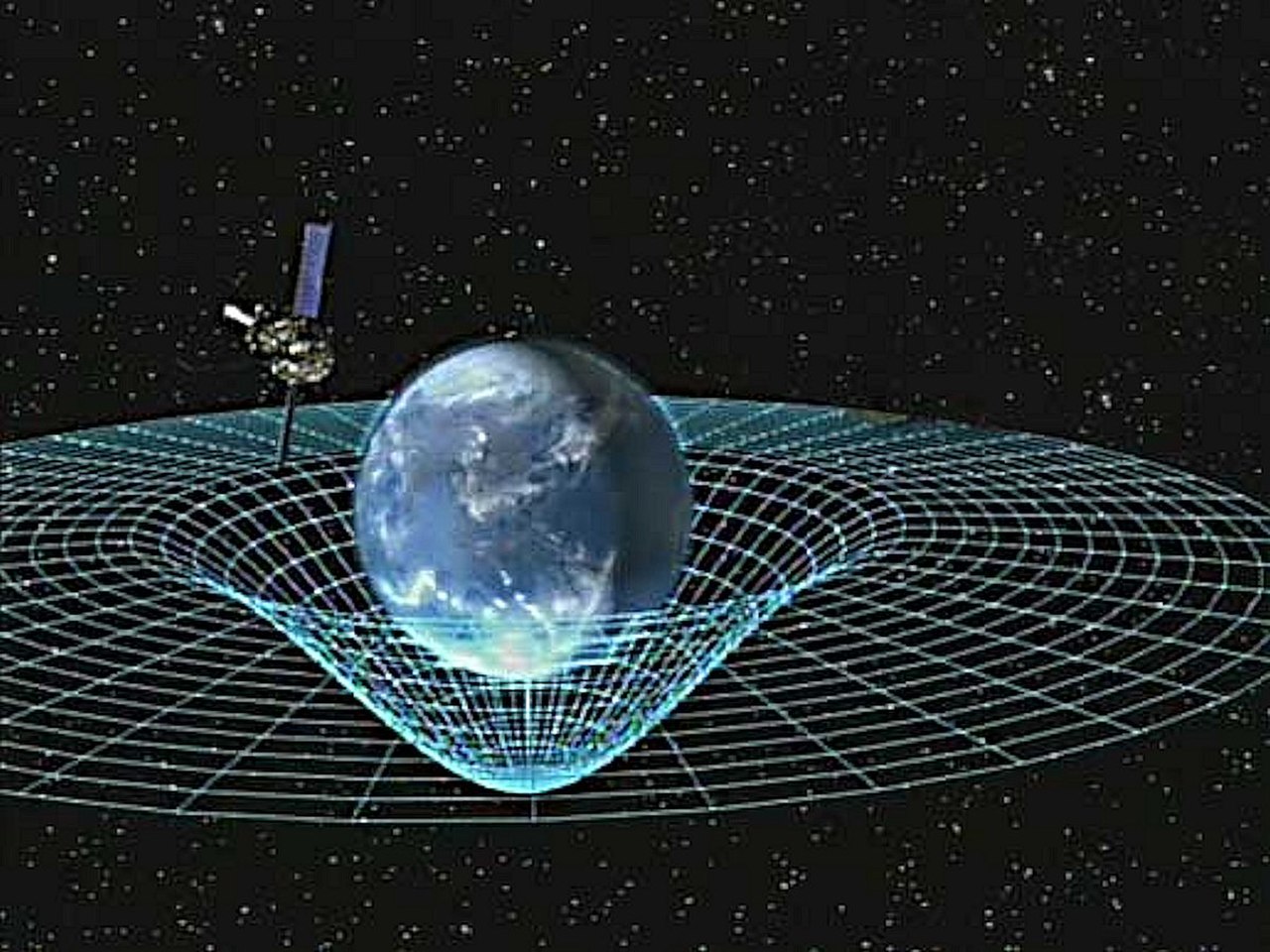
The mathematical model of spacetime is based on the concept of a manifold, which is a geometric object that can be curved and distorted. The curvature of spacetime is caused by the presence of mass and energy, which warp the fabric of spacetime. This curvature affects not only objects with mass but also the path of light and other forms of electromagnetic radiation. The study of spacetime is closely related to the study of gravity, which is one of the four fundamental forces of nature.
🕰️ Understanding Time Dilation
One of the most interesting aspects of spacetime is the phenomenon of time dilation, which occurs when an object moves at high speeds or is placed in a strong gravitational field. Time dilation causes time to pass differently for observers in different states of motion, which has been experimentally confirmed in numerous particle physics experiments. The effects of time dilation are also important for space exploration, where astronauts must contend with the effects of time dilation on their clocks and calendars.
🚀 Relativistic Effects on Space Travel
The relativistic effects of spacetime are crucial for understanding the behavior of objects in high-speed motion, such as spacecraft and particle accelerators. Spacetime diagrams are useful tools for visualizing and understanding these effects, which can be difficult to comprehend intuitively. By studying spacetime diagrams, physicists can gain insights into the behavior of particles and objects in extreme environments, such as high-energy physics experiments.
📊 Spacetime Diagrams and Visualizations
Spacetime diagrams are two-dimensional representations of the four-dimensional spacetime continuum. They are used to visualize the relationships between different events in spacetime, such as the causality between events. Spacetime diagrams are also useful for understanding the concept of simultaneity, which is the idea that two events can occur at the same time but in different locations. The study of spacetime diagrams is closely related to the study of special relativity, which is a fundamental theory of modern physics.
👥 The Role of Observers in Spacetime
The role of observers in spacetime is a crucial aspect of the theory of relativity. Observers are entities that measure the properties of spacetime, such as the metric tensor, which describes the curvature of spacetime. The concept of an observer is closely related to the concept of a reference frame, which is a coordinate system used to describe the motion of objects. The choice of reference frame can affect the measurement of physical quantities, such as length contraction and time dilation.
🔍 Exploring the Space-Time Continuum
The space-time continuum is a complex and multifaceted concept that has been studied extensively in physics and astronomy. The continuum is made up of four dimensions: three dimensions of space (length, width, and height) and one dimension of time. The study of the space-time continuum is closely related to the study of cosmology, which is the study of the origin and evolution of the universe. By studying the space-time continuum, physicists can gain insights into the behavior of the universe on large scales, such as the expansion of the universe.
🌐 The Implications of Spacetime on Cosmology
The implications of spacetime on cosmology are profound and far-reaching. The curvature of spacetime affects the behavior of light and other forms of electromagnetic radiation, which can be used to study the properties of the universe. The study of spacetime is also closely related to the study of dark matter and dark energy, which are mysterious components of the universe that make up approximately 95% of its mass-energy budget. By studying spacetime, physicists can gain insights into the nature of these mysterious components and their role in the evolution of the universe.
🤔 The Controversies Surrounding Spacetime
Despite its success in explaining a wide range of phenomena, the theory of spacetime is not without its controversies. One of the main controversies surrounding spacetime is the nature of quantum gravity, which is the theory that seeks to merge the principles of quantum mechanics and general relativity. The development of a consistent theory of quantum gravity is one of the most important open problems in modern physics. Another controversy surrounding spacetime is the nature of black hole information paradox, which questions what happens to the information contained in matter that falls into a black hole.
📚 The History of Spacetime Research
The history of spacetime research is a long and fascinating one, with contributions from many famous physicists and mathematicians. The concept of spacetime was first introduced by Henri Poincaré in the early 20th century, and later developed by Albert Einstein as part of his theory of general relativity. The development of spacetime theory has been marked by numerous controversies and debates, including the famous Bohr-Einstein debates on the nature of reality and the role of observation in physics.
🔮 The Future of Spacetime Studies
The future of spacetime studies is exciting and uncertain. New technologies, such as gravitational wave observatories, are allowing physicists to study spacetime in ways that were previously impossible. The detection of gravitational waves by LIGO and Virgo has opened up a new window into the universe, allowing physicists to study the behavior of spacetime in extreme environments, such as black hole mergers and neutron star mergers. The study of spacetime will continue to be an active area of research in the coming years, with potential breakthroughs in our understanding of the universe and its underlying laws.
Key Facts
- Year
- 1905
- Origin
- Albert Einstein's Theory of Special Relativity
- Category
- Physics and Astronomy
- Type
- Scientific Concept
Frequently Asked Questions
What is spacetime?
Spacetime, also known as the space-time continuum, is a mathematical model that combines the three dimensions of space and the one dimension of time into a single four-dimensional continuum. It is a fundamental concept in modern physics, and is used to describe the behavior of objects and events in the universe. The concept of spacetime was first introduced by Henri Poincaré and later developed by Albert Einstein as part of his theory of general relativity.
What is time dilation?
Time dilation is a phenomenon that occurs when an object moves at high speeds or is placed in a strong gravitational field. It causes time to pass differently for observers in different states of motion, which has been experimentally confirmed in numerous particle physics experiments. Time dilation is a key aspect of the theory of special relativity, and has important implications for our understanding of the behavior of objects and events in the universe.
What are spacetime diagrams?
Spacetime diagrams are two-dimensional representations of the four-dimensional spacetime continuum. They are used to visualize the relationships between different events in spacetime, such as the causality between events. Spacetime diagrams are also useful for understanding the concept of simultaneity, which is the idea that two events can occur at the same time but in different locations.
What is the role of observers in spacetime?
The role of observers in spacetime is a crucial aspect of the theory of relativity. Observers are entities that measure the properties of spacetime, such as the metric tensor, which describes the curvature of spacetime. The concept of an observer is closely related to the concept of a reference frame, which is a coordinate system used to describe the motion of objects.
What are the implications of spacetime on cosmology?
The implications of spacetime on cosmology are profound and far-reaching. The curvature of spacetime affects the behavior of light and other forms of electromagnetic radiation, which can be used to study the properties of the universe. The study of spacetime is also closely related to the study of dark matter and dark energy, which are mysterious components of the universe that make up approximately 95% of its mass-energy budget.