
Contents
Overview
The origins of Southeast Asian art are deeply intertwined with the region's history as a crossroads for trade and cultural diffusion. Prehistoric art, found in cave paintings and megalithic structures across mainland and island Southeast Asia, hints at early animist beliefs and sophisticated craftsmanship. The arrival of Indian traders and religious emissaries from around the 1st century CE introduced Hinduism and Buddhism, leading to the development of monumental religious architecture and sculpture. This period saw the flourishing of empires like the Khmer Empire in Cambodia, whose legacy includes the breathtaking Angkorian temples, and the Srivijaya Empire in Sumatra, known for its Buddhist art. Later, the spread of Islam from the 13th century onwards influenced art in regions like Malaysia, Indonesia, and the southern Philippines, often blending with existing Hindu-Buddhist motifs. Chinese influence, particularly in ceramics and decorative arts, is also a significant thread, especially in Vietnam and Thailand. The colonial era introduced Western artistic techniques and patronage, leading to the emergence of modern art movements in the 20th century.
⚙️ How It Works
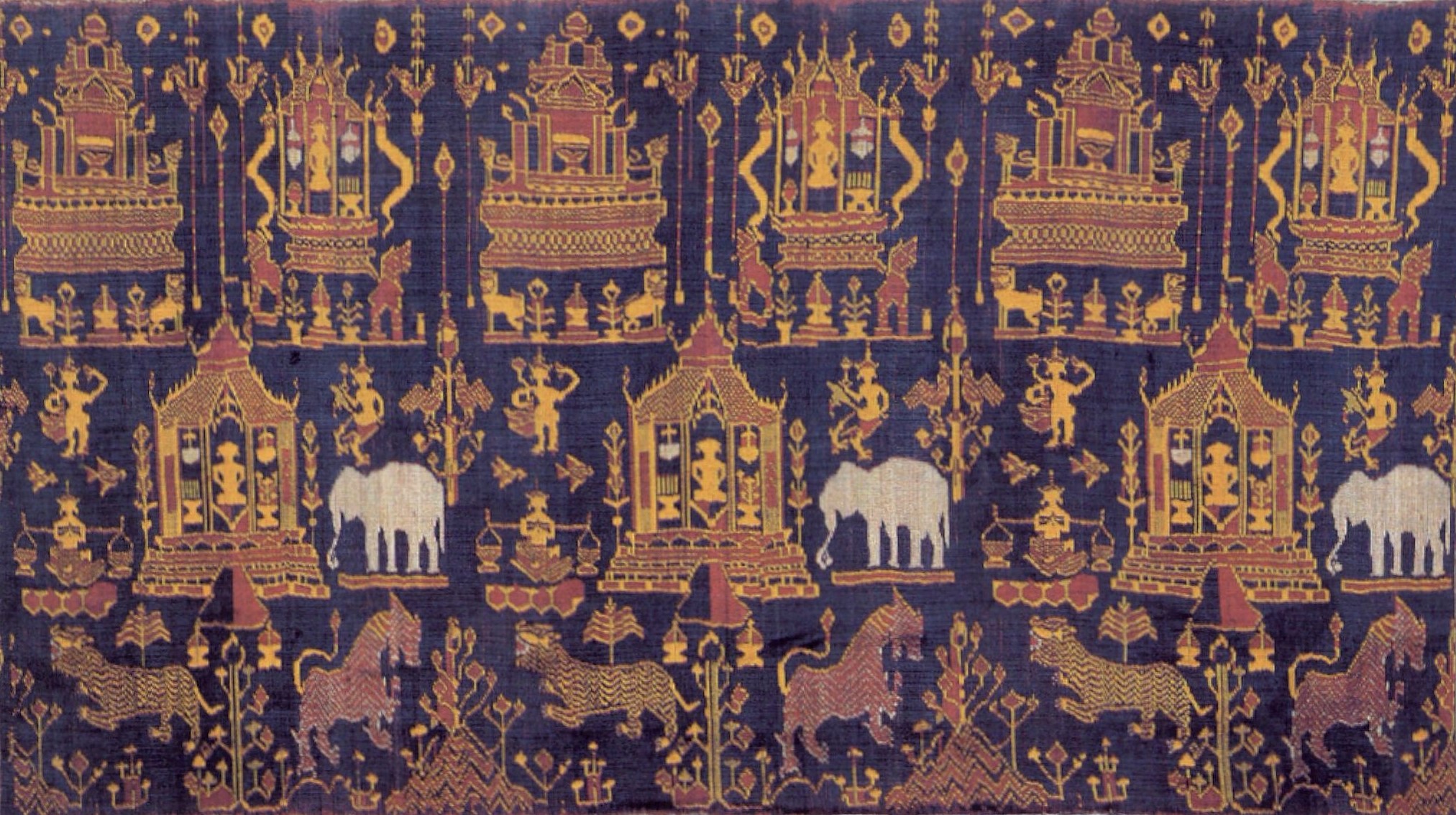
Southeast Asian art is not a monolithic entity but a collection of diverse artistic traditions shaped by geography, religion, and historical interactions. Its 'working' mechanism lies in the continuous adaptation and synthesis of external influences with local cultural specificities. For instance, the iconic batik technique, prevalent in Indonesia and Malaysia, involves using wax-resist dyeing to create intricate patterns on fabric, a method that has evolved over centuries, incorporating Islamic geometric designs and local flora and fauna motifs. Similarly, Angkorian temple architecture, while heavily influenced by Indian temple-building principles, features uniquely Khmer bas-reliefs depicting daily life, mythology, and historical events, demonstrating a distinct regional interpretation. The production of ceramics, particularly in Vietnam, has a long history dating back to the Dong Son culture, with later dynasties like the Le Dynasty and Nguyen Dynasty developing sophisticated kiln technologies and distinct glaze colors, such as the celadon and blue-and-white wares that were widely exported.
📊 Key Facts & Numbers
The scale of artistic production in Southeast Asia is immense, with millions of artisans and artists contributing to its rich heritage. Indigenous weaving traditions of groups like the T'boli in Mindanao continue to be practiced by thousands, preserving intricate patterns passed down through generations. The global market for Southeast Asian art has seen significant growth, with auction sales of contemporary Southeast Asian art reaching over $100 million in 2022, according to Sotheby's reports.
👥 Key People & Organizations
Key figures and organizations have been instrumental in shaping and promoting Southeast Asian art. Historically, rulers and religious institutions commissioned vast architectural and sculptural projects, such as King Jayavarman VII of the Khmer Empire, who oversaw the construction of Angkor Thom and numerous Buddhist temples. In the 20th century, artists like Affandi Koesuma (Indonesia), Fernando Amorsolo (Philippines), and Thawan Duchanee (Thailand) emerged as pioneers of modern art in their respective countries. Contemporary artists such as Trinh T. Minh-ha (Vietnam), Hery Cho (Indonesia), and Pope Tresa (Philippines) are gaining international recognition. Organizations like the Singapore Art Museum, National Gallery Singapore, and the Metropolitan Museum of Manila play crucial roles in collecting, exhibiting, and preserving regional art. The ASEAN Cultural Heritage Project also works to promote cross-cultural understanding and artistic exchange within the region.
🌍 Cultural Impact & Influence
Southeast Asian art has exerted a profound influence both within the region and globally. Its spiritual and aesthetic principles have inspired art forms across Asia, particularly in China and India, through the spread of Buddhism and Hindu iconography. The intricate patterns of batik have been adopted by fashion designers worldwide, while the architectural styles of temples like Borobudur continue to influence contemporary sustainable design. The region's rich tradition of storytelling through visual arts, evident in shadow puppetry and temple murals, has informed narrative art forms globally. Furthermore, the emergence of a vibrant contemporary art scene in cities like Jakarta, Manila, and Bangkok has introduced new perspectives and critical dialogues into the international art world, challenging Western-centric narratives and highlighting issues pertinent to the Global South, such as post-colonialism and environmental degradation. The global popularity of K-pop, while Korean, has also indirectly boosted interest in pan-Asian cultural aesthetics, including those from Southeast Asia.
⚡ Current State & Latest Developments
The current state of Southeast Asian art is dynamic and increasingly globalized. Major international art fairs like Art Jakarta, Art Manila, and Art Singapore showcase a growing number of contemporary artists from the region, attracting international collectors and galleries. Institutions are actively acquiring and exhibiting works by Southeast Asian artists, with significant acquisitions by museums like the Tate Modern in London and the Museum of Modern Art in New York. Digital art and new media are gaining traction, with artists utilizing platforms like Instagram and Vimeo to share their work and connect with audiences. There's also a renewed focus on traditional crafts, with initiatives aimed at preserving and modernizing techniques, often integrating them into contemporary design and fashion. The rise of art collectives and independent spaces in cities like Kuala Lumpur and Ho Chi Minh City fosters experimental practices and community engagement, pushing the boundaries of artistic expression.
🤔 Controversies & Debates
One of the primary controversies surrounding Southeast Asian art is the debate over authenticity and cultural appropriation, particularly concerning traditional crafts like batik and ikat weaving. As these crafts gain global popularity, questions arise about who benefits from their commercialization and whether traditional knowledge is being respected. Another ongoing debate concerns the representation of Southeast Asian art in Western museums and galleries. Critics argue that these institutions often present a fragmented or exoticized view of the region's art, failing to capture its complexity and diversity. The issue of repatriation of cultural artifacts, such as the Angkorian artifacts looted during periods of conflict, remains a sensitive and contentious topic. Furthermore, the rapid commercialization of contemporary Southeast Asian art has led to discussions abou
Key Facts
- Category
- culture
- Type
- topic