
Contents
- 🥋 Who is Shigeru Egami?
- 📜 The Genesis of Shōtōkan's Evolution
- 💥 Egami's Core Philosophy: The 'Muga' Principle
- 👊 Key Techniques and Training Methodologies
- 🤔 The Controversy: Egami vs. Nakayama
- 📈 Egami's Lasting Impact and Legacy
- 💡 Practical Application: Beyond the Dojo
- 🌐 Finding Egami's Descendants
- Frequently Asked Questions
- Related Topics
Overview
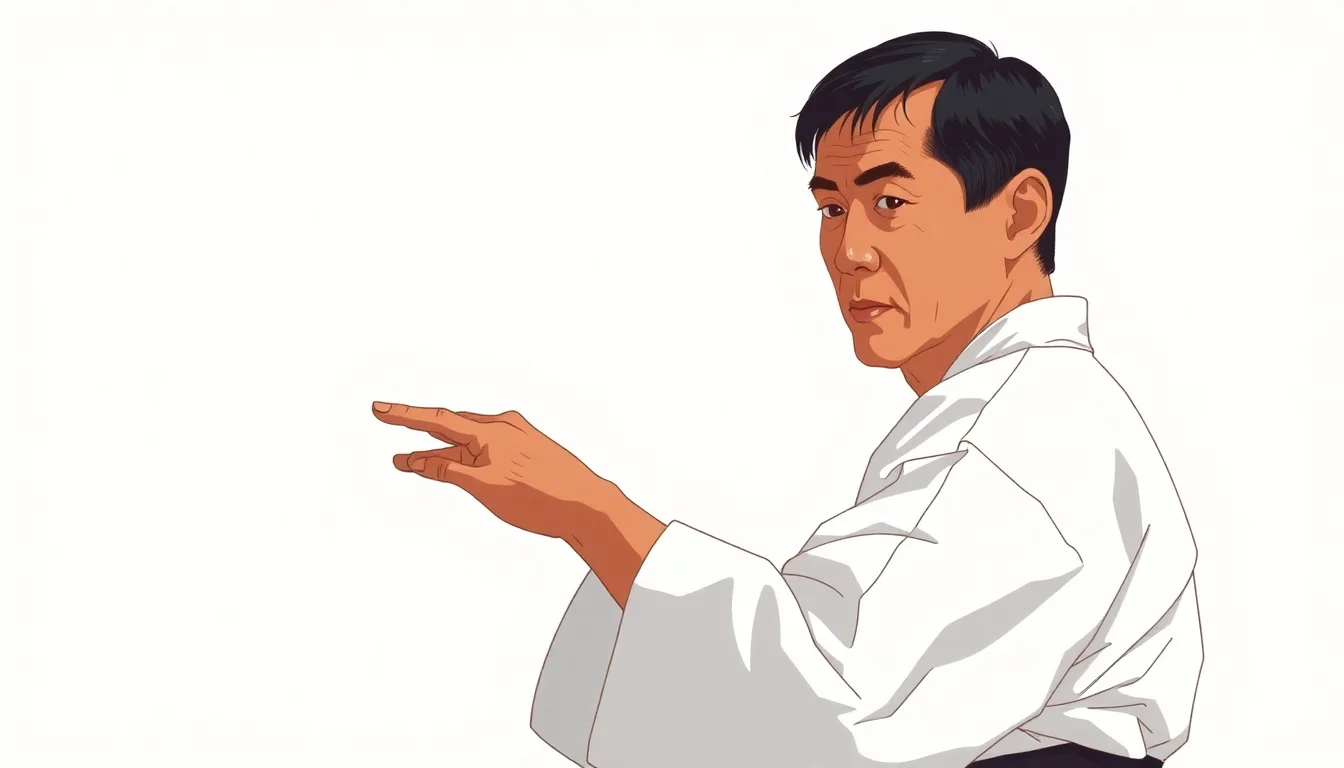
Shigeru Egami (1912-1981) was a pivotal figure in the development of modern Shotokan Karate, serving as a direct student of its founder, Gichin Funakoshi. Egami's influence extended beyond mere technique; he championed a philosophical approach to karate, emphasizing its spiritual and health-giving aspects, a departure from the purely combative focus that often dominated. He founded the Shotokai organization in 1942, which became a crucial vehicle for disseminating his interpretations of Funakoshi's teachings. Egami's legacy is debated, with some seeing him as a purist preserving the essence of karate, while others critique his divergence from more traditional martial applications. His work continues to shape the practice and philosophy of karate globally.
🥋 Who is Shigeru Egami?
Shigeru Egami (1912-1981) was a pivotal figure in the development of Karate and a senior student of the founder, Gichin Funakoshi. While Funakoshi is revered as the father of modern Karate, Egami is credited with significantly shaping its philosophical underpinnings and practical application, particularly within the Japan Karate Association (JKA) in its formative years. He moved beyond a purely physical interpretation of Karate, emphasizing its role in personal development and spiritual cultivation. His teachings are often seen as a bridge between the martial arts' combative origins and its modern practice as a path to self-mastery.
📜 The Genesis of Shōtōkan's Evolution
Egami's journey began under Funakoshi's direct tutelage in the late 1920s. He was instrumental in the early days of the JKA, working alongside Masatoshi Nakayama to standardize and propagate Shōtōkan Karate. However, as the JKA grew and formalized its curriculum, Egami began to diverge from the more sport-oriented or rigidly structured approach that was gaining prominence. He felt that the essence of Karate was being diluted, leading him to explore and articulate a more profound, almost mystical, dimension of the art.
💥 Egami's Core Philosophy: The 'Muga' Principle
At the heart of Egami's philosophy lies the concept of 'Muga' (無我), often translated as 'no-self' or 'selflessness.' This principle, deeply rooted in Zen Buddhism, posits that true mastery in Karate, or any endeavor, is achieved when the practitioner transcends ego, fear, and conscious thought. In combat, this means acting spontaneously and instinctively, without hesitation or self-doubt. Egami believed that this state of 'muga' allowed for the full realization of one's potential, enabling movements that were both devastatingly effective and harmoniously natural. This contrasts with approaches that focus on calculated strategy or brute force.
👊 Key Techniques and Training Methodologies
Egami's training emphasized the development of 'Koshi' (腰), a concept referring to the power generated from the hips and core, rather than solely from muscular strength. He advocated for relaxed, flowing movements, believing that tension was the enemy of true power and speed. Techniques were practiced not just for their offensive or defensive utility, but as a means to cultivate internal awareness and control. Forms (Kata) were seen as moving meditations, designed to embody the principles of 'muga' and 'koshi,' rather than mere sequences of physical actions. His approach often involved extensive repetition of fundamental movements to ingrain them at a subconscious level.
🤔 The Controversy: Egami vs. Nakayama
Egami's philosophical leanings and his emphasis on 'muga' led to significant friction, most notably with Masatoshi Nakayama, the JKA's chief instructor. While both were Funakoshi's students, their visions for Karate diverged. Nakayama focused on standardizing techniques for broader appeal and competition, leading to the development of the JKA's influential textbook and grading system. Egami, conversely, felt this standardization risked sacrificing the deeper, spiritual essence of Karate. This ideological split is a key point of contention in understanding the evolution of Shōtōkan, with some viewing Egami as a purist and Nakayama as a pragmatist who made Karate accessible globally.
📈 Egami's Lasting Impact and Legacy
Despite the internal debates, Egami's influence is undeniable, particularly on those who sought a more profound martial art experience. His teachings fostered a lineage of instructors who continued to explore the philosophical and spiritual dimensions of Karate. While the JKA became the dominant global force, Egami's ideas resonated with practitioners seeking depth beyond competitive success. His emphasis on 'muga' and 'koshi' continues to inform the training of many martial artists who prioritize self-discovery and internal development over external accolades. The International Karate-do Federation (IKF), founded by his students, stands as a testament to his enduring philosophy.
💡 Practical Application: Beyond the Dojo
The principles Egami espoused—selflessness, instinctual action, and the cultivation of internal power—extend far beyond the dojo. In high-pressure situations, whether in sports, business negotiations, or even creative pursuits, the ability to act without ego or hesitation, to be fully present and responsive, is invaluable. Egami's philosophy encourages a mindset where one is not attached to outcomes but is instead focused on the process and the cultivation of one's inner state. This can lead to greater resilience, adaptability, and a more authentic engagement with life's challenges.
🌐 Finding Egami's Descendants
To explore Egami's teachings further, one can seek out dojos affiliated with the International Karate-do Federation (IKF) or instructors who explicitly reference Egami's philosophy and the concept of 'muga.' Many of these dojos emphasize traditional training methods and philosophical study alongside physical techniques. Researching books and articles by Egami's direct students, such as Tetsuji Nakamura or Takashi Kono, can also provide deeper insights into his teachings and their practical application. Engaging with these resources offers a path to understanding a less-traveled, yet profoundly influential, branch of Karate.
Key Facts
- Year
- 1912
- Origin
- Japan
- Category
- Martial Arts & Philosophy
- Type
- Person
Frequently Asked Questions
What is the main difference between Egami's Karate and Nakayama's Karate?
The primary divergence lies in their philosophical emphasis. Egami focused on 'muga' (no-self) and the spiritual development through Karate, advocating for spontaneous, ego-less action. Nakayama, while respecting Funakoshi, prioritized standardization, technical refinement for broader appeal, and the development of Karate as a competitive discipline, which became the hallmark of the JKA's global expansion. Egami felt the JKA's approach risked diluting the art's deeper essence.
What does 'Muga' mean in the context of Egami's teachings?
'Muga' translates to 'no-self' or 'selflessness,' a concept borrowed from Zen Buddhism. Egami applied this to Karate by teaching practitioners to act without ego, fear, or conscious deliberation. It's about achieving a state of flow where actions are instinctive and perfectly attuned to the situation, transcending the individual's self-consciousness.
Is Egami's Karate still practiced today?
Yes, Egami's teachings are preserved and practiced by various lineages, most notably through the International Karate-do Federation (IKF), founded by his students. While not as globally widespread as the JKA's style, these groups continue to emphasize the philosophical and internal development aspects that Egami championed, offering a distinct path within Shōtōkan.
What is 'Koshi' (腰) according to Egami?
'Koshi' refers to the power generated from the hips and core, emphasizing a grounded, rooted stance and fluid hip rotation. Egami taught that true Karate power comes not from brute muscular force but from this integrated body mechanics, allowing for relaxed yet explosive movements. It's about harnessing the body's natural kinetic chain.
Did Egami invent new techniques?
Egami did not invent entirely new techniques in the way one might invent a new move. Instead, he refined the understanding and application of existing Shōtōkan techniques, focusing on the principles of 'muga' and 'koshi.' His innovation was more in the philosophical and energetic interpretation of movement, emphasizing naturalness and instinct over rigid form.
Where can I find information on Egami's students?
Key students who carried on Egami's legacy include Tetsuji Nakamura, who founded the IKF, and Takashi Kono. Researching their writings, seminars, and affiliated dojos is the most direct way to access and understand the continuation of Egami's specific approach to Karate. Many of these resources are available through specialized martial arts libraries or online martial arts communities.