
Contents
Overview
Self Information, in the context of your digital existence, quantifies the uniqueness and unexpectedness of your personal data points. Think of it as the 'surprise factor' of a piece of information about you. A common piece of data, like your city of residence, has low self-information because it's predictable. However, a highly specific detail, such as your unique genetic markers or a rare medical condition, carries high self-information. This concept, rooted in information theory, helps us understand the inherent value and privacy implications of different data types. It's not just about what data exists, but how surprising or specific it is.
👤 Who Needs Self Information?
Anyone navigating the modern digital world needs to grasp Self Information. If you've ever signed up for a service, posted on social media, or even just browsed the web, you've generated data. Understanding self-information helps you assess the privacy risk associated with each interaction. For digital privacy advocates, it's a foundational concept for building robust data protection strategies. For data scientists and AI developers, it's crucial for understanding data utility and potential biases. Essentially, if you care about who knows what about you, and how valuable that knowledge is, you need to understand self-information.
📊 Measuring Your Digital Footprint
Measuring your digital footprint's self-information involves assessing the probability of specific data points being known by others. High self-information data, like your precise location history or detailed financial transactions, is more sensitive. Tools and services are emerging that aim to provide users with a 'data privacy score' based on the breadth and depth of information available about them. This isn't about a single number, but a nuanced understanding of which aspects of your life are most exposed. It requires actively auditing the data you share and the permissions you grant to various applications and platforms.
🔒 Privacy Controls & Ownership
The core of managing self-information lies in privacy controls and data ownership. This means actively configuring settings on social media, understanding app permissions, and utilizing encryption tools for sensitive communications. True ownership implies the right to access, modify, and delete your personal data. Regulations like the General Data Protection Regulation are steps towards empowering individuals, but the practical implementation of these rights can be complex. It's an ongoing battle to reclaim control over the data that defines your digital identity.
⚖️ The Ethics of Data Collection
The ethics of data collection are inextricably linked to self-information. When companies collect data with high self-information without explicit consent or clear benefit to the individual, it raises significant ethical questions. Is it justifiable to collect detailed behavioral patterns for targeted advertising if those patterns reveal deeply personal insights? The Cambridge Analytica scandal serves as a stark reminder of how the misuse of personal data, particularly high self-information data, can have profound societal consequences. Debates rage over the line between legitimate data use and invasive surveillance.
📈 Self Information vs. Data Brokerage
Self Information provides a critical lens to differentiate between personal data and the commodities traded by data brokers. While data brokers aggregate vast amounts of information, the self-information value of that data is what makes it valuable. A broker might have your name and email (low self-information), but if they also possess detailed health records or political affiliations (high self-information), that's a different ballgame. Understanding this distinction empowers individuals to challenge data collection practices and demand greater transparency from entities that profit from their personal details.
🚀 Future of Personal Data
The future of personal data will likely see a greater emphasis on individual control and the concept of self-information. We might see more decentralized identity solutions where users hold their data securely and grant granular access. Technologies like zero-knowledge proofs could allow verification of certain attributes without revealing the underlying data itself. The ongoing tension will be between the desire for personalized services and the fundamental right to privacy, with self-information acting as a key metric in this evolving landscape.
❓ Frequently Asked Questions
Self-information is a concept from information theory that measures the 'surprise' or uniqueness of a data point. In digital terms, it helps us understand how sensitive or revealing a piece of personal information is. High self-information means the data is rare and specific, making it more valuable and potentially more private. Low self-information means the data is common and predictable. This concept is crucial for understanding your digital footprint and the privacy risks associated with sharing different types of data online.
Key Facts
- Year
- 1990
- Origin
- The concept of 'self information' emerged with the rise of personal computing and the internet, evolving significantly with the advent of big data and AI. Early discussions centered on data protection and privacy rights, but the scope has broadened to include the active management and understanding of one's digital identity.
- Category
- Digital Identity & Privacy
- Type
- Concept
Frequently Asked Questions
How does self-information differ from entropy in information theory?
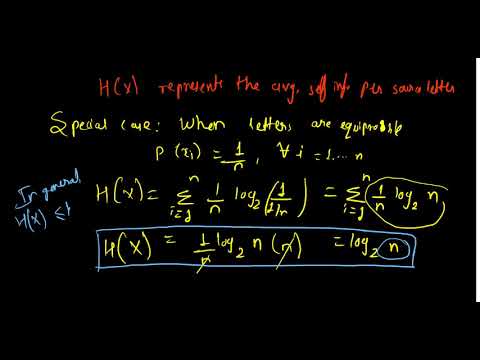
While related, self-information is the measure for a single event, whereas entropy is the average self-information over all possible events for a random variable. Think of self-information as the surprise of one specific outcome, and entropy as the average surprise across all outcomes. Both are fundamental to information theory but serve distinct analytical purposes.
Can I truly 'own' my self-information?
The concept of 'ownership' is legally and technically complex. While you generate the data, its storage, processing, and dissemination are often controlled by third parties. Regulations like GDPR grant rights to control your data, but true, absolute ownership in the physical sense is still an evolving ideal in the digital realm. It's more about asserting control and demanding accountability.
What are practical ways to reduce the self-information of my online presence?
Actively manage your privacy settings on all platforms. Limit the amount of personal detail you share in public profiles. Use pseudonyms where appropriate. Be mindful of app permissions and regularly audit them. Consider using VPN services to mask your IP address and location, reducing the predictability of your online activities.
Are there tools to help me understand my self-information exposure?
Several services offer 'data breach monitoring' and 'digital footprint analysis' tools. These can alert you if your personal information appears in known data breaches or provide reports on what information is publicly accessible about you. While not directly measuring 'self-information' in a theoretical sense, they offer practical insights into your data exposure.
Why is high self-information data more valuable to companies?
Data with high self-information is more valuable because it's more predictive and unique. It allows companies to create highly specific user profiles for targeted advertising, personalized recommendations, or even risk assessment (e.g., insurance premiums). Common data points offer less insight, while rare, specific data reveals much more about an individual's behavior, preferences, and vulnerabilities.