
Contents
Overview
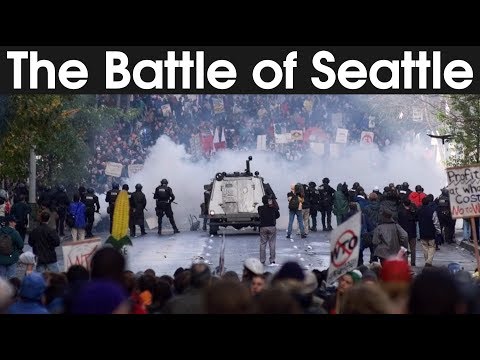
The 1999 Seattle WTO protests, often referred to as the 'Battle of Seattle,' erupted from November 28 to December 3, 1999, in Seattle, Washington. These demonstrations were a direct response to the World Trade Organization's (WTO) Ministerial Conference, where global trade policies were being discussed. The protests drew an estimated 40,000 to 60,000 activists from diverse backgrounds, including labor unions like the AFL-CIO, environmental groups, student organizations, and anarchists. This convergence of various groups, united against what they perceived as the WTO's corporate-centric agenda, made the protests a landmark event for the burgeoning anti-globalization movement, drawing parallels to earlier movements that questioned unchecked economic expansion, much like the concerns raised during the Bretton Woods Agreement.
⚙️ How It Worked
The protests employed a wide range of tactics, from peaceful marches and street theater to more disruptive actions like sit-ins and blockades. The Direct Action Network (DAN) coordinated many of these efforts, aiming to prevent delegates from reaching the conference venue. Simultaneously, a 'black bloc' of anarchists engaged in property destruction, targeting corporations perceived as exploitative. The Independent Media Center (IMC) played a crucial role in documenting and disseminating information about the protests, offering an alternative to mainstream media narratives, much like how platforms like Reddit and YouTube later became crucial for citizen journalism. The sheer scale and diversity of tactics employed demonstrated a complex, multi-faceted opposition to the WTO's policies, echoing the organizational strategies seen in movements like the Occupy movement.
🌍 Cultural Impact
The 'Battle of Seattle' had a profound cultural impact, bringing the anti-globalization movement into mainstream consciousness. Images of clashes between protesters and police, including the use of tear gas and mass arrests, were broadcast globally, sparking widespread debate about globalization's effects. The protests fostered a sense of solidarity among disparate groups and highlighted the power of collective action, influencing subsequent social movements. The event also led to the resignation of Seattle's police chief, Norm Stamper, and prompted critical reviews of law enforcement's response, similar to discussions surrounding police conduct in other large-scale demonstrations.
🔮 Legacy & Future
The legacy of the 1999 Seattle WTO protests is significant, serving as a precursor to many 21st-century social and political movements, including the Iraq War protests and the Black Lives Matter movement. While the anti-globalization movement's momentum eventually waned, the tactics and spirit of the Seattle protests continued to inspire activists. The event underscored the ongoing tension between global economic policies and grassroots concerns for social justice, labor rights, and environmental protection. The issues raised in Seattle, concerning corporate power and democratic accountability, remain relevant today, as seen in ongoing debates about automation and the gig economy taxation, and the influence of large tech companies like Google.com and platforms like TikTok.
Key Facts
- Year
- 1999
- Origin
- Seattle, Washington, United States
- Category
- movements
- Type
- event
Frequently Asked Questions
What were the main goals of the Seattle WTO protests?
The primary goals of the Seattle WTO protests were to disrupt the World Trade Organization's Ministerial Conference and to raise awareness about the perceived negative impacts of corporate globalization. Protesters focused on issues such as labor rights, environmental protection, human rights, and the undemocratic nature of the WTO's decision-making processes.
Who participated in the protests?
The protests involved a broad coalition of groups, including labor unions (like the AFL-CIO), environmental organizations, student groups, anarchists, human rights advocates, farmers, and international workers. This diverse participation highlighted the widespread opposition to the WTO's agenda.
What were some of the key tactics used by protesters?
Protesters employed a variety of tactics, ranging from peaceful marches, sit-ins, and street theater to more confrontational actions like blockades and property destruction. The Direct Action Network (DAN) organized many of these disruptive actions, while the 'black bloc' engaged in more radical tactics.
How did law enforcement respond to the protests?
Law enforcement responded with significant force, deploying tear gas, pepper spray, batons, and making mass arrests. The scale of the protests overwhelmed local police, leading to the involvement of the National Guard and the declaration of a state of emergency in Seattle.
What is the lasting legacy of the Seattle WTO protests?
The Seattle WTO protests are considered a pivotal moment for the anti-globalization movement and a significant event in the history of modern activism. They brought global attention to the critiques of corporate globalization, influenced subsequent protest movements, and highlighted the power of coordinated, diverse activism, even as the specific anti-globalization movement later saw its momentum wane.
References
- en.wikipedia.org — /wiki/1999_Seattle_WTO_protests
- britannica.com — /event/Seattle-WTO-protests-of-1999
- jacobin.com — /2024/06/battle-of-seattle-protest-wto
- seattle.gov — /cityarchives/exhibits-and-education/digital-document-libraries/world-trade-orga
- content.lib.washington.edu — /wtoweb/
- dailyuw.com — /article/wto-protests-capitalism-the-end-of-history-fukuyama-20260209
- katalcenter.org — /2024/09/whose-story-of-seattle-a-protest-history-misses-the-point/
- ebsco.com — /research-starters/history/rioters-disrupt-world-trade-organization-meetings