
Contents
Overview
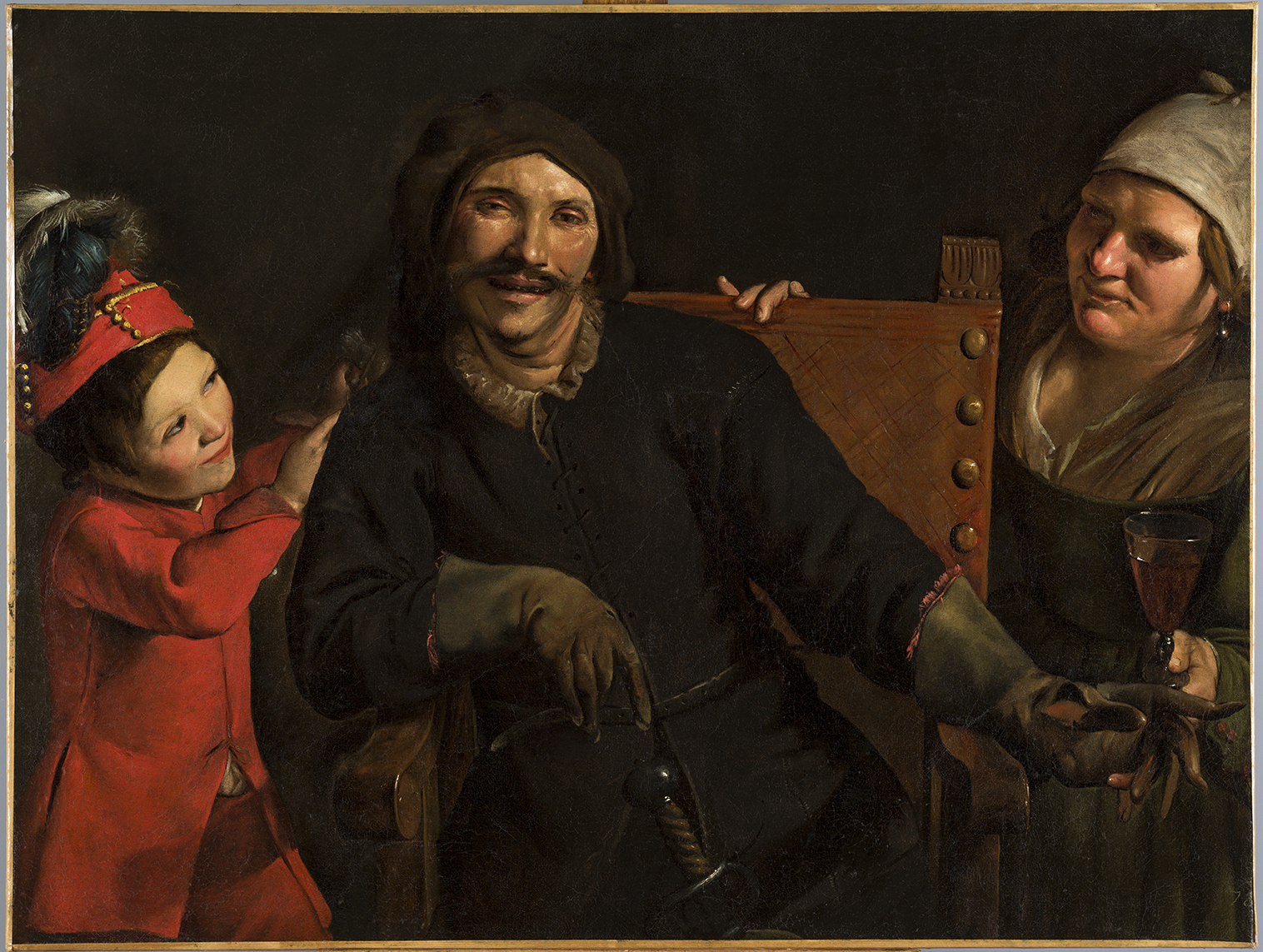
The character of Scaramouche, or Scaramuccia, emerged in 16th-century Italy as a figure in the commedia dell'arte. This improvisational performance art, characterized by masked stock characters and physical comedy, provided fertile ground for Scaramouche's development. He blended traits from the Zanni, the roguish servant characters, and il Capitano, the boastful, often cowardly soldier. Typically clad in black, mimicking Spanish fashion and a pompous nobleman, Scaramouche's defining characteristic was his profound cowardice, which starkly contrasted with his loud, often nonsensical, boasts. This duality made him a prime target for physical retribution, most famously from Harlequin, who would often administer beatings for Scaramouche's preposterous claims and misdeeds. The character's name itself, derived from the Italian 'scaramuccia' meaning 'little skirmisher,' served as a constant ironic commentary on his true nature.
⚙️ How It Works
Scaramouche functions as a specific archetype within the commedia dell'arte's established character repertoire. His performance relied heavily on physical comedy, exaggerated facial expressions (often amplified by his mask, though sometimes unmasked to emphasize his fear), and rapid-fire, often nonsensical, dialogue. The 'how it works' of Scaramouche is his predictable arc: he enters with grand pronouncements and threats, attempts to deceive or intimidate others, inevitably fails due to his own incompetence or cowardice, and is then punished, usually by Harlequin or Pantalone. This cycle of bravado, exposure, and punishment provided consistent comedic relief and reinforced moral lessons about pride and deceit. His interactions were crucial for driving the plot, often serving as the catalyst for conflict or the source of misunderstandings that other characters had to resolve. The improvisational nature of commedia meant actors playing Scaramouche had to be adept at reacting to audience cues and fellow performers, making each iteration unique yet adhering to the core character traits established by early performers like Tiberio Fiorilli.
📊 Key Facts & Numbers
While precise numbers for commedia dell'arte's early impact are scarce, the influence of Scaramouche is evident in its widespread adoption across Europe. By the mid-17th century, performances featuring Scaramouche were popular in Paris, with actors like Tiberio Fiorilli drawing crowds of up to 3,000 spectators for his troupe's shows at the Hôtel de Bourgogne. The character's name became synonymous with the commedia dell'arte itself for many audiences outside Italy. Over centuries, variations of Scaramouche appeared in an estimated 500-1000 commedia dell'arte plays, with each performance potentially reaching thousands of audience members. His archetype has been cited as an influence on characters in over 100 theatrical productions and numerous literary works, demonstrating a sustained cultural presence that spans more than 400 years.
👥 Key People & Organizations
The commedia dell'arte troupes themselves were the primary organizations responsible for Scaramouche's dissemination. Key among these was the troupe led by Tiberio Fiorilli, an Italian actor who achieved significant fame in Paris during the 1640s and 1650s, popularizing the Scaramouche character for French audiences. Later, companies like the Théâtre-Italien in Paris continued to feature commedia characters, including Scaramouche, ensuring his continued presence. While not a single individual creator, Fiorilli is often credited with defining and popularizing the character's specific blend of cowardice and bravado. Beyond the stage, writers and artists who adapted or were inspired by the character, such as Rafael Sabatini in his novel Scaramouche, and later filmmakers, also played crucial roles in keeping the archetype alive. The character's enduring appeal means he continues to be referenced by contemporary performers and creators in various media.
🌍 Cultural Impact & Influence
Scaramouche's cultural impact is profound, extending far beyond the confines of 16th-century Italian theatre. He became an international theatrical sensation, particularly in France, where his character was embraced and adapted. His archetype—the boastful coward—has served as a foundational element for countless characters in subsequent theatrical traditions, opera, literature, and film. For instance, Scaramouche's blend of arrogance and underlying fear can be seen echoed in figures like Sir John Falstaff in Shakespeare's plays, or later in the theatrical villains and comic foils of the 19th and 20th centuries. The name 'Scaramouche' itself became a shorthand for this specific personality type, appearing in novels, poems, and even as a title for works that explore themes of deception and hidden vulnerability. The 1921 novel Scaramouche by Rafael Sabatini and its subsequent film adaptations cemented the character's name in popular culture as a symbol of daring, albeit often misplaced, bravado and theatrical flair.
⚡ Current State & Latest Developments
While Scaramouche is a historical character, his archetype continues to manifest in contemporary media. Modern adaptations and reinterpretations of commedia dell'arte characters, including Scaramouche, appear in theatrical productions worldwide, often updated for current social and political contexts. The character's influence can be observed in animated series, video games, and even in the personas adopted by some online content creators who leverage exaggerated characters for comedic effect. For example, the character's blend of theatricality and underlying insecurity is a recurring theme in character design for animated features and video games, where visual exaggeration often complements personality traits. The enduring appeal of the 'braggart who is easily exposed' ensures that Scaramouche's spirit, if not his exact name, continues to find new life in the digital age and on stages globally.
🤔 Controversies & Debates
The primary controversy surrounding Scaramouche, if one can call it that, lies in the inherent nature of stock characters and the potential for them to become caricatures rather than nuanced portrayals. Critics of commedia dell'arte sometimes argue that the reliance on fixed archetypes, including Scaramouche, could limit artistic expression and perpetuate stereotypes. However, proponents counter that these archetypes provided a universal language for performance, allowing for deep exploration of human nature through recognizable figures. Another point of discussion is the historical accuracy of certain portrayals; while Tiberio Fiorilli is often cited as a definitive Scaramouche, the exact evolution and variations of the character across different troupes and regions remain subjects of scholarly debate. The character's frequent beatings also raise questions about the depiction of violence in early theatre, though it was standard comedic fare within the commedia tradition.
🔮 Future Outlook & Predictions
The future outlook for the Scaramouche archetype remains robust, largely due to its adaptability and its deep roots in fundamental human psychology. As long as there are stories to tell about pride, fear, and the gap between appearance and reality, characters embodying Scaramouche's traits will persist. We can anticipate further reinterpretations in theatre, film, and digital media, where the character might be deconstructed, subverted, or given new contexts. For instance, future iterations could explore the psychological underpinnings of his cowardice more deeply, perhaps in a psychological thriller, or use his bravado as a commentary on modern political discourse. The character's inherent theatricality also makes him a prime candidate for revival in immersive theatre experiences or augmented reality performances, where the line between performer and audience can be blurred, mirroring the interactive nature of commedia.
💡 Practical Applications
The 'practical applications' of Scaramouche are less about direct utility and more about his enduring function as a character archetype and a tool for understanding performance. In theatre, actors studying commedia dell'arte learn to embody Scaramouche to develop skills in physical comedy, improvisation, and character work. The archetype serves as a pedagogical device for teaching the principles of commedia dell'arte. Beyond formal training, Scaramouche's character provides a blueprint for write
Key Facts
- Category
- culture
- Type
- topic