
Contents
Overview
Severe acute respiratory syndrome coronavirus 2 (SARS-CoV-2) is the novel betacoronavirus responsible for the COVID-19 pandemic. First identified in Wuhan, China, this positive-sense single-stranded RNA virus rapidly spread globally, leading the World Health Organization to declare a Public Health Emergency of International Concern. Its closest known relative is the BANAL-52 bat coronavirus, underscoring its zoonotic origins. SARS-CoV-2's ability to efficiently transmit between humans and cause a spectrum of respiratory and systemic illnesses, from asymptomatic infection to severe pneumonia and death, has profoundly impacted public health, economies, and societal structures worldwide. The ongoing evolution of its variants, such as Omicron and Delta, continues to shape public health strategies and scientific research.
🎵 Origins & History
The genesis of SARS-CoV-2 is traced to Wuhan, Hubei Province, China, with the first human cases identified in December 2019. Its provisional designation was 2019 novel coronavirus (2019-nCoV) before the International Committee on Taxonomy of Viruses officially named it SARS-CoV-2 in February 2020. Genetic sequencing revealed its close relation to bat coronaviruses, particularly BANAL-52, suggesting a zoonotic spillover event, likely from an intermediate animal host, though the precise pathway remains a subject of intense investigation. The rapid global dissemination led to the COVID-19 pandemic, declared by the WHO on March 11, 2020, marking a pivotal moment in modern public health history.
⚙️ How It Works
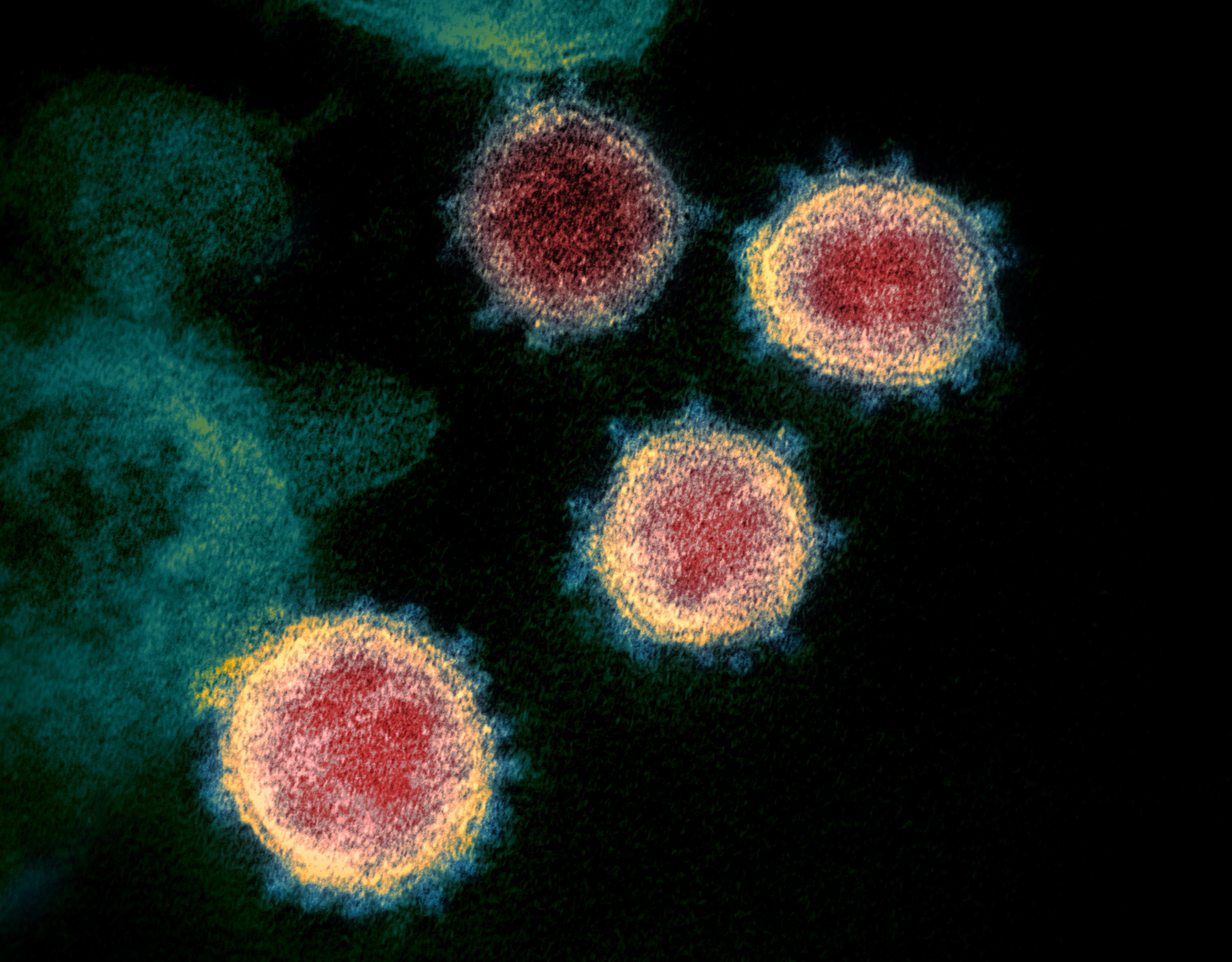
SARS-CoV-2 is a spherical, enveloped virus with a diameter of approximately 80-120 nanometers, characterized by its distinctive crown-like spikes on its surface, formed by the spike glycoprotein. This spike protein is crucial for viral entry into host cells, binding to the ACE2 receptor on human cells, primarily in the respiratory tract. Once inside, the virus hijacks the host cell's machinery to replicate its positive-sense single-stranded RNA genome, producing new viral particles that are then released to infect other cells. The viral genome, approximately 30,000 nucleotides long, encodes structural proteins like the spike, envelope, membrane, and nucleocapsid proteins, as well as non-structural proteins essential for replication and assembly.
📊 Key Facts & Numbers
The virus has demonstrated a remarkable capacity for global spread, infecting over 770 million confirmed cases worldwide as of early 2024, with an estimated mortality rate that has varied significantly by variant, age group, and access to healthcare. The Omicron variant, first identified in November 2021, became the dominant strain globally, exhibiting higher transmissibility but generally lower severity compared to its predecessors like the Delta. The economic impact has been staggering, with global GDP experiencing significant contractions, estimated at trillions of dollars, and healthcare systems worldwide facing unprecedented strain, with millions of healthcare workers infected or suffering from burnout.
👥 Key People & Organizations
Key figures in understanding and combating SARS-CoV-2 include Shi Zhengli, a virologist at the Wuhan Institute of Virology, whose research on bat coronaviruses predated the pandemic. Anthony Fauci, former Director of the U.S. National Institute of Allergy and Infectious Diseases, became a prominent public health voice. Organizations like the WHO coordinated global responses, while pharmaceutical giants such as Pfizer, BioNTech, Moderna, and AstraZeneca rapidly developed vaccines. The CDC in the United States and the ECDC in Europe played critical roles in tracking the virus and issuing public health guidance.
🌍 Cultural Impact & Influence
SARS-CoV-2 has indelibly marked global culture, forcing widespread adoption of public health measures like mask-wearing, social distancing, and remote work, fundamentally altering social interactions and urban planning. The pandemic spurred an unprecedented surge in scientific collaboration and data sharing, accelerating research in virology, immunology, and vaccine development, with mRNA vaccine technology, pioneered by companies like Moderna and Pfizer, achieving rapid clinical success. It also highlighted existing societal inequalities, disproportionately affecting marginalized communities and exacerbating mental health challenges, leading to a surge in discussions around public health equity and resilience.
⚡ Current State & Latest Developments
As of early 2024, SARS-CoV-2 continues to circulate globally, with ongoing surveillance for new variants. While the acute phase of the pandemic has subsided, the virus remains endemic, posing a continuous public health challenge. Public health agencies are shifting focus towards long-term management, including vaccination campaigns, antiviral treatments, and preparedness for future outbreaks. The emergence of subvariants of Omicron, such as XBB.1.5 and JN.1, continues to be monitored for changes in transmissibility, immune evasion, and severity, influencing updated vaccine formulations developed by companies like Novavax.
🤔 Controversies & Debates
Significant debates surround the origins of SARS-CoV-2, with theories ranging from natural zoonotic spillover to the controversial lab-leak hypothesis involving the Wuhan Institute of Virology. The efficacy and necessity of various public health interventions, such as lockdowns and mask mandates, have been fiercely debated, with differing opinions on their impact on public health versus economic and social costs. Furthermore, vaccine hesitancy and the spread of misinformation regarding the virus and its vaccines have presented substantial challenges to public health efforts, amplified by social media platforms like Facebook and X.
🔮 Future Outlook & Predictions
The future trajectory of SARS-CoV-2 involves continued evolution, with the potential for new variants to emerge that may evade existing immunity. Public health strategies will likely focus on maintaining high vaccination rates, developing next-generation vaccines and therapeutics, and strengthening global surveillance systems. The long-term health consequences of infection, known as Long COVID, remain a significant area of research, with ongoing efforts to understand its mechanisms and develop effective treatments. Experts predict that SARS-CoV-2 will likely become an endemic respiratory virus, similar to influenza, requiring ongoing adaptation of public health measures.
💡 Practical Applications
The primary practical application of understanding SARS-CoV-2 lies in the development of diagnostic tests, vaccines, and antiviral treatments. Diagnostic tools, ranging from RT-PCR tests to rapid antigen tests, are crucial for identifying infections and controlling spread. Vaccines, such as those developed by Pfizer-BioNTech and Johnson & Johnson, have been instrumental in reducing severe illness and death. Antiviral medications, like Paxlovid from Pfizer, offer therapeutic options for infected individuals, particularly those at high risk. Research into the virus also informs strategies for preventing future zoonotic spillover events.
Key Facts
- Category
- science
- Type
- topic