
Contents
Overview
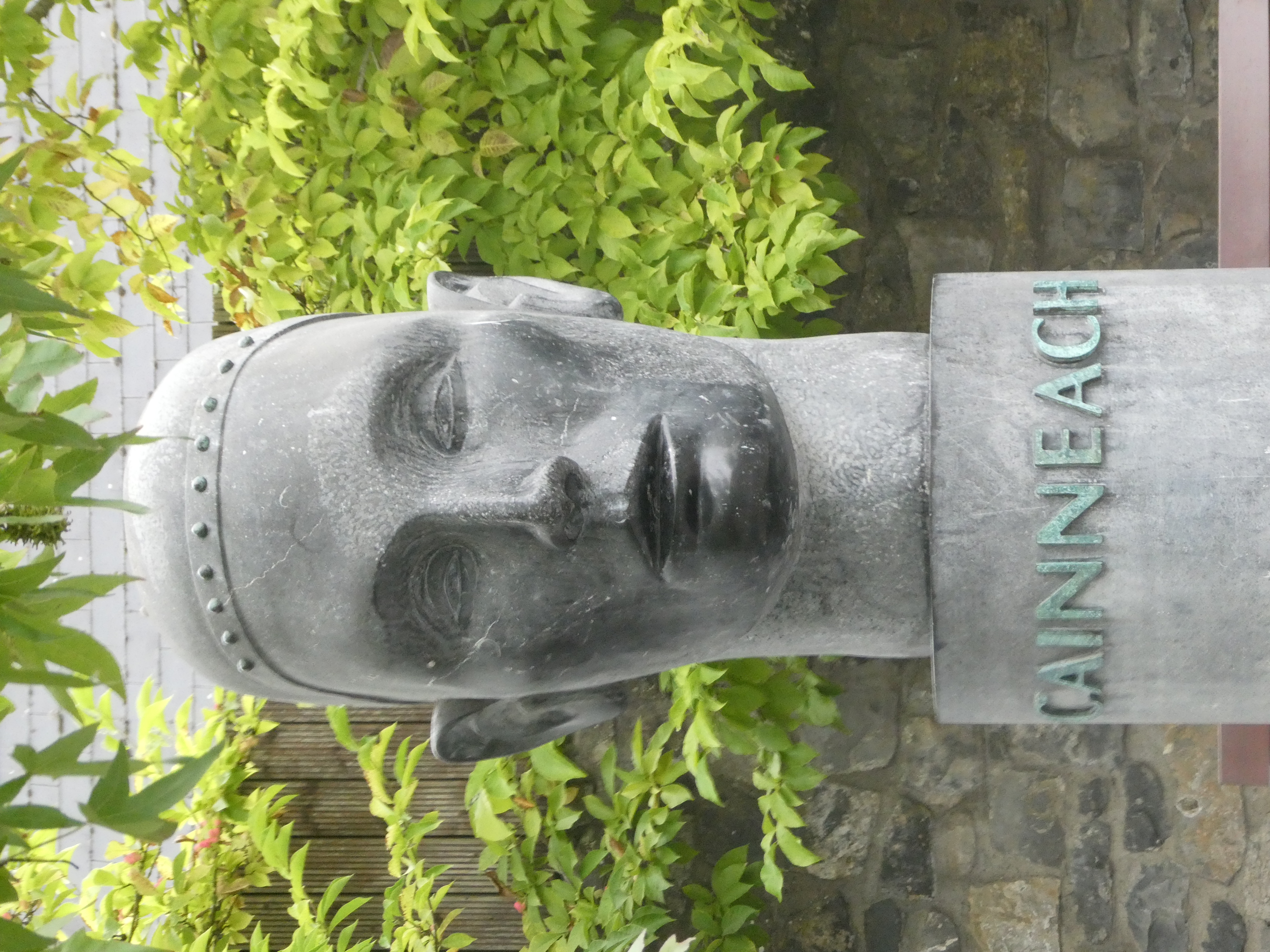
Saint Canice, also known as Cainnech of Aghaboe, is depicted as a man of profound virtue, eloquence, and learning, whose influence resonated through centuries of religious and cultural development. Despite much of his biography being rooted in hagiography, his veneration is maintained by the Roman Catholic Church and the Eastern Orthodox Church. His feast day, celebrated on October 11th, continues to mark his enduring spiritual significance. His missionary work in Scotland is often linked with the broader evangelization efforts of Irish monks. The 'Glas-Choinnigh' is preserved in various manuscript traditions, and contemporary discussions surrounding early Irish saints often feature Canice as a key figure.
🎵 Origins & History
The historical accounts of Saint Canice, or Cainnech of Aghaboe, are rooted in hagiography, offering insights into the religious landscape of early Ireland. Tradition suggests he studied under Saint Finian at Clonard Abbey, a renowned center of learning. His missionary work in Scotland is often linked with the broader evangelization efforts of Irish monks in the region. His life's work is traditionally understood to have culminated around 600 AD, though the exact date remains a subject of historical tradition.
⚙️ How It Works
While the 'how it works' of a 6th-century saint might seem abstract, Canice's influence operated through the established structures of early medieval monasticism and the power of the written word. His primary contribution was reportedly the establishment and governance of monastic communities, which served as centers for prayer, education, and evangelization. These monasteries, like his principal foundation at Aghaboe Abbey, functioned as self-sufficient units, fostering spiritual discipline and disseminating Christian doctrine. Crucially, he is credited with authoring a significant commentary on the Gospels, known as 'Glas-Choinnigh' (Kenneth's Lock or the Chain of Cainnech). This work, a testament to his scholarly prowess, served as a vital theological resource for centuries, preserving and transmitting biblical interpretation through the turbulent early medieval period and beyond. His missionary activities also involved direct preaching and teaching, bringing Christian tenets to communities in Ireland and Scotland through pastoral care and spiritual guidance.
📊 Key Facts & Numbers
Saint Canice's legacy is understood through the enduring impact of his foundations and writings. His Gospel commentary, 'Glas-Choinnigh,' was so highly regarded that it reportedly remained a standard text for over 700 years, influencing theological thought and biblical scholarship across Ireland and Britain. His feast day, October 11th, is observed by both the Roman Catholic and Eastern Orthodox Churches, a testament to his widespread veneration. While precise numbers for his direct converts are lost to time, the sheer scale of his monastic foundations and the longevity of his written works suggest a profound spiritual reach, impacting thousands of lives across multiple generations and regions.
👥 Key People & Organizations
The constellation of individuals and institutions associated with Saint Canice paints a picture of a vibrant early medieval religious network. His primary spiritual mentor was Saint Finian of Clonard, under whom he studied at Clonard Abbey, a nexus of Irish monasticism that also produced figures like Saint Columba and Saint Ciarán of Clonmacnoise. Canice's own monastic community at Aghaboe Abbey became a significant center, reportedly attracting disciples and scholars. His missionary work in Scotland is often linked with the broader evangelization efforts of Irish monks in the region, though specific collaborators are less documented. The veneration of Saint Canice is maintained by the Roman Catholic Church and the Eastern Orthodox Church, both of whom commemorate his feast day. Modern scholarship on early Irish Christianity and monasticism, including works by historians like Kathleen Hughes and Dáibhí Ó Cróinín, continues to illuminate his life and times.
🌍 Cultural Impact & Influence
Saint Canice's influence reverberates through the cultural and religious fabric of Ireland and Scotland. His status as one of the Twelve Apostles of Ireland places him at the very genesis of Irish Christianity, shaping its early development and identity. The monasteries he founded, particularly Aghaboe Abbey, served not only as spiritual centers but also as bastions of learning and culture during the early medieval period, preserving texts and traditions. The 'Glas-Choinnigh,' his Gospel commentary, was a cornerstone of biblical scholarship for centuries, demonstrating the intellectual prowess of Irish monasticism. Furthermore, his missionary endeavors in Scotland contributed to the Christianization of the Pictish kingdoms, leaving a lasting spiritual legacy. The very name 'Canice' and its variations, like Kenneth, remain popular given names, a subtle yet persistent echo of his enduring presence in the cultural consciousness.
⚡ Current State & Latest Developments
In the contemporary landscape, Saint Canice's legacy is primarily preserved through religious observance and historical scholarship. His feast day, October 11th, continues to be marked by services in churches dedicated to him across Ireland and Scotland, such as Saint Canice's Cathedral in Kilkenny, a magnificent Gothic structure dating back to the 13th century. While the monastic communities he founded no longer exist in their original form, their historical significance is studied by scholars of early medieval history and Celtic Christianity. The 'Glas-Choinnigh' is preserved in various manuscript traditions, accessible to researchers and theologians. Contemporary discussions surrounding early Irish saints and their impact on European Christianity often feature Canice as a key figure, highlighting his role in shaping religious and cultural identity during a formative period. There are no active technological or commercial developments directly tied to Saint Canice himself, his relevance remains firmly in the spiritual and historical realms.
🤔 Controversies & Debates
The historical accounts of Saint Canice are not without their points of contention and debate, largely stemming from the nature of early hagiography. A prominent point of discussion revolves around the authenticity and precise dating of his Gospel commentary, 'Glas-Choinnigh.' Some scholars debate the extent of his direct authorship versus the compilation or editing of existing texts by his followers. Another area of discussion concerns the miraculous elements often woven into his biography, such as taming a wild bull or being protected by a divine light. These narratives, while serving to elevate his spiritual status, are viewed by modern historians as allegorical or symbolic rather than literal accounts. The exact geographical scope and impact of his missionary work in Scotland also remain subjects of ongoing historical inquiry, with varying interpretations of his influence on the Pictish church.
🔮 Future Outlook & Predictions
The future of Saint Canice's legacy lies in the continued exploration and reinterpretation of his life and works within academic and religious contexts. As historical methodologies evolve, scholars will likely continue to refine our understanding of his contributions, potentially uncovering new insights into the 'Glas-Choinnigh' and the broader network of early Irish monasticism. The ongoing interest in Celtic Christianity and its unique spiritual traditions may lead to renewed popular engagement with figures like Canice, fostering a deeper appreciation for his role in shaping religious thought. Furthermore, the enduring presence of churches and places named in his honor suggests a continued spiritual relevance, ensuring his story will be passed down through generations. While no specific technological advancements are anticipated, the digital preservation and accessibility of ancient manuscripts related to his writings could offer new avenues for study and devotion.
💡 Practical Applications
The practical applications of Saint Canice's life are primarily spiritual and educational, rather than technological or commercial. His most tangible legacy, the 'Glas-Choinnigh,' reportedly served as a practical tool for theological study and spiritual guidance for centuries, influencing the understanding and interpretation of the Gospels. The monastic communities he founded provided practical models for organized religious life, education, and community building in the early medieval period. For contemporary individuals, Canice's life offers a model of devotion, intellectual rigor, and missionary zeal. Churches dedicated to him continue to serve as places of worship and community gathering.
Key Facts
- Category
- culture
- Type
- topic