
Contents
- 🎵 Origins & Early Practices
- ⚙️ The Triad and Beyond: Key Crops
- 📊 Scale and Labor: From Smallholders to Latifundia
- 👥 Tools, Techniques, and Innovations
- 🌍 Feeding the Empire: Trade and Logistics
- ⚡ Decline and Legacy
- 🤔 Debates on Sustainability and Labor
- 🔮 Future Research Directions
- 💡 Practical Applications in Modern Farming
- 📚 Related Topics & Deeper Reading
- References
Overview
Roman agriculture, spanning over a millennium, formed the bedrock of one of history's most expansive civilizations. Primarily centered around the Mediterranean's climate, it revolved around a vital triad of grains, olives, and grapes, sustaining a vast population. Initially characterized by small, self-sufficient landholdings, Roman farming evolved dramatically. This transformation fueled the growth of urban centers like the city of Rome, necessitating sophisticated systems of commercial markets and long-distance transport, particularly for grain, to ensure the sustenance of millions across diverse territories. The ingenuity in irrigation, crop rotation, and tool development laid foundations that influenced agricultural practices for centuries.
🎵 Origins & Early Practices
The genesis of Roman agriculture can be traced to the early days of the Roman Republic, where small, independent farmers, often citizen-soldiers, tilled their plots to achieve self-sufficiency. These early farms, typically measured in iugera (an ancient Roman unit of area), were the backbone of a society that valued agrarian life. Early techniques were rudimentary, relying on manual labor and basic tools, but they were sufficient to support a growing population and the nascent military needs of the expanding city-state. The foundational principles of crop rotation and fallowing were understood, even if not systematically applied across all regions.
⚙️ The Triad and Beyond: Key Crops
At the heart of Roman agriculture lay a crucial triad: grains (primarily wheat and barley), olives, and vines. Grains were the staple food, essential for feeding the populace and the legions, with wheat varieties like triticum durum and triticum spelta being particularly important. Olives yielded oil, indispensable for cooking, lighting, and hygiene, while grapes were pressed for wine, a ubiquitous beverage across all social strata. Beyond this core, Romans cultivated a variety of other crops, including legumes (beans, lentils, chickpeas), vegetables (cabbage, onions, garlic), fruits (figs, apples, pears), and flax for linen. The success of these crops was heavily dependent on regional climate and soil conditions, leading to specialized agricultural zones within the vast empire.
📊 Scale and Labor: From Smallholders to Latifundia
The agrarian landscape of Rome underwent a profound transformation. Initially dominated by smallholders, the Republic and later the Empire saw the rise of the latifundium – vast estates worked by enslaved peoples. This shift had significant social and economic consequences, contributing to the displacement of small farmers and the growth of urban centers dependent on imported food. The management of this supply chain was a monumental undertaking, involving taxation, storage facilities (horrea), and the regulation of merchants and shipowners.
👥 Tools, Techniques, and Innovations
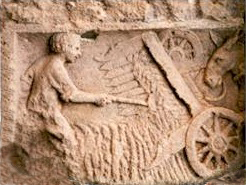
Roman farmers developed a range of tools and techniques to enhance productivity. The ard (a simple scratch plow) was common, though heavier plows with iron shares were used in more challenging soils, particularly in northern provinces. Irrigation systems, including aqueducts and ditches, were crucial in drier regions, mirroring the sophisticated engineering seen in Roman infrastructure elsewhere. Manure from livestock was a primary fertilizer, and crop rotation, including the use of legumes to replenish soil nitrogen, was practiced to maintain fertility. The sickle and scythe were used for harvesting grains, while specialized tools existed for pruning vines and harvesting olives. Watermills and animal-powered mills also began to appear, increasing the efficiency of grain processing.
🌍 Feeding the Empire: Trade and Logistics
Feeding the burgeoning urban populations, especially Rome, required a sophisticated logistical network. The state played a significant role through the Annona, a system designed to ensure the regular supply of grain to the city. This involved extensive trade routes, both by land and sea, with grain ships sailing from provinces like Egypt, Sicily, and North Africa to Italian ports. The vulnerability of these supply lines was a constant concern, as disruptions could lead to famine and unrest.
⚡ Decline and Legacy
As the Western Roman Empire declined, so too did its agricultural infrastructure and productivity. Warfare, political instability, and economic disruption led to the abandonment of many farms and the breakdown of long-distance trade networks. The reliance on slave labor, while initially productive, may have also stifled innovation and created social tensions. However, the knowledge and techniques developed during the Roman era did not vanish; they were transmitted through surviving texts and adapted by successor kingdoms and the early medieval Church, influencing agricultural practices throughout Europe for centuries. The legacy of Roman viticulture and olive cultivation, in particular, persists in many regions today.
🤔 Debates on Sustainability and Labor
The sustainability of Roman agriculture, particularly the intensive cultivation of the latifundia, is a subject of ongoing debate among historians and archaeologists. Some scholars argue that the reliance on slave labor and intensive farming practices led to soil exhaustion and deforestation in certain regions, contributing to long-term environmental degradation. Others point to the Romans' sophisticated understanding of soil management, crop rotation, and irrigation as evidence of a more sustainable approach, capable of supporting large populations for extended periods. The impact of climate fluctuations, such as the Roman Climate Optimum, also played a role in agricultural success and failure, complicating simple narratives of environmental determinism or human ingenuity alone.
🔮 Future Research Directions
Current research in Roman agriculture is increasingly leveraging interdisciplinary approaches. Advances in paleobotany and archaeological analysis of ancient farm sites are providing more granular data on crop yields, farming techniques, and land use patterns. Isotope analysis of human and animal remains can reveal dietary habits and the origins of foodstuffs, shedding light on trade and migration. Computational modeling is being used to simulate ancient farming systems and assess their resilience to environmental changes and economic pressures. The study of surviving Roman agricultural texts continues to offer invaluable insights into Roman agricultural thought and practice.
💡 Practical Applications in Modern Farming
While direct application is limited by technological advancements, Roman agricultural principles still resonate. The emphasis on crop rotation, soil enrichment through manure, and water management techniques like terracing and irrigation are foundational to modern sustainable farming. The cultivation of staple crops like wheat, olives, and grapes, central to Roman diets, remains critical globally. Furthermore, the Roman understanding of regional specialization in agriculture, adapting crops to specific climates, informs contemporary agricultural zoning and the development of climate-resilient varieties. The very concept of large-scale, organized food production to support urban populations is a direct inheritance from Roman logistical achievements.
Key Facts
- Category
- history
- Type
- concept