
Contents
- 📜 What is the Rig Veda?
- ⏳ Historical Context & Origins
- 📖 Key Themes & Structure
- 🗣️ Language & Transmission
- 🤔 Scholarly Debates & Interpretations
- ✨ Cultural Impact & Resonance
- 📚 Versions & Preservation
- 💡 Who Should Explore the Rig Veda?
- 🧭 Navigating the Text
- 🔗 Related Wisdom Traditions
- ❓ Frequently Asked Questions
- 🚀 Getting Started
- Frequently Asked Questions
- Related Topics
Overview
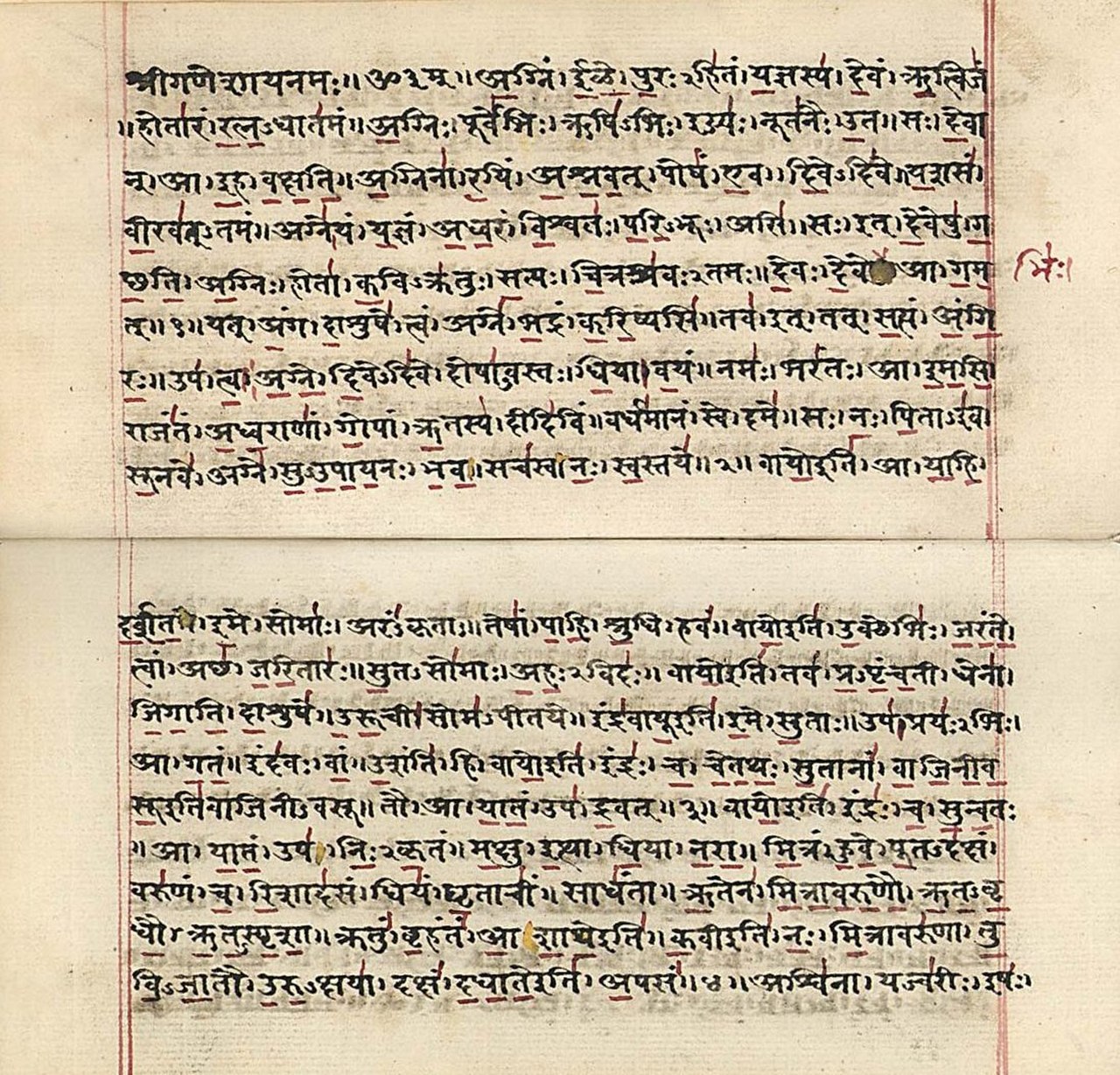
The Rig Veda is the oldest of the four Vedas, a collection of Sanskrit hymns composed between 1500 and 1200 BCE. It's not just a religious text; it's a foundational pillar of Hinduism and a crucial window into the Indo-Aryan civilization of the Vedic period. Comprising over 1,000 hymns (suktas) and 10,600 verses (mantras) organized into ten books (mandals), it details rituals, cosmology, and philosophical inquiries. Its oral transmission for millennia before being written down highlights a profound commitment to preserving knowledge. The Rig Veda's influence extends far beyond India, shaping philosophical discourse and spiritual practices globally.
📜 What is the Rig Veda?
The Rig Veda is not just a book; it's a foundational pillar of Hinduism and one of the oldest continuously recited texts in the world. Composed in Vedic Sanskrit, it's a collection of over 1,000 hymns (sūktas) and more than 10,000 verses, organized into ten books (mandals). It's considered śruti, meaning 'that which is heard,' implying divine revelation rather than human authorship. This ancient scripture offers a window into the spiritual, philosophical, and social fabric of early Indo-Aryan civilization, predating many other major world religions.
⏳ Historical Context & Origins
Dating the Rig Veda is a complex scholarly endeavor, with estimates ranging from 1500 BCE to 1200 BCE, making it one of the oldest extant Indo-European texts. Its composition is attributed to a priestly class of Vedic priests known as Brahmins, who meticulously preserved and transmitted these hymns orally for centuries. The hymns reflect a society deeply connected to nature, with a pantheon of deities like Agni (fire), Indra (king of gods), and Soma (a ritual drink). Understanding its historical milieu is crucial to grasping the worldview it encapsulates.
📖 Key Themes & Structure
The Rig Veda is structured into ten mandals, with the first and last being the youngest additions. The hymns primarily focus on praise, invocation, and philosophical inquiry, exploring themes of creation, cosmic order (Ṛta), sacrifice (yajña), and the nature of reality. While often seen as polytheistic, many scholars point to an underlying monistic or henotheistic current, where various deities are seen as manifestations of a single supreme principle. The intricate meter and poetic devices within the hymns are as significant as their semantic content.
🗣️ Language & Transmission
The language of the Rig Veda is Old Indo-Aryan, specifically Vedic Sanskrit, which differs significantly from classical Sanskrit. Its preservation is a marvel of oral tradition, relying on precise pronunciation, intonation, and memorization techniques passed down through generations. This meticulous oral transmission, known as the śākhā system, ensured the text's integrity for millennia, even as many of the original branches of transmission have been lost.
🤔 Scholarly Debates & Interpretations
Scholarly debate surrounding the Rig Veda is vibrant. Key discussions revolve around its precise dating, the extent of its Indo-Aryan migration context, and the interpretation of its philosophical underpinnings. Is it purely ritualistic, or does it contain profound philosophical insights? Was it composed by indigenous inhabitants or arriving peoples? The interpretation of its deities and cosmology continues to be a fertile ground for academic and spiritual inquiry, with varying perspectives from Western Indology and traditional Indian scholarship.
✨ Cultural Impact & Resonance
The Rig Veda's influence is immeasurable, shaping the trajectory of Indian philosophy, Hindu theology, and Sanskrit literature for over three millennia. Its hymns have inspired countless rituals, meditations, and philosophical treatises, including the Upanishads. The concepts of karma, dharma, and moksha, while more explicitly developed in later texts, find their nascent forms within its verses, demonstrating its enduring cultural and spiritual legacy.
📚 Versions & Preservation
Of the numerous śākhās (recensions) of the Rig Veda that once existed, only the Śakalya śākhā is widely available today. This means that while the core text is preserved, much of the associated literature, commentaries, and alternative versions are lost to history or remain in obscure private collections. The surviving Śakalya recension is itself a testament to the rigorous methods of oral preservation that prioritized phonetic accuracy and structural integrity.
💡 Who Should Explore the Rig Veda?
Anyone interested in the deep roots of Eastern spirituality, the origins of Indian philosophy, or the power of ancient oral traditions will find the Rig Veda compelling. It's essential for scholars of Indo-European languages, comparative religion, and ancient history. For practitioners of Yoga and Meditation, it offers a direct connection to the source texts that underpin many modern spiritual practices, providing context and depth beyond contemporary interpretations.
❓ Frequently Asked Questions
Q: Is the Rig Veda a single book or a collection? A: The Rig Veda is a collection of over 1,000 hymns, organized into ten books (mandals). It's considered one of the four primary Vedic scriptures known as the Vedas, and is the oldest of them all. Its hymns were composed over a period of time by various sages.
🚀 Getting Started
Q: What is the main purpose of the Rig Veda? A: Primarily, the Rig Veda is a collection of hymns used for ritualistic purposes, invoking deities and seeking blessings. However, it also contains profound philosophical and cosmological reflections that have shaped subsequent Indian thought, exploring themes of creation, order, and the nature of existence.
Section 13
Q: How can I read the Rig Veda if I don't know Vedic Sanskrit? A: Fortunately, there are several reputable translations available in English and other languages. Notable translators include Ralph T. H. Griffith, Wendy Doniger, and David Kinsley. Engaging with scholarly commentaries alongside translations is highly recommended for deeper understanding.
Section 14
Q: Is the Rig Veda still relevant today? A: Absolutely. The Rig Veda continues to be recited in certain Hindu rituals and is a cornerstone of Hindu philosophy. Its concepts and hymns inspire millions globally, influencing practices in Yoga, meditation, and spiritual seeking, making it a living tradition.
Section 15
Q: What are the main deities mentioned in the Rig Veda? A: Key deities include Indra (king of the gods, associated with thunder and war), Agni (the fire god, messenger to the gods), Surya (the sun god), Varuna (god of cosmic order and justice), and Soma (a divine plant and its intoxicating juice). The hymns often focus on praising these and other deities.
Section 16
Q: What does 'śruti' mean in relation to the Rig Veda? A: 'Śruti' translates to 'that which is heard' and signifies texts considered to be of divine origin, revealed directly to the ancient sages. The Rig Veda, along with the other Vedas, is classified as śruti, distinguishing it from smṛti ('that which is remembered') texts like the Puranas or the Mahabharata.
Section 17
To begin your exploration, consider acquiring a well-regarded English translation. The version by Ralph T. H. Griffith, first published in 1896, remains a foundational resource, though it's dated in its scholarship. For a more contemporary perspective, Wendy Doniger's translations and commentaries offer critical insights. Many academic libraries and online archives also provide access to the original Sanskrit text and scholarly analyses. Engaging with a local Vedic scholar or a Hindu temple community can also offer invaluable guidance and context for understanding this complex and ancient scripture.
Key Facts
- Year
- c. 1500-1200 BCE
- Origin
- Indian Subcontinent
- Category
- Religious Texts
- Type
- Primary Source Text
Frequently Asked Questions
Is the Rig Veda a single book or a collection?
The Rig Veda is a collection of over 1,000 hymns, organized into ten books (mandals). It's considered one of the four primary Vedic scriptures known as the Vedas, and is the oldest of them all. Its hymns were composed over a period of time by various sages.
What is the main purpose of the Rig Veda?
Primarily, the Rig Veda is a collection of hymns used for ritualistic purposes, invoking deities and seeking blessings. However, it also contains profound philosophical and cosmological reflections that have shaped subsequent Indian thought, exploring themes of creation, order, and the nature of existence.
How can I read the Rig Veda if I don't know Vedic Sanskrit?
Fortunately, there are several reputable translations available in English and other languages. Notable translators include Ralph T. H. Griffith, Wendy Doniger, and David Kinsley. Engaging with scholarly commentaries alongside translations is highly recommended for deeper understanding.
Is the Rig Veda still relevant today?
Absolutely. The Rig Veda continues to be recited in certain Hindu rituals and is a cornerstone of Hindu philosophy. Its concepts and hymns inspire millions globally, influencing practices in Yoga, meditation, and spiritual seeking, making it a living tradition.
What are the main deities mentioned in the Rig Veda?
Key deities include Indra (king of the gods, associated with thunder and war), Agni (the fire god, messenger to the gods), Surya (the sun god), Varuna (god of cosmic order and justice), and Soma (a divine plant and its intoxicating juice). The hymns often focus on praising these and other deities.
What does 'śruti' mean in relation to the Rig Veda?
'Śruti' translates to 'that which is heard' and signifies texts considered to be of divine origin, revealed directly to the ancient sages. The Rig Veda, along with the other Vedas, is classified as śruti, distinguishing it from smṛti ('that which is remembered') texts like the Puranas or the Mahabharata.