
Contents
Overview
Retrieval Augmented Generation (RAG) is a sophisticated artificial intelligence architecture that tackles a fundamental limitation of large language models (LLMs): their static knowledge base. While LLMs like GPT-3 can generate human-like text, their understanding is frozen at the time of their last training. RAG injects dynamic, external knowledge into the generation process. It works by first retrieving relevant information from a knowledge source—like a database, a collection of documents, or even the web—and then feeding that retrieved context to the LLM, which uses it to inform its output. This allows for more accurate, up-to-date, and grounded responses, significantly reducing the risk of 'hallucinations' or factual inaccuracies. The interplay between retrieval and generation is what gives RAG its power, creating a more robust and reliable AI system.
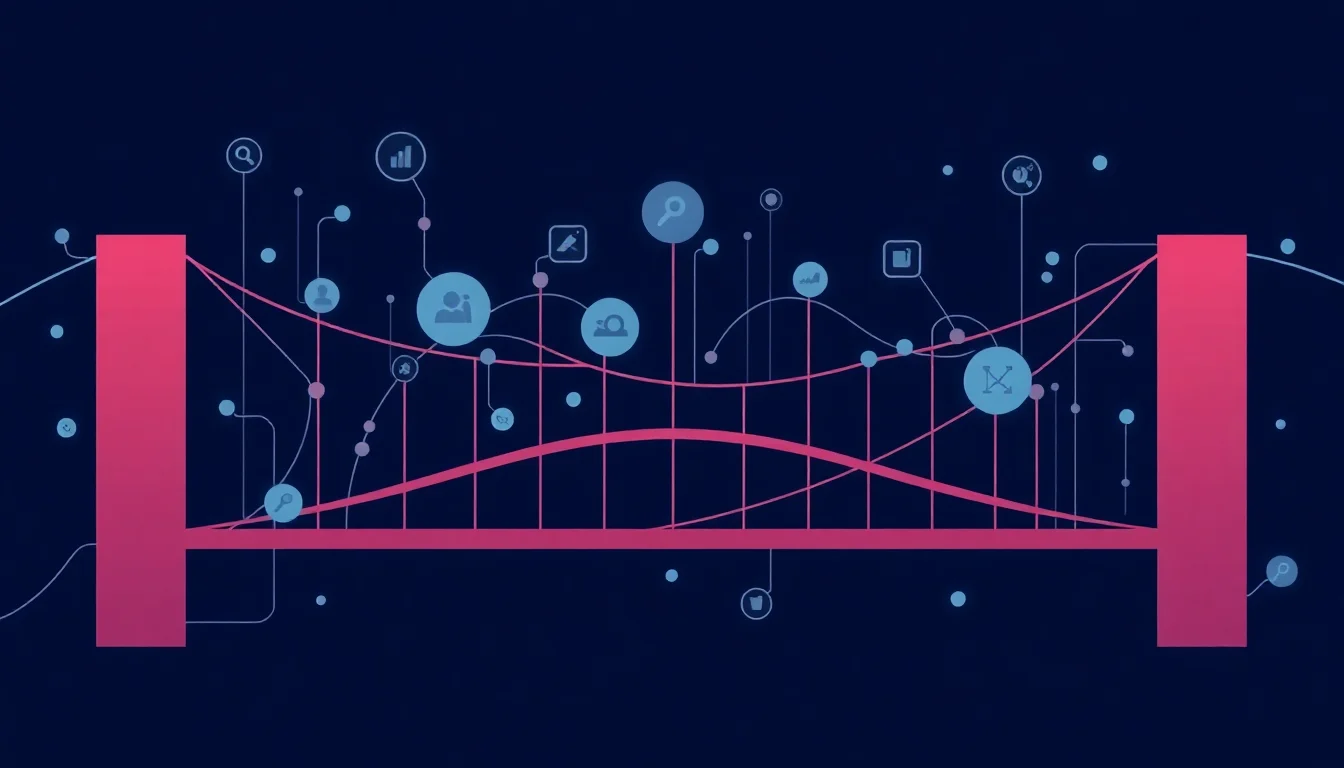
At its core, RAG operates in two main phases. First, the 'retrieval' component, often powered by dense vector embeddings and similarity search, finds the most pertinent pieces of information related to a user's query from a pre-indexed knowledge corpus. Think of it as a hyper-efficient search engine for AI. Once these relevant documents or snippets are identified, they are passed to the 'generation' component—the LLM—alongside the original query. The LLM then synthesizes this contextual information with its internal knowledge to produce a coherent and factually supported answer. This hybrid approach bridges the gap between parametric knowledge (what the LLM 'knows' from training) and non-parametric knowledge (external, accessible data).
🎬 The Genesis
The genesis of Retrieval Augmented Generation can be traced to the burgeoning field of natural language processing and the persistent challenge of knowledge grounding in AI. Early attempts at question answering relied on structured databases, but the advent of massive, unstructured text corpora and powerful LLMs like GPT-2 and BERT necessitated new paradigms. Researchers at the Meta AI (then Facebook AI) and Google Research were pivotal in developing the foundational techniques, particularly in efficient information retrieval and the integration of external knowledge into neural networks. The seminal paper 'Retrieval Augmented Generation for Knowledge-Intensive NLP Tasks' by Patrick Lewis et al. in 2020 is widely credited with formalizing the RAG architecture as we know it today, demonstrating its effectiveness across various NLP benchmarks.
📖 How It Works
The RAG process is elegantly simple yet profoundly effective. When a user poses a question, a retriever module (often a dense passage retriever trained on a corpus) scours a knowledge base—which could be a company's internal documents, a curated set of web pages, or a scientific literature archive. It identifies the most relevant chunks of text. These snippets are then prepended to the original prompt, creating an augmented prompt that is fed into a generative LLM. The LLM, now armed with specific, contextually relevant information, generates an answer that is far more likely to be accurate and detailed than one produced from its parametric knowledge alone. For instance, when asked about a recent scientific discovery, a RAG system can retrieve the latest research papers, ensuring its answer reflects current findings, unlike a base LLM that might provide outdated information.
🏆 Reception & Impact
The reception of RAG has been overwhelmingly positive within the AI research and development community. Its ability to enhance LLM accuracy and reduce hallucinations has made it a go-to solution for enterprise applications requiring reliable information delivery, such as customer support chatbots and internal knowledge assistants. Companies like Microsoft and AWS have integrated RAG-like functionalities into their AI platforms, recognizing its potential. However, debates persist regarding the optimal retrieval strategies, the computational cost of maintaining large indexed knowledge bases, and the potential for bias amplification if the retrieved data itself is biased. The controversy spectrum for RAG is moderate, as its benefits are widely acknowledged, but its implementation details and long-term implications are still under active discussion.
✨ Legacy & Influence
The legacy of RAG is already significant, reshaping how we interact with AI and access information. It has democratized the use of LLMs by allowing them to be grounded in specific, proprietary datasets without requiring costly retraining. This has fueled the development of numerous AI-powered applications, from advanced search engines to personalized learning platforms. The influence of RAG is evident in subsequent research exploring even more dynamic integration methods, such as recursive retrieval and multi-hop reasoning. It stands as a testament to the power of combining focused information retrieval with generative capabilities, paving the way for more intelligent and trustworthy AI systems, and directly influencing the architecture of newer models that aim for even greater contextual awareness and factual fidelity.
Key Facts
- Year
- 2023
- Origin
- Global
- Category
- videos
- Type
- documentary
Frequently Asked Questions
What's the main problem RAG solves for AI?
RAG primarily addresses the issue of 'hallucinations' in large language models, where the AI generates factually incorrect or nonsensical information because its knowledge is limited to its training data.
How does RAG make AI more accurate?
By retrieving specific, up-to-date information from external sources (like documents or databases) and feeding it to the AI model as context, RAG guides the AI to generate answers that are grounded in factual evidence.
Is RAG a type of AI itself, or a technique?
RAG is best described as a technique or an architecture that combines existing AI components (retrieval systems and generative models) to achieve a more powerful and reliable outcome.
Can RAG be used with any AI model?
While RAG is most commonly associated with large language models (LLMs) like GPT-3 or BERT, the core principle of augmenting generation with retrieval can be applied to other generative AI models as well.