
Contents
Overview
The concept of recombinant DNA was first explored by scientists like Paul Berg, who conducted experiments with SV40 virus and E. coli in the 1970s, laying the groundwork for modern genetic engineering. The development of rDNA technology was further accelerated by the discovery of restriction enzymes like HindIII and BamHI, which enabled researchers to precisely cut and join DNA sequences. Today, companies like Biogen and Amgen utilize rDNA to produce therapeutic proteins, such as erythropoietin, which has transformed the treatment of anemia, as discussed by experts like David Baltimore and James Watson.
🔬 How It Works
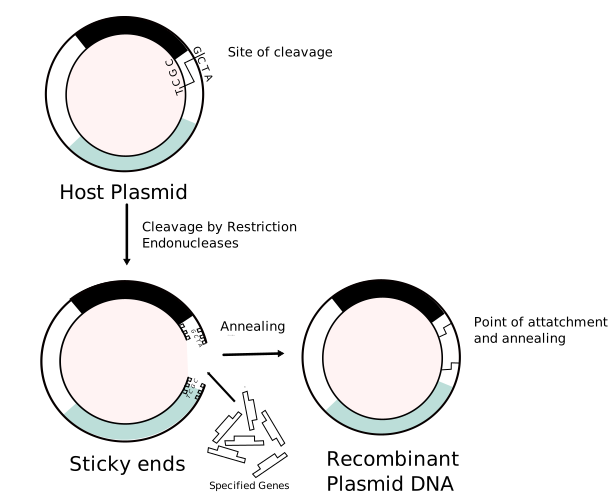
Recombinant DNA molecules are created through a process known as molecular cloning, which involves the use of enzymes like DNA ligase and reverse transcriptase to join DNA fragments. This technology has been instrumental in the development of genetic engineering, gene therapy, and synthetic biology, with applications in fields like agriculture, where companies like Monsanto and Syngenta have developed genetically modified crops, such as Bt corn and Roundup Ready soybeans, using rDNA technology. Researchers like Craig Venter and Hamilton Smith have also used rDNA to sequence entire genomes, including the human genome, as part of the Human Genome Project, which was completed in 2003 with the help of organizations like the National Institutes of Health and the Wellcome Trust.
🌎 Cultural Impact
The cultural impact of recombinant DNA technology has been significant, with far-reaching implications for fields like medicine, agriculture, and biotechnology. The ability to create rDNA molecules has enabled scientists to develop new treatments for diseases, such as genetic disorders and cancer, as well as to produce biofuels and other sustainable energy sources. However, the use of rDNA has also raised concerns about the ethics of genetic engineering, as discussed by thinkers like Jeremy Rifkin and Vandana Shiva, who have argued that the technology poses risks to human health and the environment, and have called for greater regulation and oversight, as seen in the work of organizations like the European Union's Directorate-General for Environment and the US Environmental Protection Agency.
🔮 Legacy & Future
The legacy of recombinant DNA technology is profound, with applications in fields like biotechnology, medicine, and agriculture. As researchers continue to push the boundaries of genetic engineering, we can expect to see new innovations and breakthroughs in the years to come, such as the development of gene editing tools like CRISPR-Cas9, which has been pioneered by scientists like Jennifer Doudna and Emmanuelle Charpentier, and has the potential to revolutionize the treatment of genetic diseases, as discussed by experts like George Church and David Liu.
Key Facts
- Year
- 1973
- Origin
- Stanford University
- Category
- science
- Type
- concept
Frequently Asked Questions
What is recombinant DNA?
Recombinant DNA (rDNA) is a laboratory-created DNA molecule formed by combining genetic material from multiple sources, enabling the creation of sequences that wouldn't occur naturally. This technology has been used by companies like Pfizer and Novartis to develop new treatments for diseases, such as cancer and genetic disorders, as discussed by experts like Francis Collins and Eric Lander.
How is rDNA created?
Recombinant DNA molecules are created through a process known as molecular cloning, which involves the use of enzymes like DNA ligase and reverse transcriptase to join DNA fragments. This technology has been instrumental in the development of genetic engineering, gene therapy, and synthetic biology, with applications in fields like agriculture, where companies like Monsanto and Syngenta have developed genetically modified crops, such as Bt corn and Roundup Ready soybeans, using rDNA technology, as discussed by researchers like Norman Borlaug and M.S. Swaminathan.
What are the applications of rDNA technology?
The applications of rDNA technology are diverse and far-reaching, with implications for fields like medicine, agriculture, and biotechnology. The ability to create rDNA molecules has enabled scientists to develop new treatments for diseases, such as genetic disorders and cancer, as well as to produce biofuels and other sustainable energy sources, as discussed by experts like Craig Venter and Hamilton Smith.
What are the risks and benefits of rDNA technology?
The risks and benefits of rDNA technology are complex and multifaceted, with implications for human health, the environment, and the economy. While rDNA technology has the potential to revolutionize the treatment of diseases and improve crop yields, it also raises concerns about the ethics of genetic engineering and the potential for unintended consequences, as discussed by thinkers like Jeremy Rifkin and Vandana Shiva.
How is rDNA technology regulated?
The regulation of rDNA technology is a complex and evolving issue, with implications for the biotechnology industry, government agencies, and the public. In the United States, for example, the regulation of rDNA technology is overseen by agencies like the FDA and the EPA, which have established guidelines for the safe use of rDNA technology in fields like medicine and agriculture, as discussed by experts like Margaret Hamburg and Lisa Jackson.