
Contents
Overview
Rebreather diving utilizes self-contained underwater breathing apparatus (SCUBA) that recirculate a diver's exhaled gas, scrubbing carbon dioxide and replenishing oxygen. This closed-circuit system offers significant advantages over traditional open-circuit scuba, primarily extended underwater endurance, near-silent operation, and the absence of tell-tale bubbles. These features make rebreathers indispensable for technical, military, and scientific diving applications where prolonged bottom times, stealth, or minimal environmental disturbance are paramount. While more complex and expensive than open-circuit systems, rebreathers unlock deeper, longer, and more discreet underwater exploration, pushing the boundaries of what's possible beneath the surface. The technology has evolved from early, often unreliable, designs to sophisticated, digitally controlled units that are becoming increasingly accessible.
🎵 Origins & History
Rebreather technology has seen significant advancements over time. World War II saw significant advancements, particularly with the development of the Chariot by Italian divers, which utilized a rebreather system for covert operations. Post-war, companies like Poseidon and later Ocean Technology Inc. (OTI) began producing rebreathers for both military and nascent technical diving communities. The 1990s marked a pivotal shift with the introduction of electronically controlled, or 'e-rebreathers,' such as the Megalodon by Halcyon Diving Systems, which significantly improved safety and usability, ushering in the modern era of rebreather diving.
⚙️ How It Works
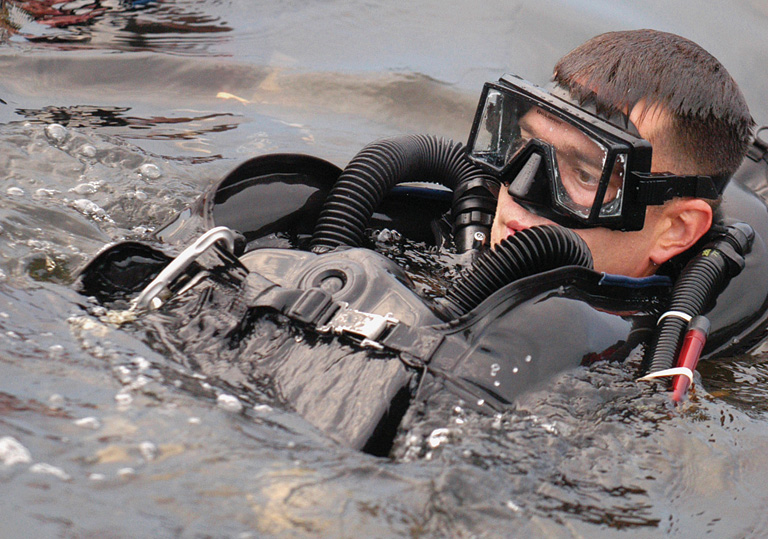
At its core, a rebreather functions by recirculating the diver's exhaled breath. The exhaled gas, rich in carbon dioxide and depleted of oxygen, passes through a 'scrubber' containing a chemical absorbent, typically soda lime, which removes the CO2. The now-scrubbed gas is then mixed with a fresh oxygen source – either a small, high-pressure oxygen cylinder or a counter-lung system that injects oxygen based on sensor readings. This oxygen-rich mixture is returned to the diver's breathing loop, allowing for a continuous supply of breathable gas. Unlike open-circuit scuba, which vents all exhaled gas, rebreathers conserve gas, enabling dives lasting hours on a fraction of the gas supply. The system typically includes a breathing loop, counterlungs (flexible bags that store gas), a scrubber canister, oxygen and diluent gas cylinders, and sophisticated sensors and control systems for electronic models.
📊 Key Facts & Numbers
Rebreather dives can last for extended periods, a stark contrast to the limited duration of typical open-circuit scuba tanks at recreational depths. The cost of rebreather units themselves can range from $4,000 to $12,000 USD, with ongoing operational costs for consumables like scrubber material and specialized gas mixes being significantly lower per hour of dive time. Military applications often involve dives exceeding 100 meters (330 feet), with some scientific expeditions reaching depths of 300 meters (984 feet). The global market for rebreathers, while niche, has seen steady growth, with an estimated 15,000-20,000 active rebreather divers worldwide.
👥 Key People & Organizations
Key figures in rebreather development include Irving Beale, whose early designs laid groundwork, and Henry Moseley, credited with early patents. Modern rebreather design and manufacturing are dominated by companies like Halcyon Diving Systems, JJ-CCR, AP Diving, and Poseidon. These organizations employ teams of engineers and divers to refine safety features and performance. Prominent rebreather divers and instructors, such as Ged Cambridge and Jeff Boone, have been instrumental in developing training standards and pushing the operational envelope. Military organizations like the U.S. Navy SEALs and various special forces units worldwide are significant users and developers of rebreather technology, often collaborating with manufacturers on specialized units.
🌍 Cultural Impact & Influence
Rebreather diving has profoundly influenced the culture of extreme underwater exploration, enabling a generation of divers to venture into previously inaccessible environments. The silent, bubble-free nature of rebreathers has been crucial for marine biology research, allowing scientists to observe delicate ecosystems and shy marine life without disturbance. Military applications, from covert insertion to mine countermeasures, have been revolutionized by the stealth capabilities of rebreathers. For recreational divers, the allure of extended bottom times and the challenge of mastering complex equipment have fostered a dedicated community. The aesthetic of rebreather diving, often associated with specialized gear and deep, technical dives, has also permeated popular media, appearing in documentaries and adventure films, albeit sometimes with dramatic license.
⚡ Current State & Latest Developments
The current state of rebreather diving is characterized by increasing sophistication and a gradual democratization of the technology. Electronic rebreathers (e-rebreathers) with advanced monitoring and automated systems are becoming the standard, offering enhanced safety through redundant sensors and real-time feedback. Manufacturers are focusing on user-friendly interfaces, improved scrubber efficiency, and more compact designs. Training agencies like Technical Diving International (TDI) and Global Diving Institute (GDI) are continuously updating their curricula to reflect these advancements. The integration of dive computers with rebreather control systems is also a significant trend, providing divers with a unified platform for managing their dive profile and gas supply. The market continues to see innovation in battery technology and sensor accuracy, further enhancing reliability.
🤔 Controversies & Debates
The primary controversy surrounding rebreather diving centers on safety and training rigor. Due to their complexity, rebreathers carry a higher inherent risk of equipment malfunction compared to open-circuit scuba. Failures in the oxygen supply, CO2 scrubbing, or control systems can lead to rapid incapacitation or death if not managed correctly. This has led to intense debate within the diving community about the adequacy of training standards and the experience level required for rebreather use. Critics argue that the allure of extended bottom times can tempt less experienced divers into situations beyond their capabilities. Conversely, proponents emphasize that with proper training, meticulous pre-dive checks, and adherence to procedures, rebreathers are exceptionally safe, often safer than open-circuit for certain types of dives due to their redundant systems and constant monitoring.
🔮 Future Outlook & Predictions
The future of rebreather diving is likely to see further integration of advanced computing and artificial intelligence. Expect predictive algorithms that can anticipate potential failures based on sensor data and diver performance, offering proactive alerts. Miniaturization of components, improved battery life, and more efficient scrubber technologies will continue to enhance portability and endurance. The development of closed-circuit systems that can operate at extreme depths, potentially utilizing mixed gases or even novel breathing mediums, is a long-term goal for scientific and military applications. Furthermore, advancements in materials science could lead to lighter, more durable rebreather units, potentially making them more accessible to a broader range of divers, though the specialized training will always remain a critical barrier.
💡 Practical Applications
Rebreather technology finds its most critical applications in technical diving, where divers push the limits of depth and duration for exploration, wreck penetration, and cave diving. Scientific research, particularly in marine biology and archaeology, relies heavily on rebreathers for extended observation periods and minimal environmental impact. Military and law enforcement agencies utilize them for covert operations, reconnaissance, and underwater demolition. Some specialized commercial diving operations, especially those requiring extended bottom times in sensitive environments or where surface supply is impractical, also employ rebreather systems. Even in recreational diving, rebreathers are used by enthusiasts seeking longer, more immersive experiences, often exploring deeper reefs or wrecks.
Key Facts
- Category
- technology
- Type
- topic