
Contents
Overview
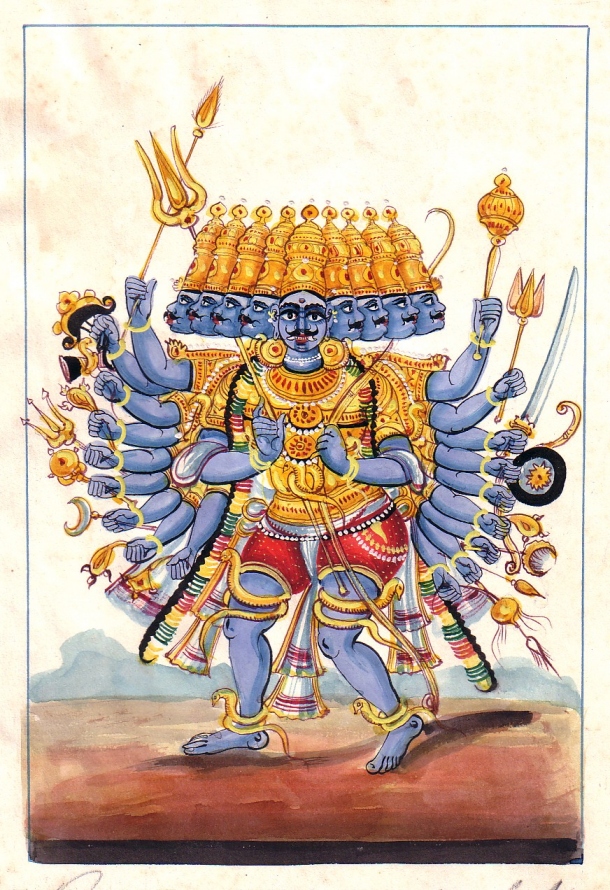
Ravana, whose name translates to 'roaring,' was the eldest son of sage Vishrava and the demoness Kaikasi. This unique parentage granted him both the wisdom of a Brahmin and the formidable power of a Rakshasa. He is traditionally depicted with ten heads and twenty arms, symbolizing his vast knowledge, including mastery over the four Vedas and six Shastras. His lineage connects him to prominent sages and demon kings, making him a figure of significant mythological importance. While often portrayed as the antagonist in the Ramayana, his character is complex, with accounts suggesting he was a devout follower of Lord Shiva, composing hymns in his praise and even performing severe penances. His grandfather was the sage Pulastya, one of the ten Prajapatis and a Saptarishi, highlighting his distinguished ancestry. The narrative of his birth and upbringing, as detailed in sources like Wikipedia and Britannica, sets the stage for his pivotal role in the epic.
⚙️ How It Works
Ravana's power stemmed from boons granted by Lord Brahma after intense penance, making him invincible to gods and demons, though vulnerable to humans. This invincibility, coupled with his immense intellect and martial prowess, allowed him to conquer the three worlds and establish himself as the powerful king of Lanka. He is known for his mastery of the Veena and is credited with composing the Shiva Tandava Stotra. His reign over Lanka is described as prosperous, with advancements in science and medicine, as noted by Sri Lankan lore. However, his immense power was also accompanied by arrogance and unchecked desires, which ultimately led to his downfall. His abduction of Sita, Rama's wife, was a pivotal act that triggered the epic war, as detailed in various retellings of the Ramayana, including those found on Britannica and Hindu American Foundation.
🌍 Cultural Impact
Ravana's influence extends beyond the Ramayana, appearing in Buddhist and Jain scriptures, and influencing various cultural traditions. In India, the festival of Dussehra commemorates Rama's victory over Ravana, symbolizing the triumph of good over evil. However, in Sri Lanka, Ravana is often viewed with more complexity, sometimes as a legendary emperor rather than a mere villain, with local lore attributing scientific and medical advancements to his reign. His character has been reinterpreted in various forms of art, literature, and film, exploring his multifaceted nature as a scholar, musician, ruler, and devotee. Websites like Hindu American Foundation and Britannica offer insights into these diverse interpretations and his cultural significance.
🔮 Legacy & Future
The legacy of Ravana is one of profound duality, embodying both immense knowledge and critical flaws. His story serves as a cautionary tale about the dangers of pride, lust, and unchecked ambition, even for those with great power and intellect. While celebrated as a devotee of Shiva and a learned scholar, his actions, particularly the abduction of Sita, led to his demise. This complexity has led to ongoing debates about his character, with some viewing him as a tragic figure or even a symbol of resistance. His story continues to be a subject of study and reinterpretation, offering lessons on morality, the nature of good and evil, and the importance of balancing power with wisdom and humility, as explored in discussions on Reddit and various cultural blogs.
Key Facts
- Year
- Ancient times
- Origin
- Indian subcontinent
- Category
- culture
- Type
- person
Frequently Asked Questions
Who was Ravana?
Ravana was the principal antagonist in the ancient Hindu epic Ramayana. He is traditionally depicted as a ten-headed rakshasa (demon) king of Lanka (present-day Sri Lanka). He was known for his immense power, intellect, and devotion to Lord Shiva, but also for his arrogance and flaws.
What is Ravana famous for?
Ravana is most famous for abducting Sita, the wife of Lord Rama, which led to the epic war described in the Ramayana. He is also known for his vast knowledge, his devotion to Shiva, and his reign as the powerful king of Lanka.
Was Ravana a devotee of Shiva?
Yes, many accounts describe Ravana as a devout follower of Lord Shiva. He is said to have performed severe penances, composed hymns like the Shiva Tandava Stotra in Shiva's praise, and is often depicted with Shiva in temples. However, some interpretations question the extent and nature of his devotion.
What do Ravana's ten heads symbolize?
Ravana's ten heads are often interpreted in various ways. They can symbolize his mastery over the six Shastras and four Vedas, representing his vast knowledge. Alternatively, they can symbolize ten negative emotions or qualities such as lust, anger, greed, pride, envy, ego, delusion, attachment, hatred, and ignorance, which ultimately contributed to his downfall.
How is Ravana viewed in different cultures?
While Ravana is primarily seen as a villain in Indian tradition, particularly during the celebration of Dussehra, his portrayal varies. In Sri Lanka, he is sometimes viewed as a legendary emperor and a figure of scientific and cultural importance. His character is also explored in Buddhist and Jain traditions, offering different perspectives on his life and actions.
References
- en.wikipedia.org — /wiki/Ravana
- hinduamerican.org — /blog/ravana-untold-story/
- britannica.com — /topic/Ravana
- southasia.ucla.edu — /religions/myths-and-characters/ravana/
- ebsco.com — /research-starters/religion-and-philosophy/ravana-deity
- pressbooks.pub — /ramayana/chapter/chapter-1-the-misdeeds-of-ravana/
- whitewolf.fandom.com — /wiki/Ravana
- villains.fandom.com — /wiki/Ravana