
Contents
Overview
The origins of Qigong are deeply entwined with ancient Daoist and Buddhist practices in China. Early texts like the Daoyin Tu (導引圖), a silk painting discovered in the Mawangdui Tombs, depict figures performing therapeutic exercises, illustrating its long history. The term 'Qigong' itself, however, is a relatively modern construct, gaining widespread popularity in the 20th century, particularly after the 1950s, to describe a diverse array of practices previously known by names like 'Daoyin' (導引), 'Tuna' (吐納), and 'Neigong' (內功). Figures like Liu Guizhen are often credited with popularizing the term and systematizing practices for medical applications in the mid-20th century, particularly in the context of the People's Republic of China's health initiatives.
⚙️ How It Works
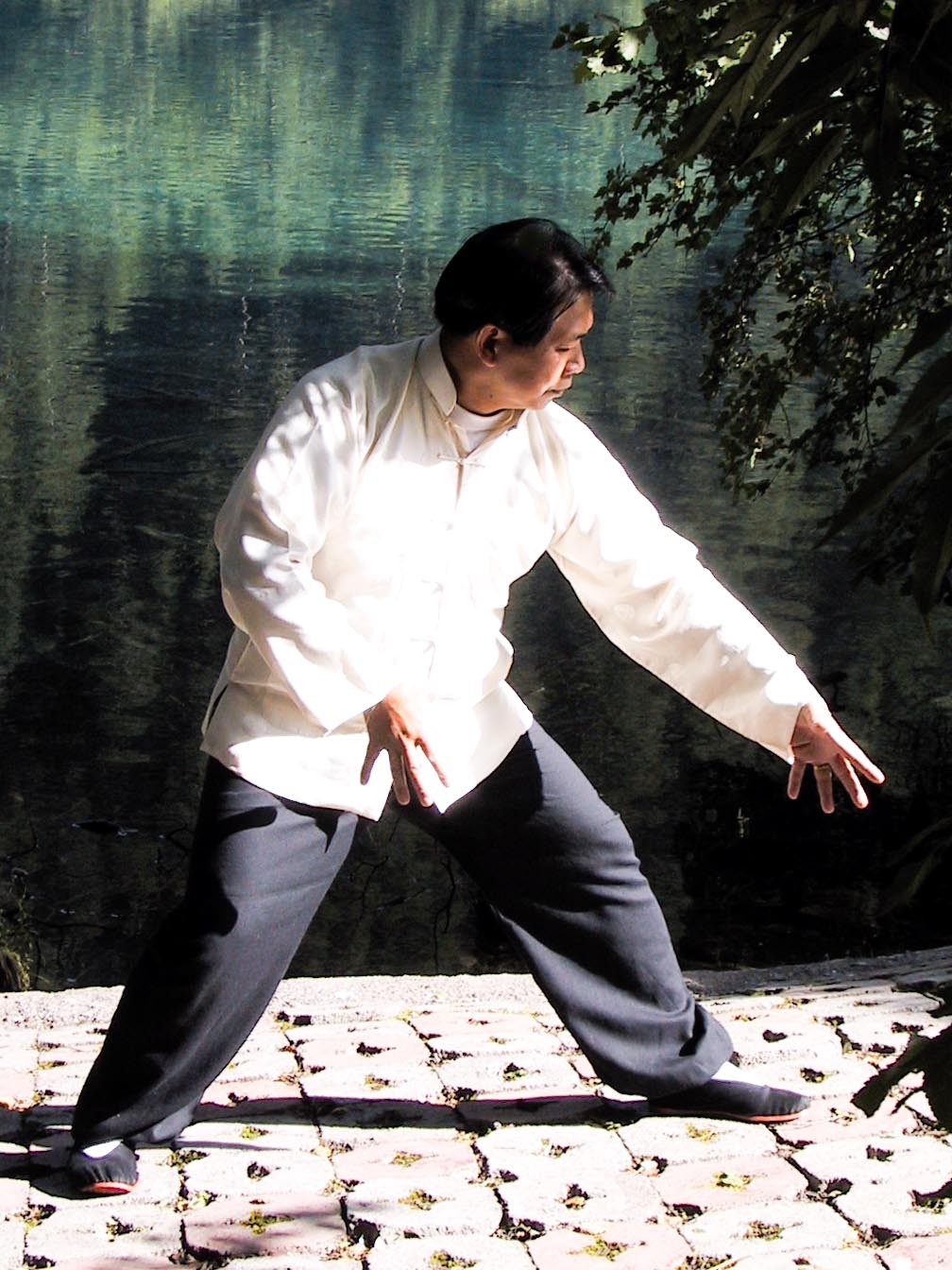
At its core, Qigong operates on the principle of harmonizing the body's Qi flow through specific combinations of physical postures, controlled breathing, and focused mental intention. The 'how' involves a dynamic interplay: movements are typically slow, fluid, and often circular, designed to gently stretch muscles, lubricate joints, and stimulate acupuncture meridians. Breathing techniques range from deep abdominal breathing to more complex patterns that synchronize with movement, aiming to increase oxygen intake and guide Qi. Mental focus, or 'Yi' (意), directs the Qi, often visualizing its movement through the body or concentrating on specific energy centers like the Dantian. This integrated approach distinguishes Qigong from mere physical exercise, aiming for a holistic cultivation of internal energy rather than just external strength, a concept central to Chinese medicine's understanding of health.
📊 Key Facts & Numbers
Globally, an estimated 60 million to 100 million people practice Qigong regularly, with a significant concentration in China. In 2018, a survey indicated that over 10% of the adult population in some Chinese provinces engaged in Qigong or Tai Chi. Research published in the Journal of Alternative and Complementary Medicine in 2019 analyzed 77 randomized controlled trials, finding Qigong effective for conditions like chronic pain and hypertension. The National Center for Complementary and Integrative Health (NCCIH) in the U.S. has funded multiple studies, with one 2020 meta-analysis of 33 studies showing significant improvements in balance and fall prevention among older adults. Annually, thousands of workshops and retreats are held worldwide, generating an estimated market value of over $500 million for related products and services, including instructional materials and specialized clothing.
👥 Key People & Organizations
While Qigong's lineage is vast and often anonymous, several key figures and organizations have shaped its modern trajectory. Liu Guizhen (1920-1983) is widely recognized for his role in establishing the first Qigong sanatorium in Beidaihe in 1957 and popularizing 'Medical Qigong' in post-revolutionary China. Wang Zi-ping (1888-1973), a renowned martial artist, integrated Qigong deeply into his martial arts training, influencing generations. In the West, figures like Ken S. Cohen and Dr. Jerry Johnson have been instrumental in translating and disseminating Qigong knowledge through books and workshops. Organizations such as the National Qigong Association (NQA) in the U.S. and the International Health Qigong Federation (IHQF) play crucial roles in setting standards, certifying instructors, and promoting research, ensuring the practice's integrity and global reach.
🌍 Cultural Impact & Influence
Qigong's cultural impact extends far beyond its health benefits, permeating Chinese culture and influencing global wellness trends. It is frequently depicted in Wuxia films and Chinese television dramas, where masters demonstrate superhuman feats attributed to their cultivated Qi, shaping popular perceptions of internal power. In the West, Qigong has contributed significantly to the broader acceptance of mind-body practices and alternative medicine, influencing everything from corporate wellness programs to physical therapy protocols. Its emphasis on slow, mindful movement has also inspired elements within contemporary dance and somatic practices, demonstrating a cross-cultural resonance. The practice has become a symbol of Chinese soft power, promoting cultural exchange and traditional values globally.
⚡ Current State & Latest Developments
As of 2024-2025, Qigong is experiencing a resurgence, driven by increased interest in holistic health and stress reduction. The COVID-19 pandemic spurred a significant uptick in online Qigong classes, making the practice more accessible than ever before, with platforms like YouTube hosting thousands of instructional videos. Research continues to explore its efficacy for specific conditions, with studies at institutions like the University of California, Los Angeles (UCLA) focusing on its impact on immune function and chronic fatigue. The Chinese government continues to promote 'Health Qigong' (健身气功), a standardized set of routines, both domestically and internationally, through organizations like the Chinese Health Qigong Association, aiming to preserve and disseminate traditional practices in a structured manner.
🤔 Controversies & Debates
Despite its widespread acceptance, Qigong is not without its controversies. Historically, the Chinese Communist Party (CCP) has had a complex relationship with Qigong, initially promoting it for health but later cracking down on certain groups, most notably Falun Gong, due to perceived political threats and cult-like tendencies. This led to a period of intense scrutiny and suppression, with many independent Qigong masters and organizations being disbanded. In the scientific community, debates persist regarding the 'Qi' concept itself, with some critics dismissing it as unscientific or pseudoscientific, while proponents argue that its benefits are measurable, even if the underlying mechanisms are not fully understood by Western science. The challenge lies in distinguishing evidence-based practices from unsubstantiated claims, a tension common in the realm of complementary and alternative medicine.
🔮 Future Outlook & Predictions
The future of Qigong appears robust, with several trends likely to shape its evolution. We can expect continued integration into mainstream healthcare, particularly in areas like rehabilitation medicine, geriatrics, and mental health support, as more clinical trials provide empirical evidence. The rise of wearable technology and biofeedback devices may offer new ways to measure and optimize Qi flow, bridging ancient wisdom with modern science. Furthermore, the global demand for mindfulness practices and stress management techniques will likely fuel its expansion, particularly in corporate wellness and educational settings. The challenge will be to maintain the authenticity of traditional teachings while adapting to contemporary needs and scientific scrutiny, potentially leading to new hybrid forms of practice.
💡 Practical Applications
Qigong's practical applications are remarkably diverse, extending from personal wellness to professional training. In preventive healthcare, it's used to reduce stress, improve cardiovascular health, and enhance immune system function. For individuals managing chronic conditions like [[fibro
Key Facts
- Category
- culture
- Type
- topic